Muʿawiyah's poisoning of Imam al-Hasan

بسم الله الرحمن الرحيم
In the year 50 AH, on the 5th of Rabīʿ al-Awwal, one of the most tragic episodes in early Islamic history unfolded: the assassination of Imam al-Ḥasan al-Mujtabā (AS).
Despite the controversies of the historical details surrounding his noble death, there is a general consensus that al-Ḥasan did not die naturally, but was rather poisoned. The main culprit behind this assassination plot was the infamous Umayyad leader, Muʿāwiyah b. Abī Sufyān.
His plot not only demonstrates the utter disregard he had for the Prophetic Household, but also reveals the lengths he would go in order to reach his ambitious goal of politically dominating the Islamic World.
In this article, we intend to present and scrutinise the historical sources that illustrate Muʿāwiyah’s involvement in al-Ḥasan’s assassination.
Authentic Reports Describing al-Ḥasan’s Assassination
Before we present the evidence of Muʿāwiyah’s involvement, it is important to first present the story regarding al-Ḥasan’s death. The most important source in this regard is what his mawlā (servant) had narrated.
This narration was recorded in Muṣannaf Ibn Abī Shaybah Vol 21, pg. 280 - 281, Hadith # 40142:
Abū Usāmah narrated from Ibn ʿAwn, from ʿUmayr b. Isḥāq:
“I and another man entered upon al-Ḥasan b. ‘Ali to visit him during his illness. He began saying to that man: ‘Ask me before you are no longer able to ask me.’
He said: ‘I do not want to ask you anything. May Allah grant you recovery.’
Then he stood and entered the toilet. Then he came out to us and said: ‘I did not come out to you until I vomited a piece of my liver, turning it over with this stick. I have certainly been made to drink poison many times, but nothing has been more severe than this time!’
Then we went early to him the next day, and there he was in the throes of death. Then al-Ḥusayn b. ‘Ali came and sat by his head and said: ‘O my brother, who is the one responsible for you?’ Al-Ḥasan (AS) asked: ‘Do you want to kill him?’ Al-Ḥusayn said: ‘Yes.’
Al-Ḥasan (AS) replied: ‘If it is the one whom I suspect, then Allah is more severe in vengeance. And if they are innocent, then I would not like an innocent person to be killed.’”
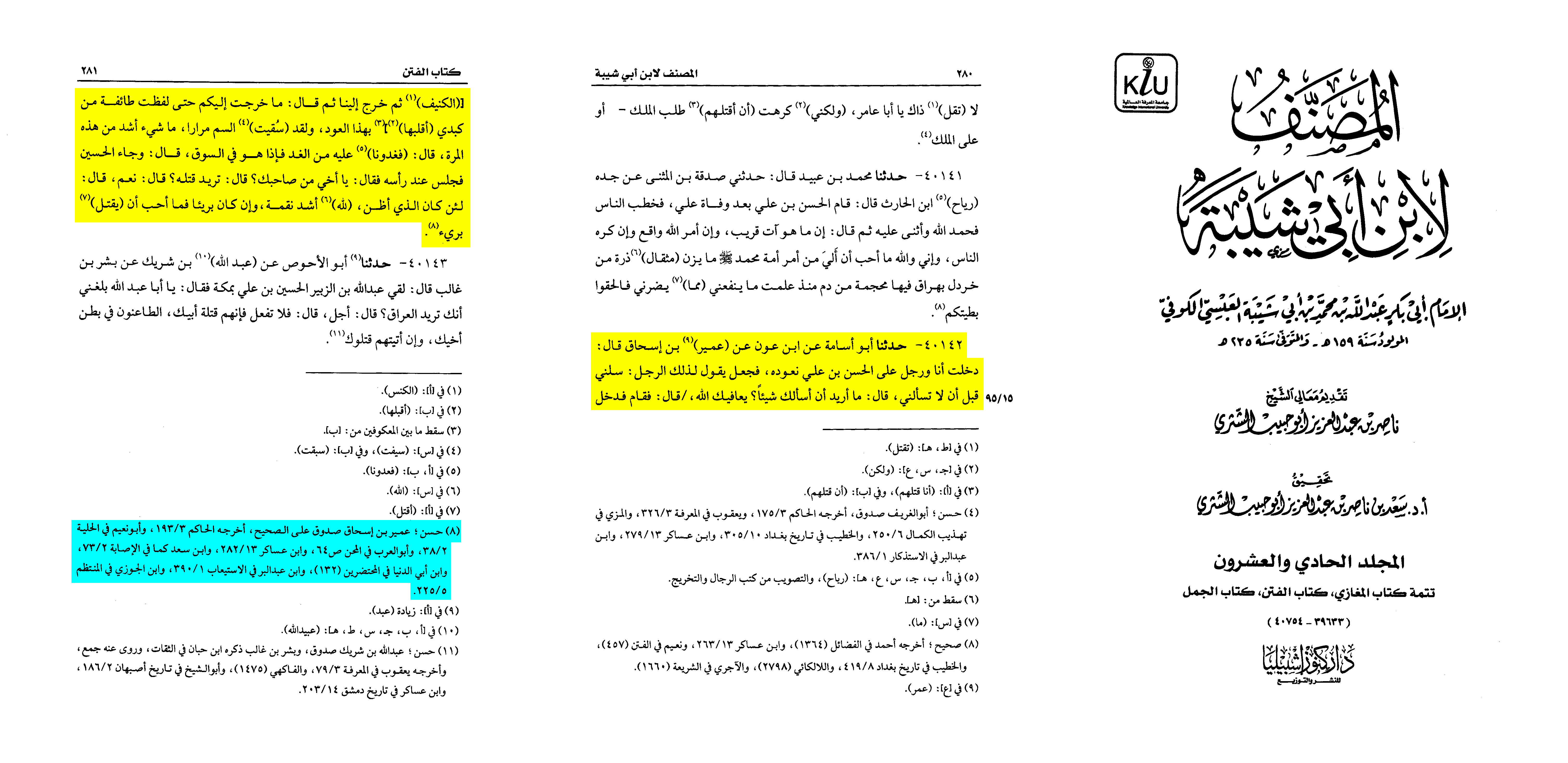
The researcher has commented that the chain of transmission is Ḥasan (good), and ʿUmayr b. Isḥāq (the mawlā narrating this tradition) has been certified by numerous scholars including Ibn Hajar al-ʿAsqalani.
This report has also been transmitted with similar or equivalent wording in the following sources:
The report highlights that al-Ḥasan was already suffering from illness prior to his death, but he realised that he had been poisoned when he began vomiting his insides (lafaẓtu ṭāʾifatan min kabidī). The word kabid here may more accurately refer to one’s “insides” or internal contents rather than the literal liver, such that he’s saying: “I vomited parts of my insides”.
This narrative was similarly corroborated by reports attributed to the Ahl al-Bayt (AS), such as by al-Mas’ūdī in his Murūj al-Dhahab Vol 2, pg. 475 - 476:
Jaʿfar b. Muḥammad narrated to us, from his father, from his grandfather ʿAlī b. al-Ḥusayn (AS), who said:
Al-Ḥusayn b. ‘Ali entered upon my uncle, al-Ḥasan b. ‘Ali, when the poison was made to be given to him.
So he stood for the need of a human, then he returned, and said: ‘I have certainly been made to drink poison several times, but I was not made to drink like this. I have certainly vomited a piece of my liver, and I saw myself turning it over with a stick in my hand.’
So al-Ḥusayn said to him: ‘O my brother, who made you drink?’
He said: ‘And what do you want by that? For if it is the one whom I suspect, then Allah is his reckoner. And if it is other than him, then I do not love that an innocent person be taken because of me.’
So he did not remain after that except three days, until he died, may Allah be pleased with him.”
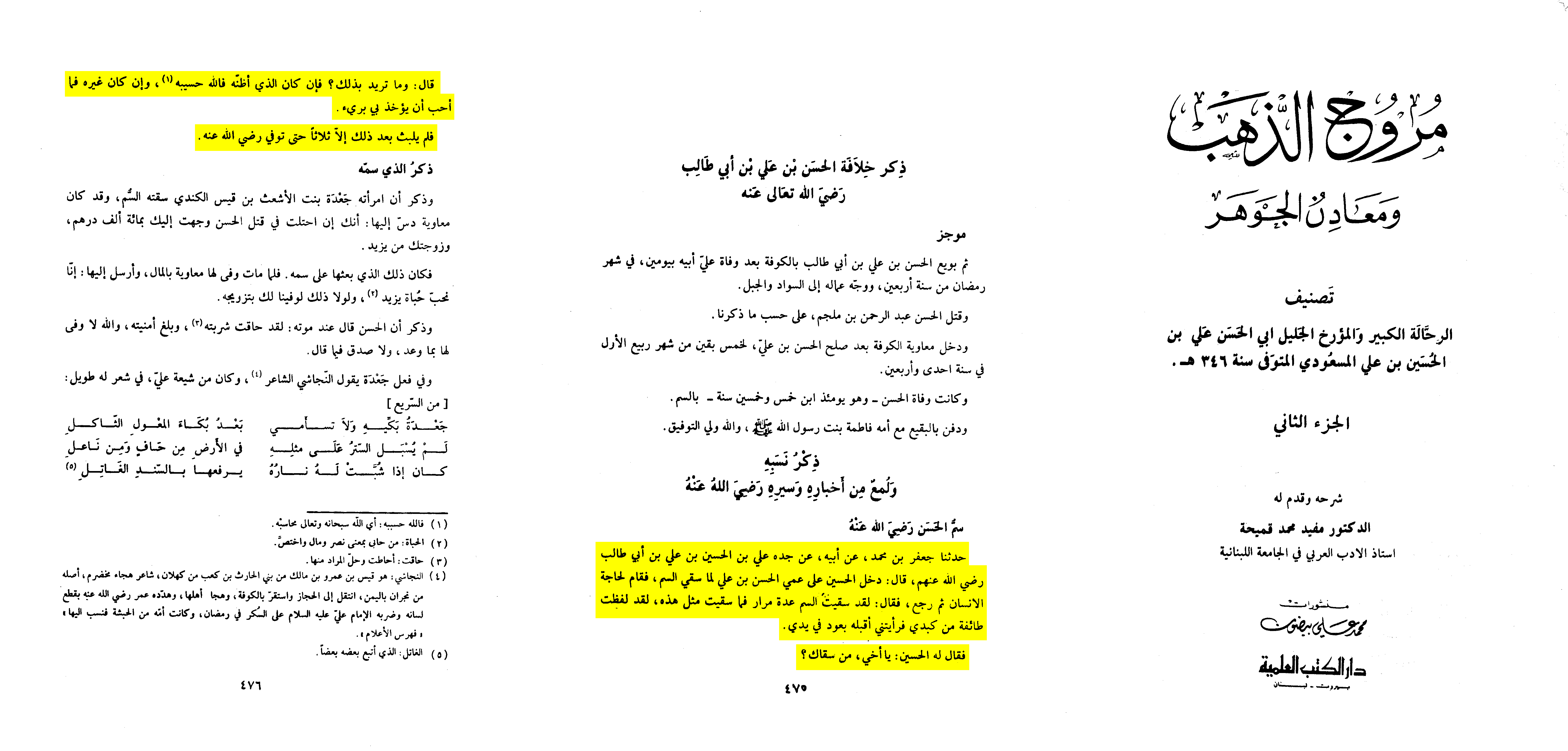
Al-Ḥasan’s refusal to mention the name of his poisoner was either a reference to his wife, whom he already suspected of attempting to kill him but he refused on account of lacking any valid legal evidence, or to Muʿāwiyah, whom he refused to name in order to not contradict his intention behind starting a peace treaty, which was to avoid further bloodshed.
The Motive Behind al-Ḥasan’s Assassination
In defense of Muʿāwiyah, opponents may dismiss any evidence suggesting his role by arguing that Muʿāwiyah had no motive to assassinate al-Ḥasan, since he had already secured the caliphate.
We will mention clear motives momentarily, but we would like to point out the weakness of this argument first by pointing out that Muʿāwiyah later used bribery, threats, and political assassinations to overcome opposition to his son Yazīd’s succession. This illustrates that securing the future of his dynasty remained a significant priority regardless of his position of power.
We have already covered many examples of this in our Karbala Series Part V: Muʿāwiyah's appointment of Yazīd.
Point 1: Al-Ḥasan was to succeed Muʿāwiyah per the treaty
A condition of the treaty between Imam al-Ḥasan (AS) and Muʿāwiyah was that authority would return to the him after Muʿāwiyah’s death, preventing Muʿāwiyah from appointing a successor. Thus, the only way to secure Yazīd’s succession was for Muʿāwiyah to find a way to eliminate Imam Ḥasan (AS).
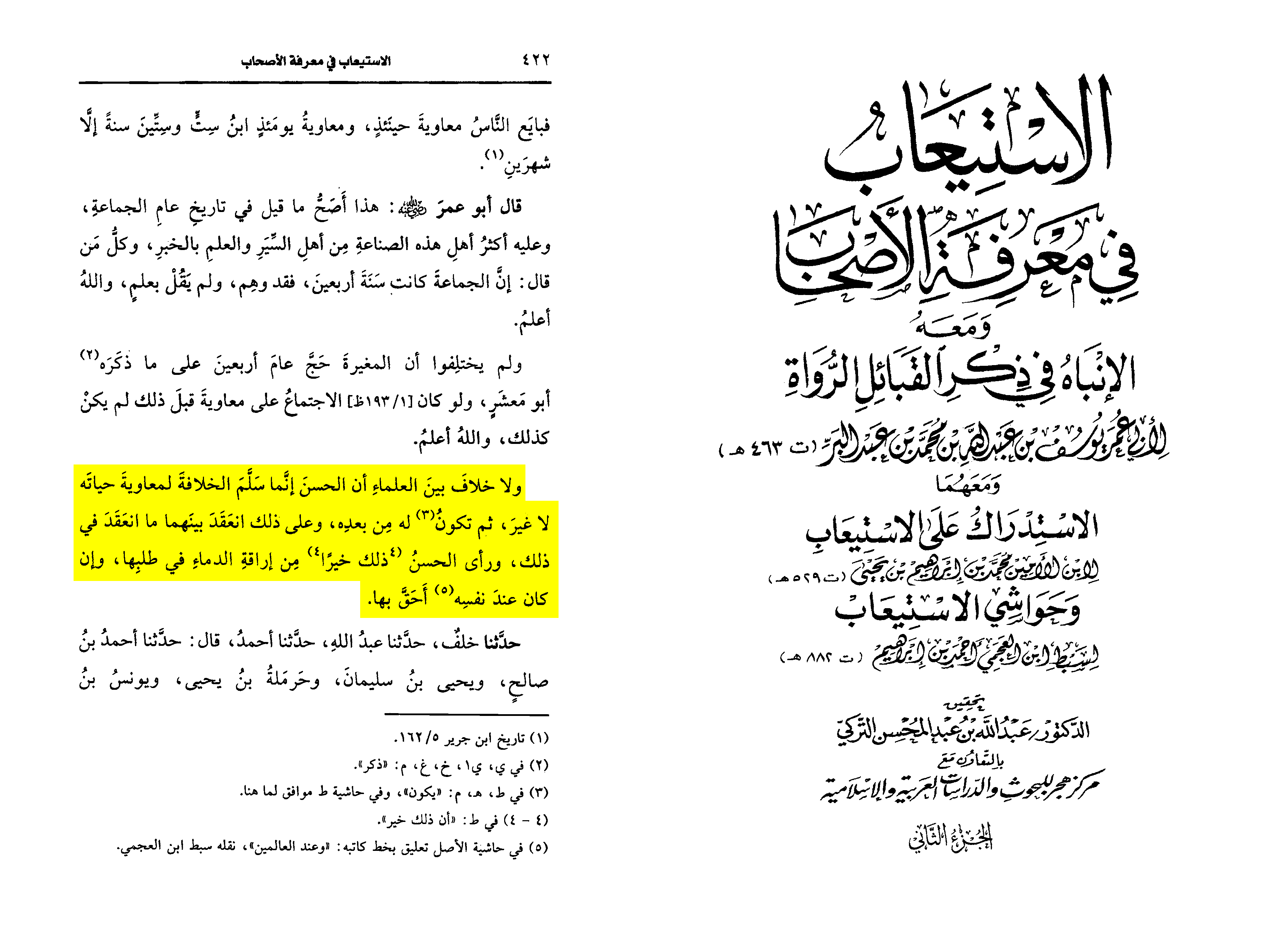
Ibn ‘Abd al-Barr attested to this fact in his al-Isti’ab Vol. 2, pg. 422:
There is no disagreement among the scholars that al-Ḥasan b. ‘Ali only handed over the caliphate to Muʿāwiyah b. Abī Sufyān for the duration of his lifetime alone, then it would return to him after him. Upon that basis, the agreement between them was concluded regarding that matter. Al-Ḥasan saw that as better than shedding blood in pursuit of it, even though he believed himself more entitled to it.”
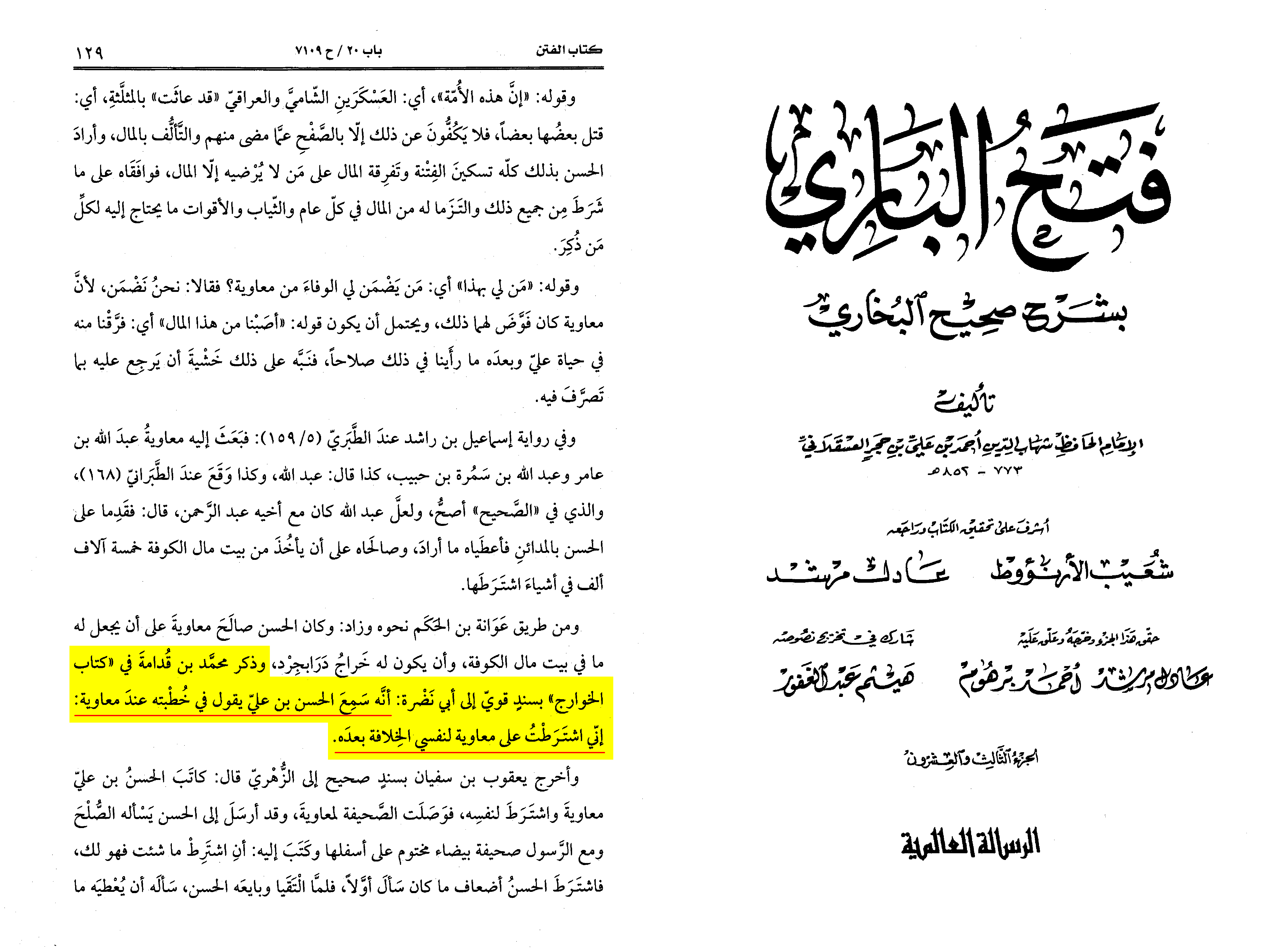
Ibn Hajar al-‘Asqalani further offers an authentic chain demonstrating this condition in his Fath al-Bari, Vol. 16, pg. 129:
Muhammad b. Qudamah mentioned in Kitab al-Khawarij, with a strong chain to Abu Nadrah, that he heard al-Ḥasan b. ‘Ali saying in his sermon in the presence of Muʿāwiyah: “Indeed, I stipulated with Muʿāwiyah that the caliphate would belong to me after him.”
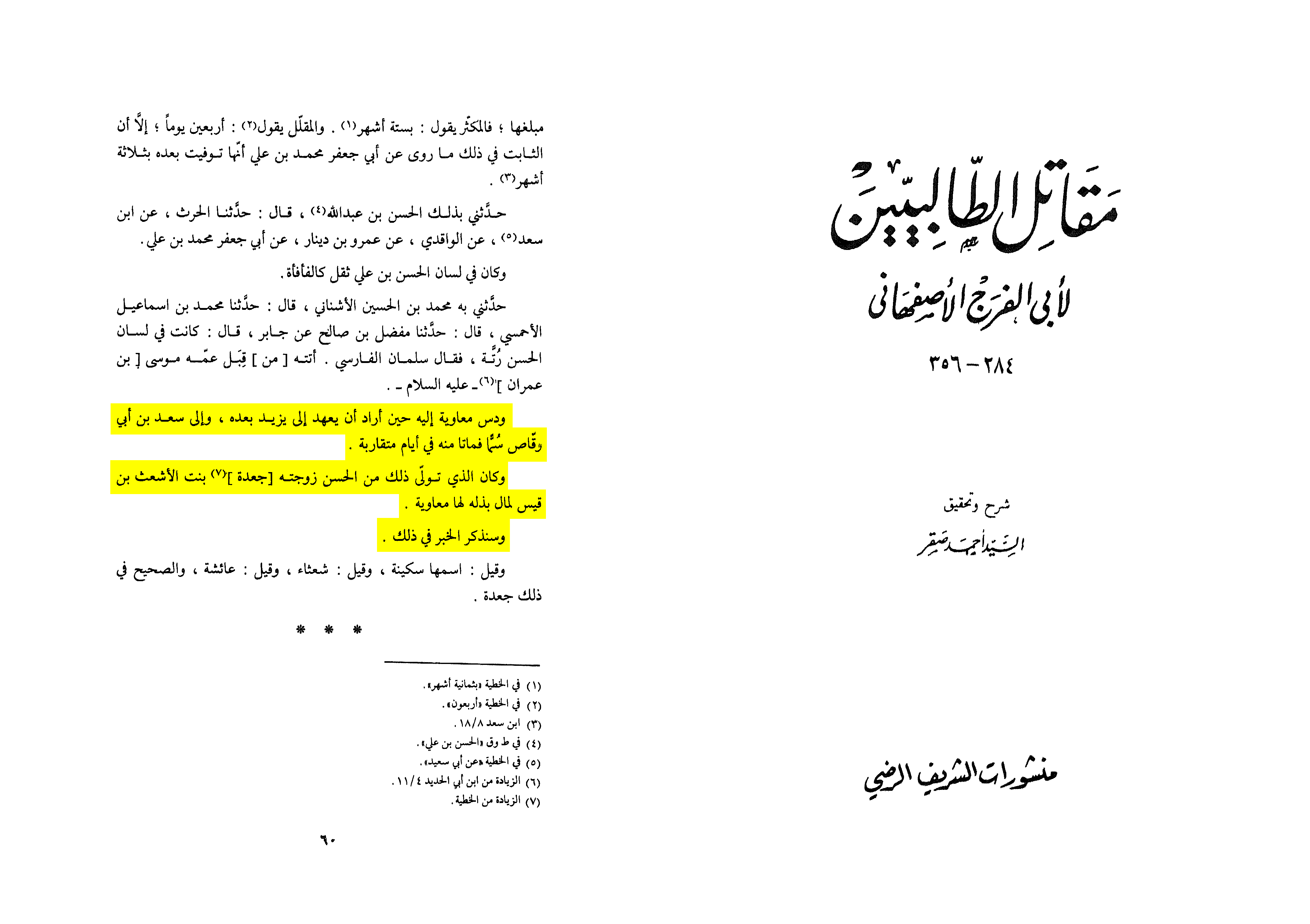
Abū al-Faraj al-Iṣfahānī also opines this as being the basis for Muʿāwiyah’s poisoning of al-Ḥasan (AS) in his Maqatil al-Talibiyyin, pg. 60:
Muʿāwiyah b. Abī Sufyān secretly sent poison to al-Ḥasan b. ‘Ali when he wanted to appoint Yazīd b. Muʿāwiyah as successor after him, and also to Sa’ad b. Abi Waqqas. So both died from it within close days of one another.
The one who carried this out against al-Ḥasan was his wife Ja’da bt. al-Ashath b. Qays, due to money that Muʿāwiyah had given her. We will mention the report concerning that later.
Abū al-Faraj was considered a trustworthy scholar as per Mīzān al-Iʿtidāl by al-Dhahabī Vol 5, pg. 151 - 152:
He wrote an indescribably large amount, to the point that he was accused [of fabrication]. However, it appears that he was truthful. Al-ʿAlawī said: Abū al-Ḥasan al-Battī used to say, “There was no one more reliable than Abū al-Faraj al-Iṣbahānī.”
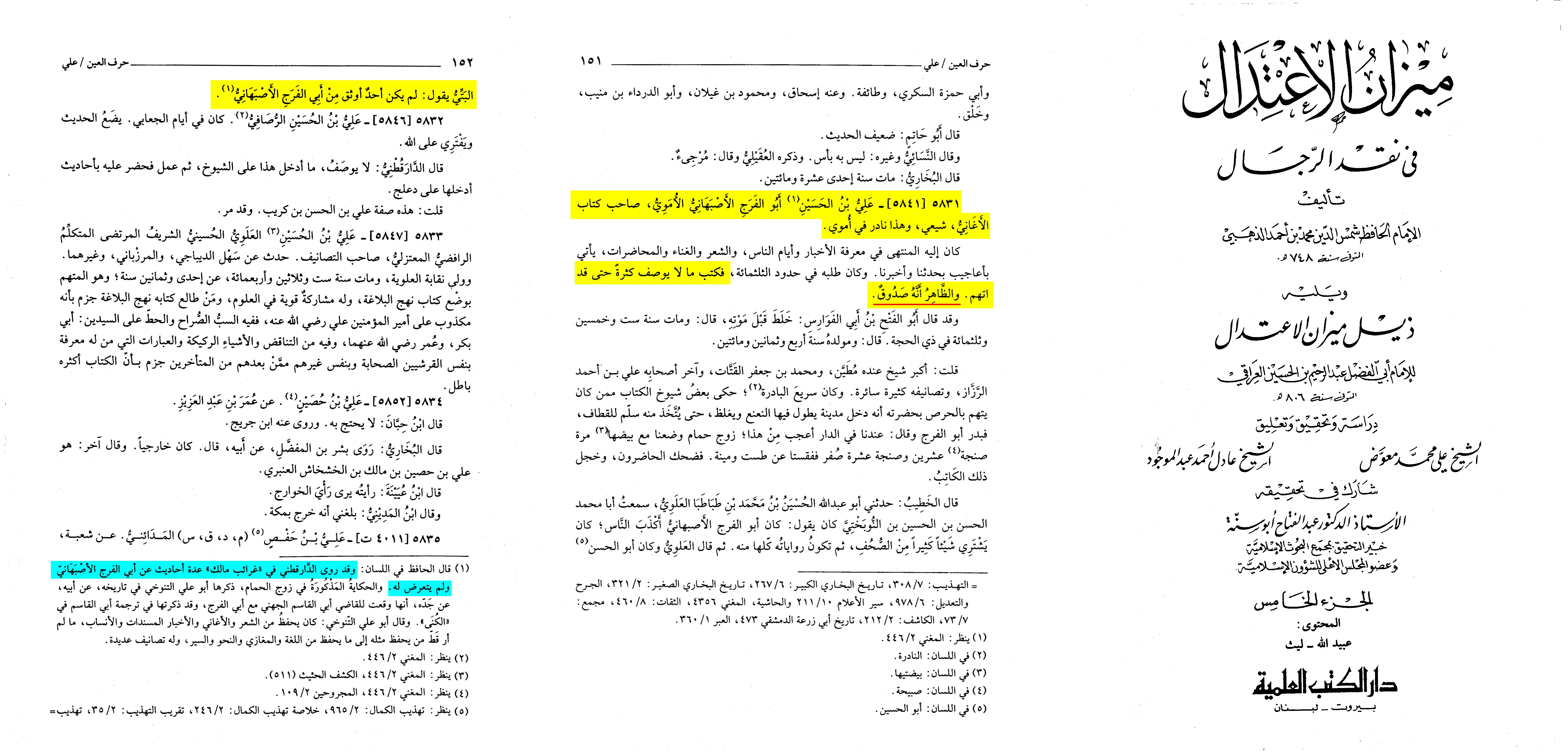
The fact that Abū al-Faraj bases his opinion on historical reports, combined with his expertise in Islamic history, makes his assessment worthy of consideration.
Point 2: The Iraqis were still loyal to al-Ḥasan b. ‘Ali
Furthermore, Muʿāwiyah had good reason to fear Imam al-Ḥasan (AS), even if he intended to disregard the terms of the treaty and appoint Yazīd, as the people of Iraq remained loyal to al-Ḥasan (AS), which meant that he remained a potential source of opposition to Muʿāwiyah’s plans.
We read in Abū al-Faraj’s Kitab al-Aghani, Vol 9, pg. 201 - 202:
I copied from the book of Yaḥyā b. Ḥāzim: ʿAlī b. Ṣāliḥ narrated to us, saying: Ibn Dhīʾb narrated to us, saying:
Muʿāwiyah b. Abī Sufyān said to ‘Abd Allah b. al-Zubayr while he was with him in Medina among some people: “O son of al-Zubayr, will you not excuse me regarding al-Ḥasan b. ‘Ali? I have not seen him since I arrived in Medina except once.”
He replied: “Leave Ḥasan aside, for by Allah, you and he are exactly as al-Shammākh (pre-Islamic poet) said:
‘I flatter certain people out of modesty, while I see their chests boiling against me with rancor.’
By Allah, if Ḥasan wished to strike you with one hundred thousand swords, he would strike you! By Allah, the people of Iraq are more compassionate toward him than a she-camel is toward her calf…!”
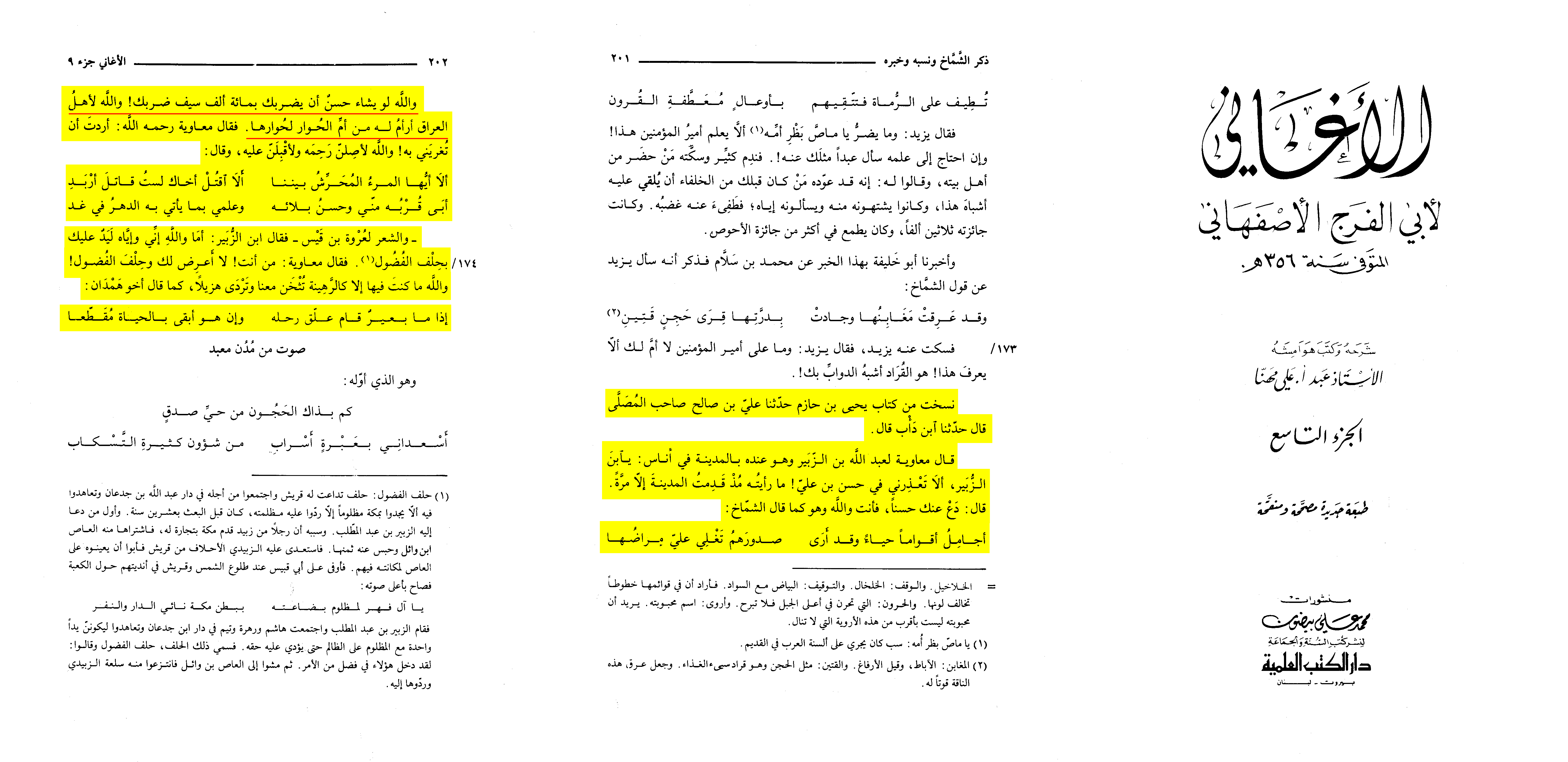
Here, Ibn al-Zubayr is warning Muʿāwiyah to leave Imam Ḥasan (AS) alone, as he still possessed the influence and support necessary to challenge Muʿāwiyah once again.
However, he chose to refrain out of forbearance and a desire to prevent further bloodshed among the Muslims. The poetry he cited is an explicit reference to showing restraint towards hostile people. It’s as if he was saying, “I treat certain people courteously despite knowing they secretly harbour hatred toward me.”
If Imam Ḥasan (AS) could cause Muʿāwiyah such concern during his own lifetime, then what chance would his foolish son Yazīd have faced against such opposition?
Point 3: Muʿāwiyah and Ibn Athal
Muʿāwiyah not only had a potential motive for assassinating Imam al-Ḥasan (AS), but he was also associated with the use of poisoning against his adversaries.
Ibn Abī Uṣaybi’ah recorded in his famous biographical dictionary of physicians and doctors ‘Uyun al-Anba fi Tabaqat al-Atiba, pg. 153 - 154 under the biography of Ibn Athāl al-Naṣrānī, who was a Christian doctor close to Muʿāwiyah:
Ibn Athal was a physician of high standing, one of the distinguished and prominent doctors of Damascus. He was a Christian in religion.
When Muʿāwiyah b. Abī Sufyān came to rule Damascus, he selected Ibn Athal for his personal service and treated him well. He frequently sought him out, placed great trust in him, and spent time conversing with him both day and night.
Ibn Athal was highly knowledgeable regarding simple and compound medicines, their properties and effects, and which of them were deadly poisons. For this reason, Muʿāwiyah kept him especially close.
During the days of Muʿāwiyah, a large number of prominent people and Muslim commanders died from poisoning.
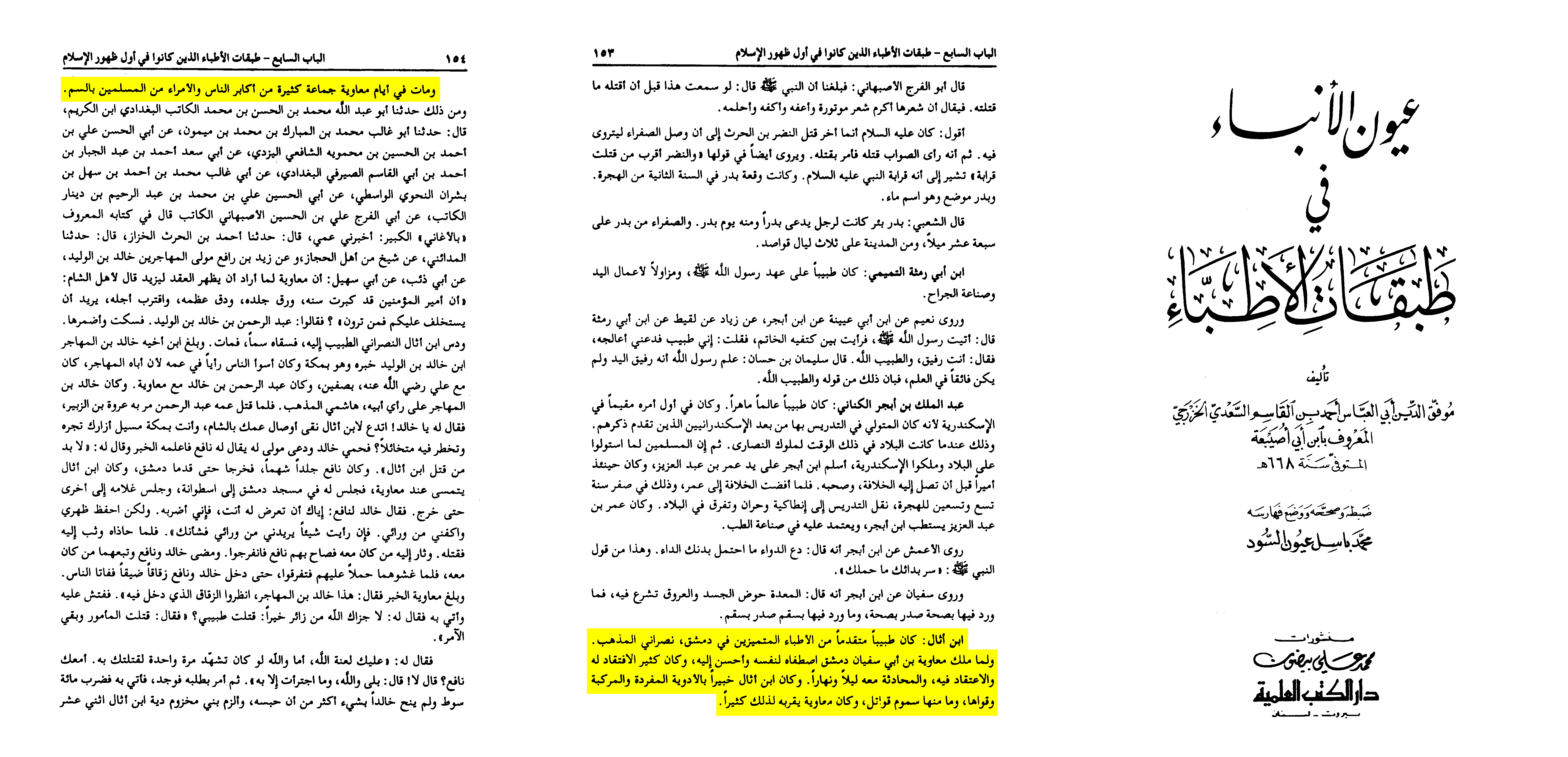
He then goes over the assasination of ʿAbd al-Raḥmān b. Khālid b. al-Walīd, Mālik al-Ashtar, and- most relevantly- Imam al-Ḥasan (AS). We have covered the sources for the assassination of ʿAbd al-Raḥmān in our article on the Appointment of Yazīd that we also cited earlier.
Thus we see that Muʿāwiyah had a history of assassinating his adversaries, particularly anyone who could pose a threat to his chosen successor.
Sources Proving Muʿāwiyah’s Involvement
Abu Bakr b. Hafs
The most relevant source illustrating Muʿāwiyah’s involvement in the assassination of Imam al-Ḥasan (AS) is the testimony of Abū Bakr b. Ḥafṣ al-Kūfī, the great-grandson of Saʿd b. Abī Waqqāṣ.
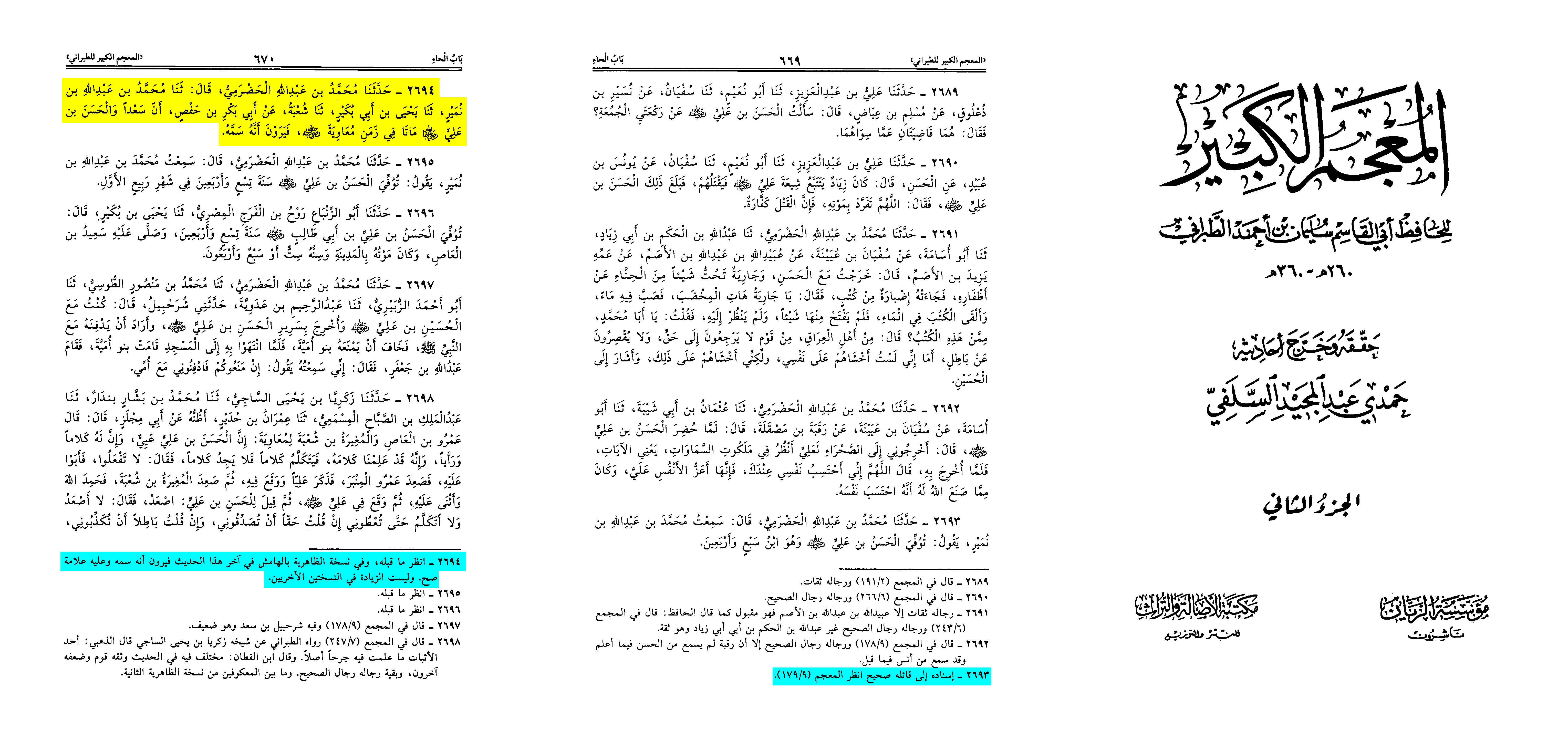
His testimony is recorded in al-Muʿjam al-Kabīr by al-Ṭabarānī Vol. 2, pg. 669 - 670, Hadith # 2694:
Muḥammad b. ʿAbd Allāh al-Ḥaḍramī narrated to us, saying: Muḥammad b. ʿAbd Allāh b. Numayr narrated to us, Yaḥyā b. Abī Bukayr narrated to us, Shuʿbah narrated to us that: Abū Bakr b. Ḥafṣ said:
Saʿd b. Abī Waqqāṣ and al-Ḥasan b. ‘Ali both died during the time of Muʿāwiyah b. Abī Sufyān, and the people believed that he (i.e. Muʿāwiyah) had poisoned them.
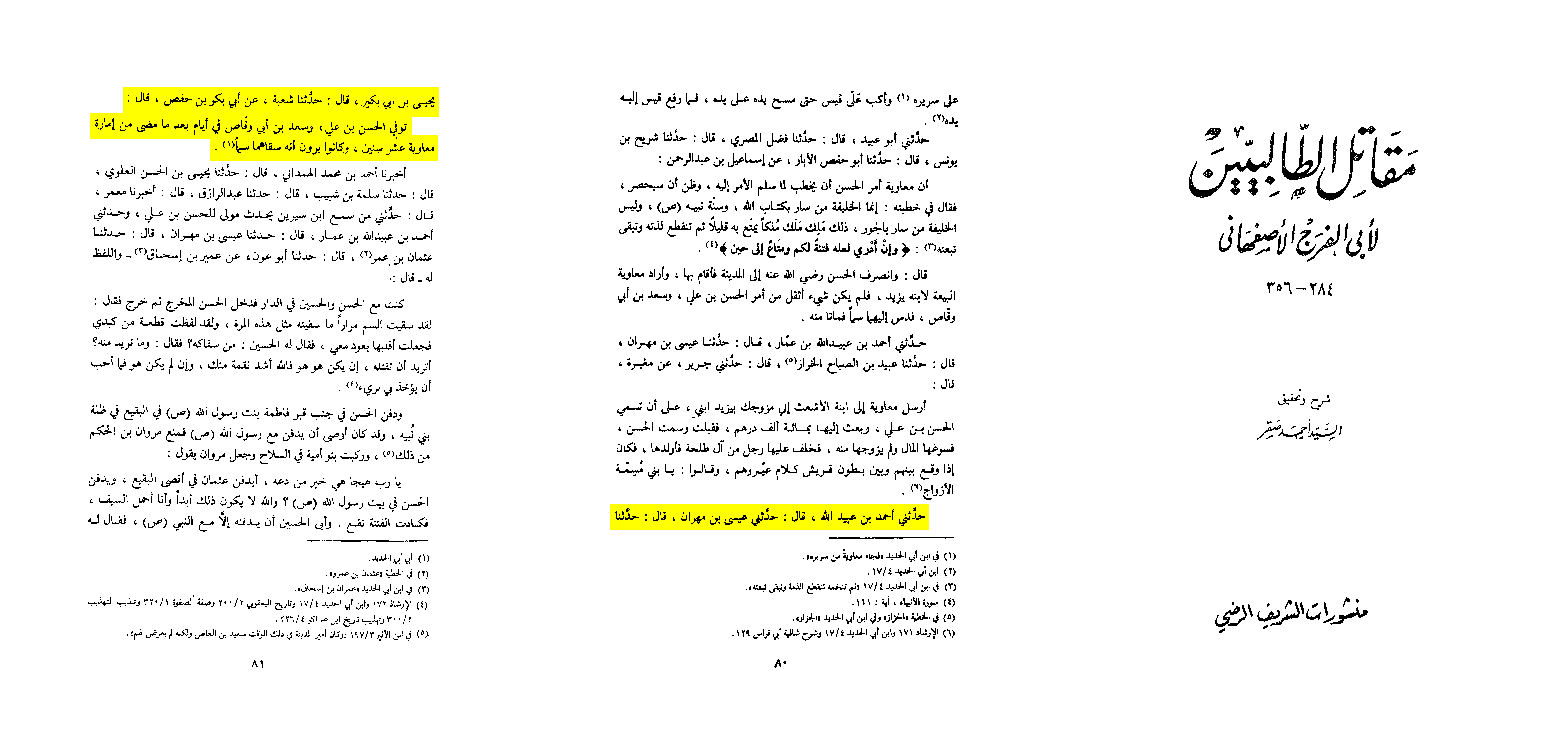
This report was also transmitted in Maqātil al-Ṭālibiyyīn by Abū al-Faraj, pg. 80 - 81 with a slight variation:
Ahmad b. ʿUbayd Allāh narrated to me, saying: ʿĪsā b. Mihrān narrated to me, saying: Yaḥyā b. Abī Bakr narrated to us, saying: Shuʿbah narrated to us, from Abū Bakr b. Ḥafṣ, who said:
"Al-Ḥasan b. ʿAlī and Saʿd b. Abī Waqqāṣ died within a few days of one another, after ten years had passed from the beginning of Muʿāwiyah's rule. People believed that he had given them both poison."
The narration of Abū Bakr b. Ḥafṣ shows that the death of al-Ḥasan and Saʿd both happened within a similar timeframe and from the same cause. Abu Bakr then goes to say that they (i.e. the people) believed that it was Mu’awiyah behind it. As Abu Bakr is a descendent of Sa’d, it would follow he obtained this information from his forefathers. As for al-Ḥasan, he is narrating what the people commonly believed.
This is because when he says “They”, he is referring to the opinion of the popularity from the contemporary of the Tābiʿīn, which shows that the weak claim that our opponents promote, which is that Muʿāwiyah’s involvement in al-Ḥasan’s murder is nothing more than a Shiʿa conspiracy theory, is nothing but short of their ignorance. It is in fact our opponents who are practicing historical revisionism when they try to argue that this claim against Muʿāwiyah has no basis.
Upon examining each narrator, we find no objections raised against any of them, and they are all regarded as trustworthy by the scholars of Ahl al-Sunnah.
Muḥammad b. ʿAbd Allāh al-Ḥaḍramī: Ibn Hajar stated that scholars have authenticated him in Lisan al-Mizan, Vol. 7, pg. 257 - 258, Bio # 7021.
Muḥammad b. ʿAbd Allāh b. Numayr: Ibn Hajar said: ‘Thiqah’ (Taqrib al-Tahdhib, pg. 546, Bio # 6053).
Yaḥyā b. Abī Bakr: Ibn Hajar said: ‘Thiqah’ (Taqrib al-Tahdhib, pg. 657, Bio # 7516).
Shuʿba b. al-Ḥajjāj Ibn Hajar said: ‘Thiqah’ (Taqrib al-Tahdhib, pg. 270, Bio # 2790).
Abī Bakr b. Ḥafṣ: Ibn Hajar said: ‘Thiqah’ (Taqrib al-Tahdhib, pg. 313, Bio # 3277).
‘Abdullah b. al-Hasan al-Muthena
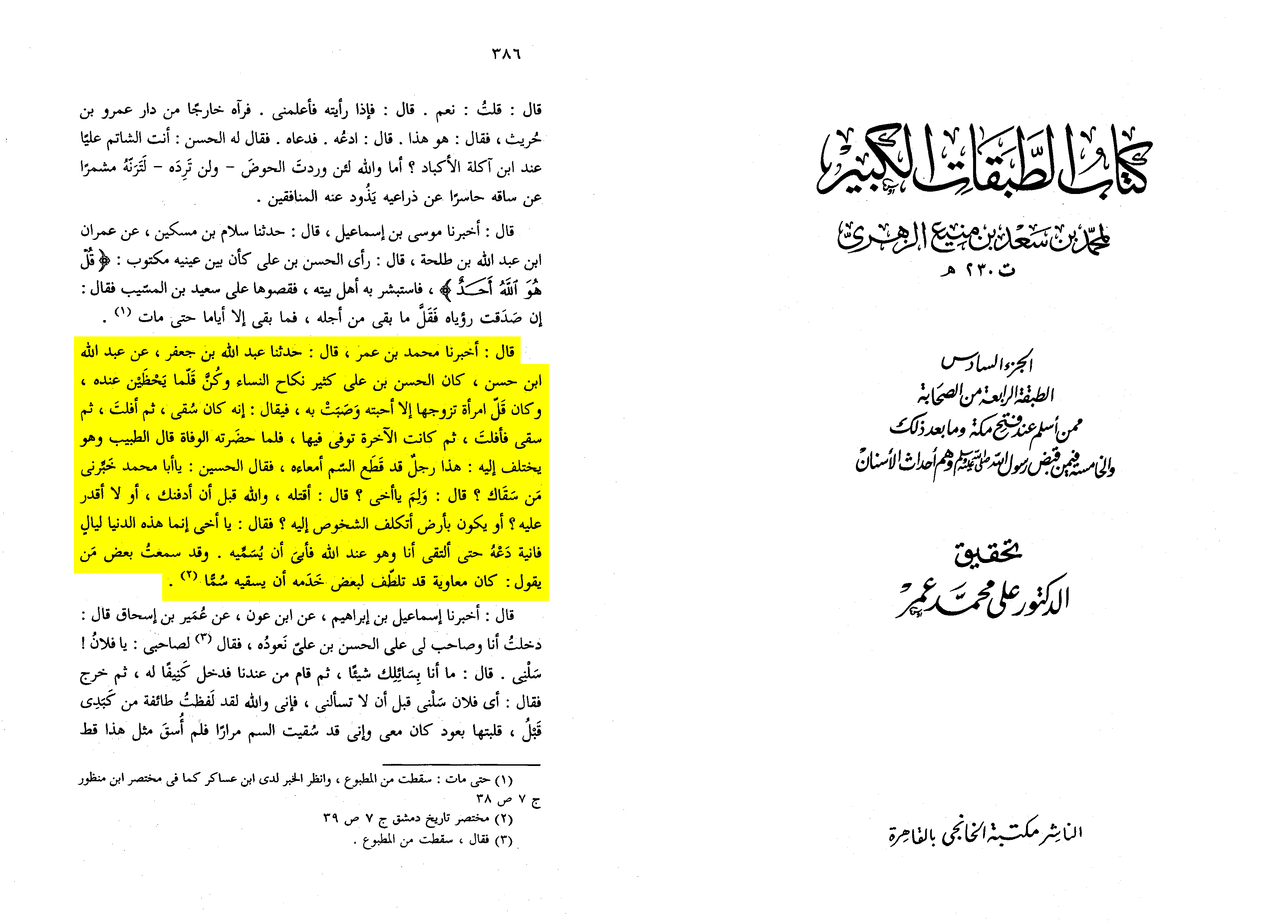
We also have the testimony of Imam Ḥasan’s own grandson, ʿAbd Allāh b. al-Ḥasan al-Muthannā, confirming this view in Tabaqāt Ibn Saʿd Vol. 6, pg. 386:
He said: Muḥammad b. ʿUmar informed us, he said: ʿAbd Allāh b. Jaʿfar narrated to us, from ʿAbd Allāh b. al-Ḥasan:
Al-Ḥasan b. ʿAli used to marry women frequently, and they would rarely retain a favored position with him. There was hardly any woman he married except that she loved him deeply and became attached to him.
It is said that he was given poison, then recovered, then was poisoned again and recovered, then the final time was the one in which he died. When death approached him, the physician who was attending him said: “This is a man whose intestines have been cut apart by poison.”
Al-Ḥusayn said: “O Abu Muhammad, tell me who poisoned you.” He replied: “Why, my brother?”
He said: “So that I may kill him, by God, before I bury you — or, if I cannot reach him, or if he is in another land, I will make the effort to go to him.”
He said: “My brother, this world is only passing nights. Leave him until I meet him before God.” So he refused to name him.
And I have heard some people say that Muʿāwiyah had secretly arranged for one of his servants to give him poison.
This report was also transmitted by Ibn Kathīr in al-Bidāya wa al-Nihāya, vol. 11, p. 208, and by al-Dhahabī in Siyar Aʿlām al-Nubalāʾ, vol. 3, p. 274.
ʿAbd Allāh b. al-Ḥasan's narration here once again shows how this belief was a contemporary claim going around, and his citation of it is proof for his belief in it. The fact that he attributes it to a servant, is proof that al-Ḥasan was poisoned multiple times as he himself stated in his own reports, but the final blow came from his wife, Juʿdah bt. al-Ashʿath.
Yazīd also enticed Juʿdah bt. al-Ashʿath
Based on the reports, we can also conclude that Yazīd played a role in this assassination plot, where both he and his father enticed Juʿdah bt. al-Ashʿath to poison the Imam.
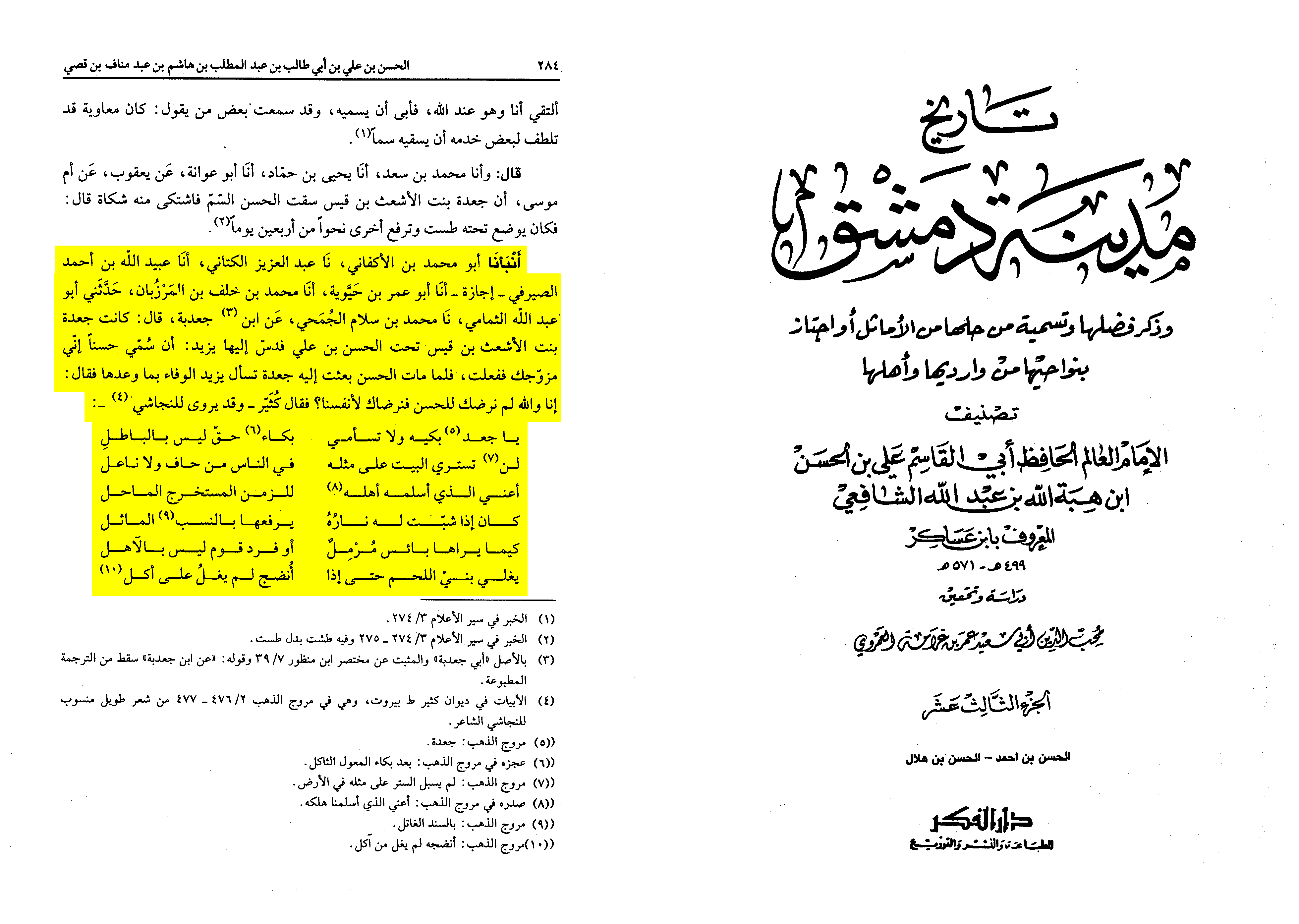
We read this narrative in Tarikh Dimashq, Vol. 13, pg. 284:
Abu Muhammad b. al-Akfani informed us; Abd al-Aziz al-Kattani narrated to us; Ubayd Allah b. Ahmad al-Sayrafi informed us by ijazah; Abu ‘Umar b. Hayuyah informed us; Muhammad b. Khalaf b. al-Marzuban informed us. Abu ‘Abd Allah al-Thumami narrated to me; Muhammad b. Salam al-Jumahi narrated to us from Ibn Jadbah, who said:
Juʿdah bt. al-Ashʿath was married to al-Ḥasan b. ‘Ali. Yazīd secretly sent word to her, saying: “Poison Ḥasan, and I will marry you.”
So she did so. When al-Ḥasan died, Ju’dah sent to Yazīd asking him to fulfill what he had promised her.
Yazīd replied: “By Allah, if we were not pleased with you for Ḥasan, then we will certainly not be pleased with you for ourselves!”
Kathir said — and it is also narrated for al-Najashi:
“O Jad, weep for him and do not grow weary; a rightful weeping, not a false one.
You will never again have within a house one like him among the people, whether barefoot or shod.
I mean the one whom his own family surrendered to destructive and devastating time.
Whenever his fire was kindled, he would raise it high through his noble lineage so that a poor and needy person might see it, or a lone traveler without family.
He would boil choice meat for them, and when it was fully cooked, he would not begrudge anyone who came to eat from it.
Historians who affirmed Mu’āwiyah’s involvement
The earlier cited Ibn Abī Uṣaybi’ah mentions this fact in ‘Uyun al-Anba' fi Tabaqat al-Atibba', pg. 156:
And in Tarikh al-Tabari it is reported that al-Ḥasan b. 'Ali died from poisoning during the days of Mu'awiyah.
It was said that Mu'awiyah, being known as cunning, secretly sent a poisoned drink to Ja'dah bt. al-Ash'ath b. Qays, who was the wife of al-Ḥasan, and said to her: 'If you kill al-Ḥasan, I will marry you to Yazīd.' When al-Ḥasan died, she sent to Mu'awiyah asking him to fulfill his promise. He replied: 'I am too protective of Yazīd (to marry him to you).'"
Kathir lamented al-Ḥasan, saying:
"O Ja'd, weep for him and do not refrain, A true weeping, not a false one.
If you conceal the dead, you will not find his equal among the people, whether barefoot or sandal-wearing."
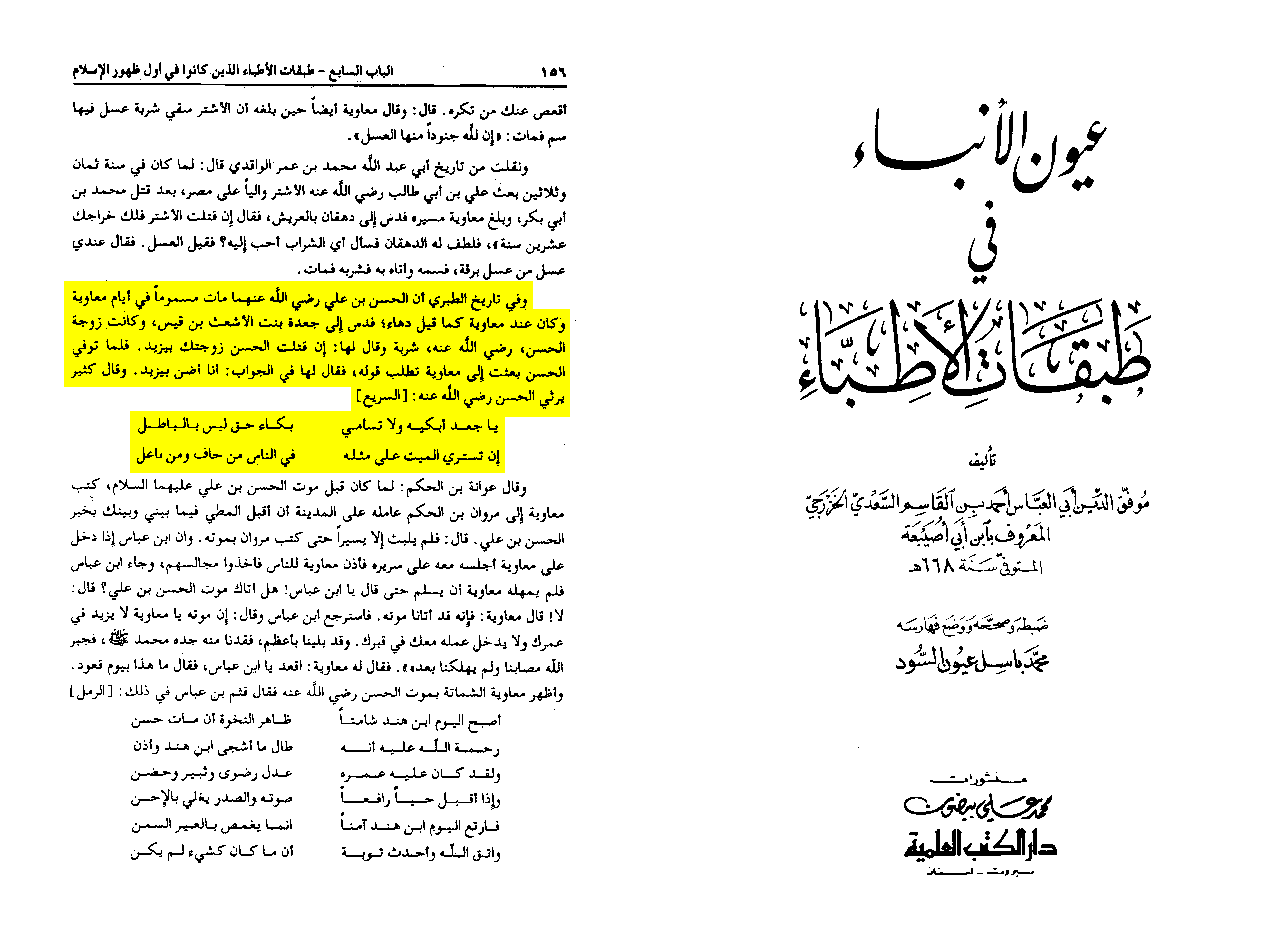
The reason why we have cited this report from this work is because in the modern prints of Tarikh al-Tabari are missing the reports of Imam al-Ḥasan’s assassination.
The famed historian, al-Baladhuri, recorded in Ansab al-Ashraf, Vol. 3, pg. 295:
It has been said that Muʿāwiya secretly sent word to Juʿdah bt. al-Ashʿath, the wife of al-Ḥasan, and enticed her until she poisoned him. She was one who held hatred towards him.
Al-Haytham b. ʿAdi said: Muʿāwiyah secretly sent to the daughter of Suhayl b. ʿAmr, the wife of al-Ḥasan, one hundred thousand dinars on the condition that she give him a drink that he sent to her, so she did so.
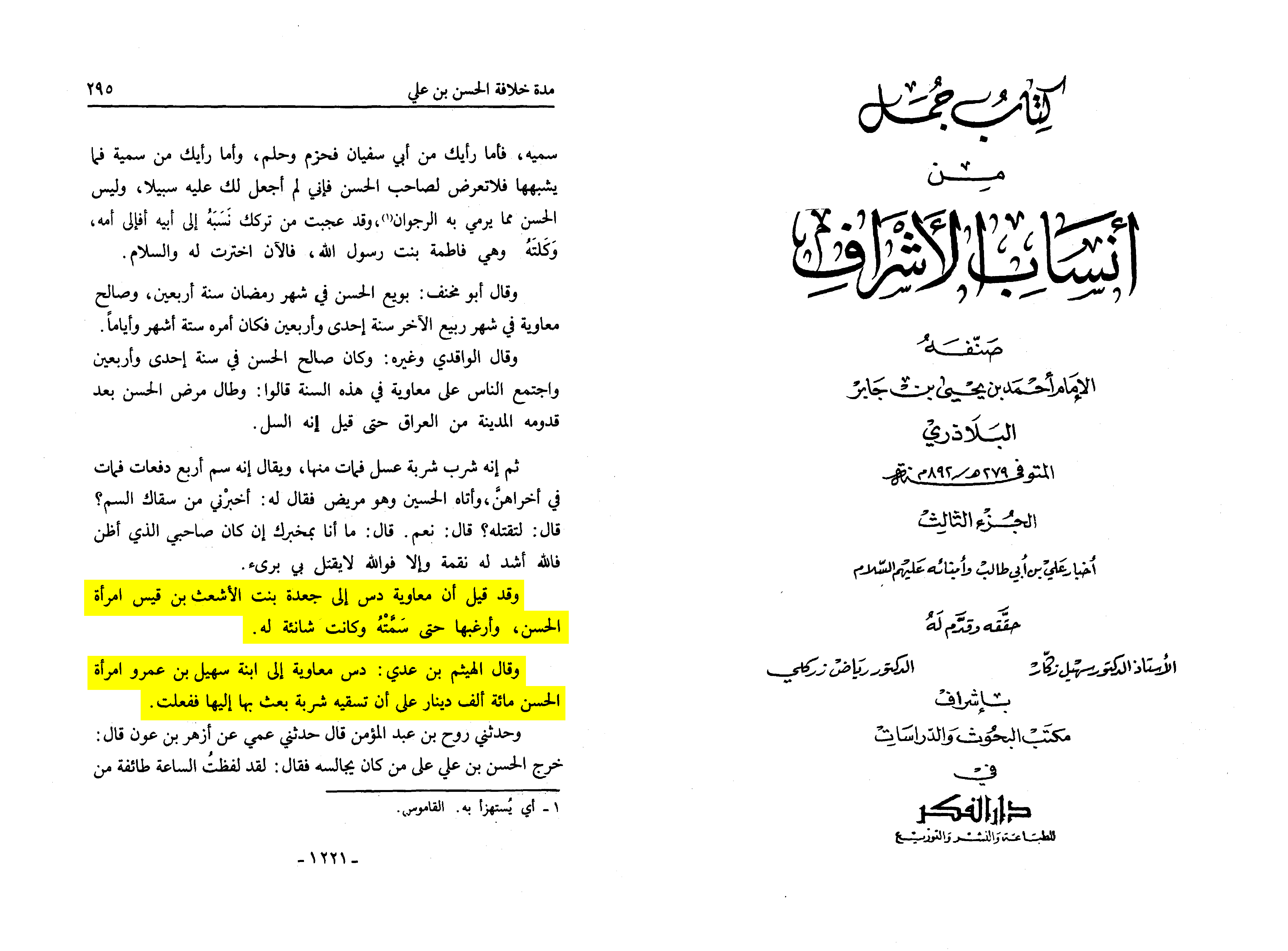
This is another instance of Muʿāwiyah having another person poison Imam al-Ḥasan (AS), and that is another one of his wives.
Muʿāwiyah’s Reaction to al-Ḥasan’s Death
A second piece of evidence demonstrating Muʿāwiyah’s involvement in the death of al-Hasan is his amusing reaction to the news of his death.
Muḥammad b. ʿAbd Allāh al-Ḥaḍramī narrated to us, Muḥammad b. ʿUbādah al-Wāsiṭī narrated to us, Yaʿqūb b. Muḥammad al-Zuhrī narrated to us, ʿAbd al-ʿAzīz b. Muḥammad narrated to us, from ʿAmr b. Maymūn, from his father, who said:
Ibn ʿAbbās, when his eyesight had become blind, used to tell his guide: ‘When you bring me in to Muʿāwiyah b. Abī Sufyān, direct me properly toward his couch, then release my hand so that Muʿāwiyah will not gloat over me.’
So one day he did that. Then Muʿāwiyah told some of his companions: ‘He will surely become grieved.’
So when he sat with him upon his couch, he asked: ‘O Ibn ʿAbbās, may Allah reward you concerning al-Ḥasan b. Ali.’
So Ibn ʿAbbās asked: ‘Has he died?’ Muʿāwiyah answered: ‘Yes.’
Ibn ʿAbbās replied: ‘May the mercy of Allah and His pleasure be upon him, and may He join him with his righteous predecessors! But by Allah, O Muʿāwiyah, he will not fill your grave, nor will he consume your provision, nor will you be made eternal after him! And indeed we were afflicted with a greater loss than him: the Messenger of Allah, peace and blessings be upon him. Yet Allah did not forsake us after him.’”
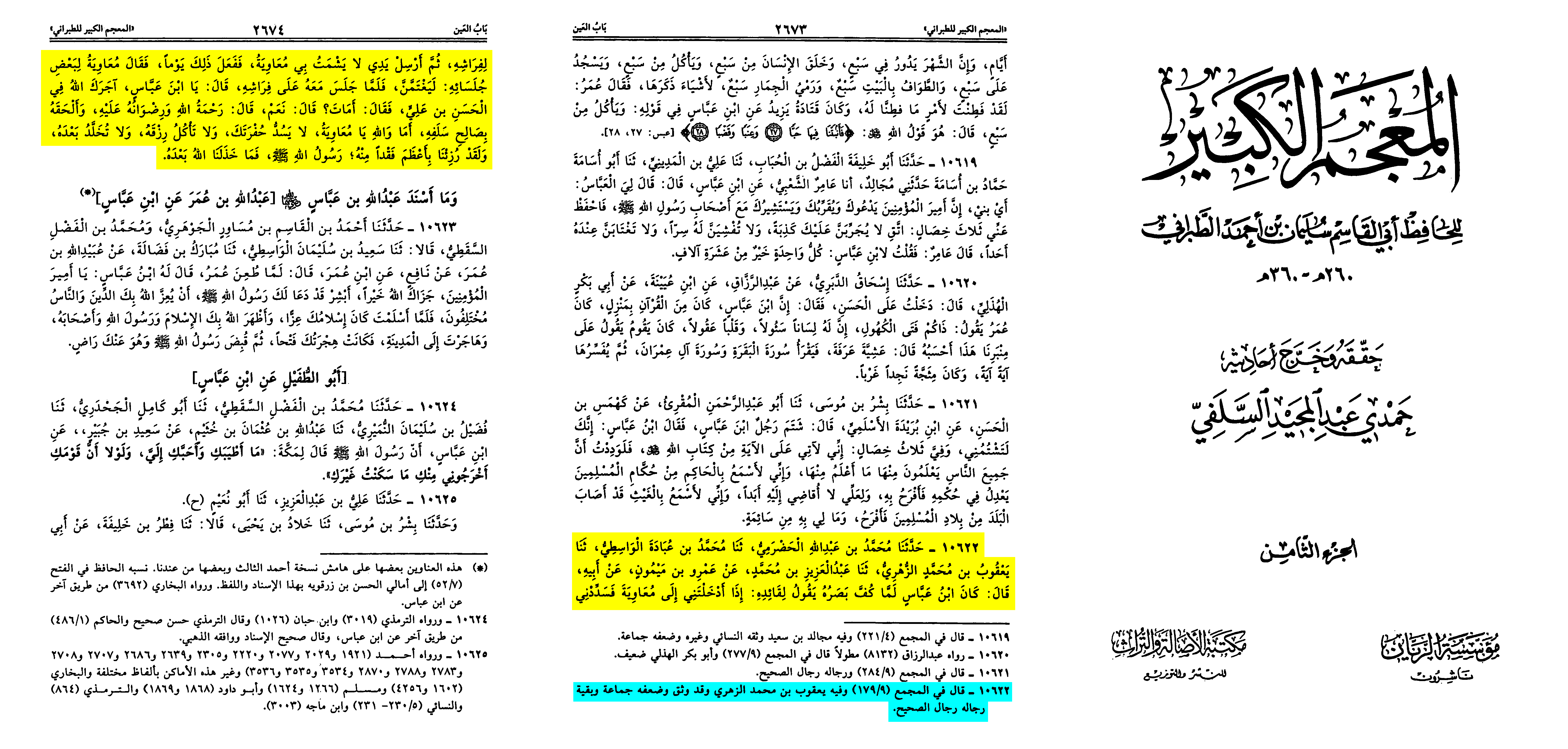
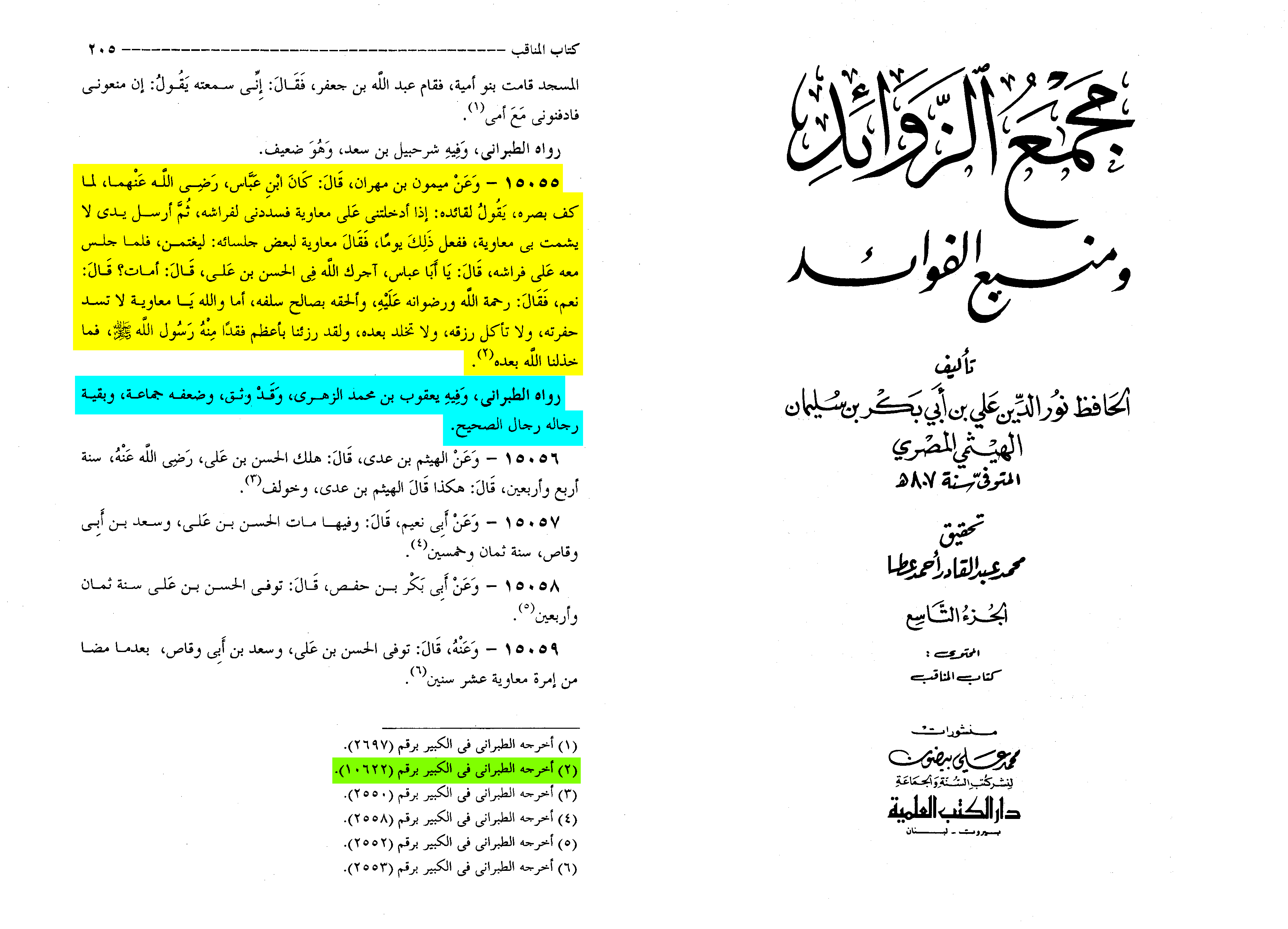
It was graded in Majmaʿ al-Zawāʾid by al-Haythamī Vol 9, pg. 205, Hadith # 15055 where he comments:
It was narrated by al-Ṭabarānī, and it contains Yaʿqūb b. Muḥammad al-Zuhrī. He was considered trustworthy, although a group of scholars weakened him. The remaining narrators are among the narrators of the Ṣaḥīḥ.
Ibn Ḥajar declared Yaʿqūb b. Muḥammad al-Zuhrī to be ṣadūq in Taqrīb al-Tahdhīb, p. 682. In any case, his narration here is from ʿAbd al-ʿAzīz b. Muḥammad, and it is corroborated by al-Wāqidī, as reported in Ṭabaqāt Ibn Saʿd, vol. 6, p. 395.
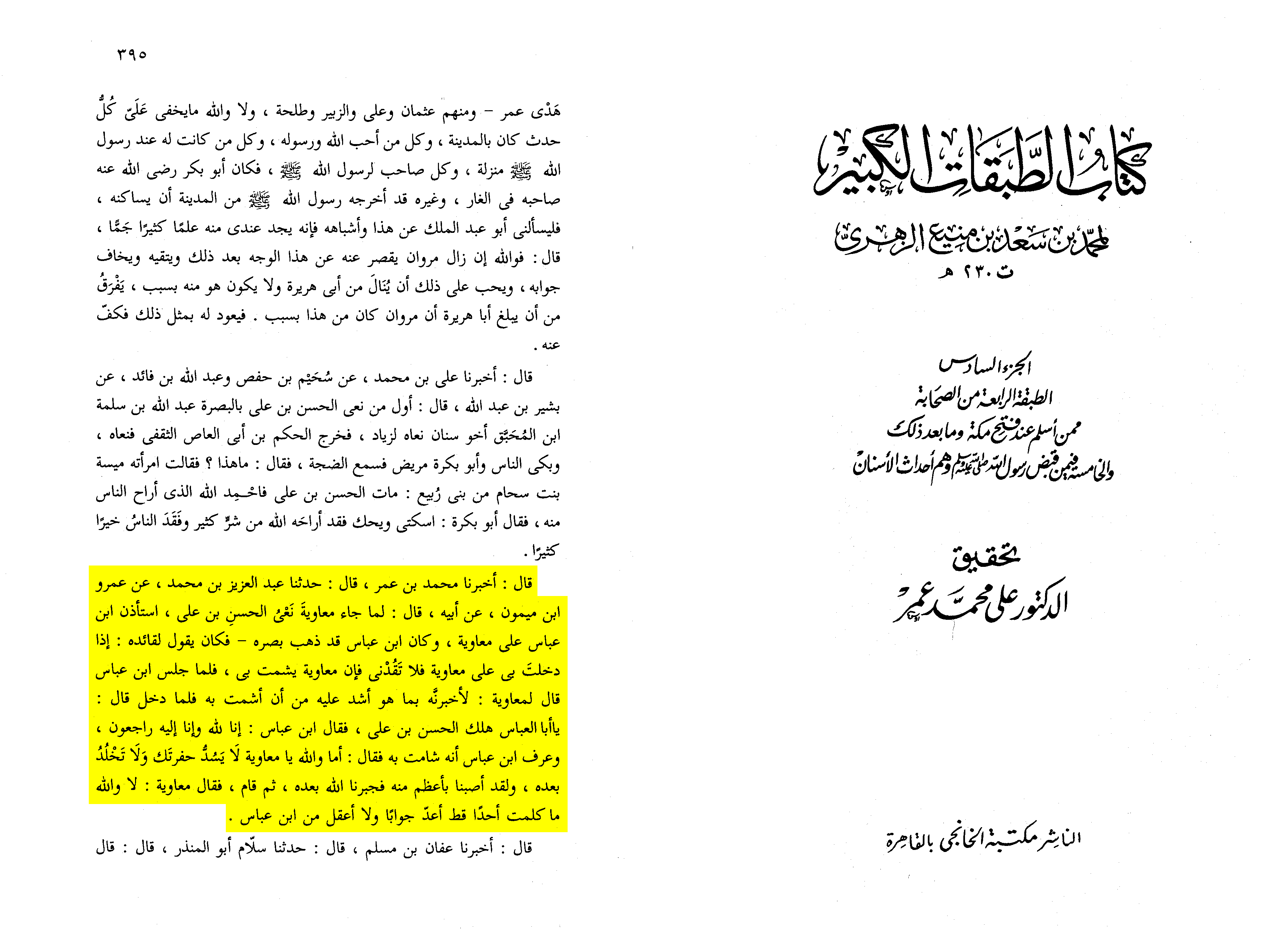
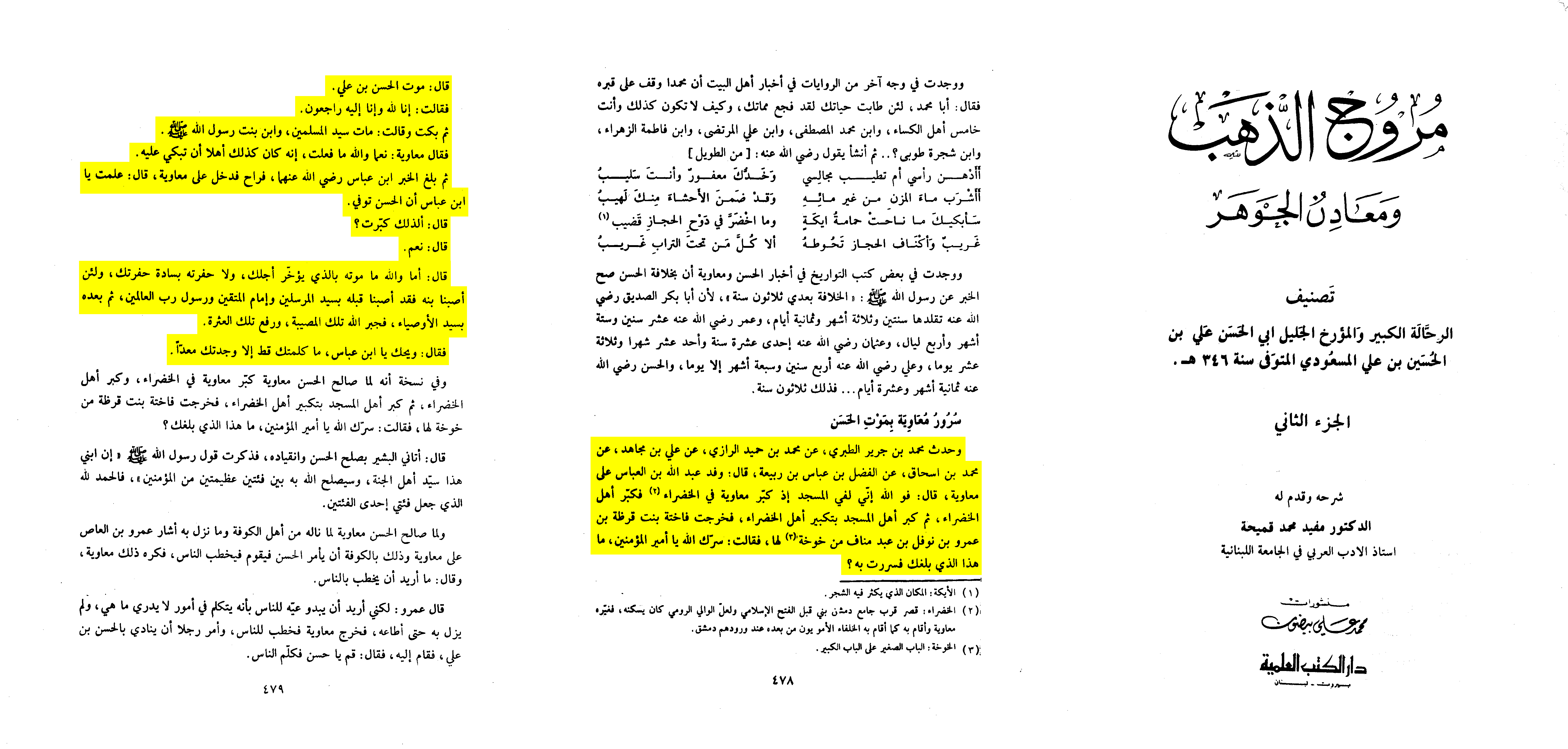
The historians have reported that not only did Muʿāwiyah mock Ibn ʿAbbās over the loss of his Imam, but we went so far as to celebrate the news!
Muḥammad b. Jarīr al-Ṭabarī narrated from Muḥammad b. Ḥumayd al-Rāzī, from ʿAlī b. Mujāhid, from Muḥammad b. Isḥāq, from al-Faḍl b. al-ʿAbbās b. Rabīʿah, who related:
ʿAbd Allāh b. ʿAbbās came in a delegation to Muʿāwiyah b. Abī Sufyān.
Al-Faḍl said: “By Allah, I was in the mosque when Muʿāwiyah proclaimed takbīr in al-Khaḍrāʾ, so the people of al-Khaḍrāʾ proclaimed takbīr, then the people of the mosque proclaimed takbīr following the takbīr of the people of al-Khaḍrāʾ.”
Then Fakhtah bt. Qurzah came out from a small window of hers and asked: “May Allah gladden you, O Commander of the Believers. What is this news that has reached you and made you happy?”
Muʿāwiyah replied: “The death of al-Ḥasan b. ʿAlī.”
Fakhtah responded: “Indeed we belong to Allah and to Him we return.”
Then Fakhtah wept and lamented: “The master of the Muslims has died, and the son of the daughter of the Messenger of Allah (ﷺ).”
Muʿāwiyah answered: “Yes, by Allah, what you have done is good. He indeed was worthy that one should weep over him.”
Then the news reached Ibn ʿAbbās (RA), so Ibn ʿAbbās departed and entered upon Muʿāwiyah.
Muʿāwiyah informed him: “Do you know, O Ibn ʿAbbās, that al-Ḥasan has died?”
Ibn ʿAbbās asked: “Was it for that that you proclaimed takbīr?”
Muʿāwiyah replied: “Yes.”
Ibn ʿAbbās declared: “But by Allah, his death is not that which will delay your appointed time, nor will his grave fill your grave. And if we have been afflicted by his loss, then before him we were afflicted by the master of the messengers, the leader of the God-fearing, and the Messenger of the Lord of the worlds; then after him by the master of the executors. So Allah repaired that calamity and lifted that stumbling.”
Then Muʿāwiyah remarked: “Woe to you, O Ibn ʿAbbās. I have never spoken to you except that I found you fully prepared.”
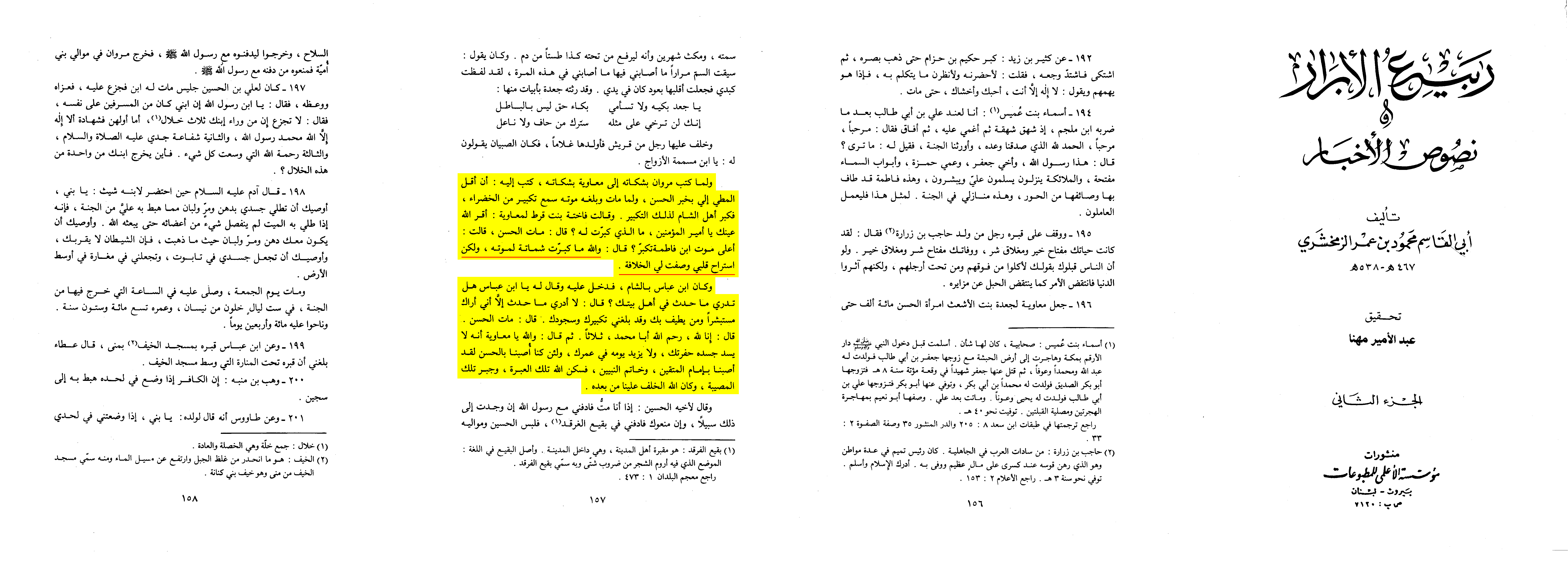
A similar report was transmitted in Rabīʿ al-Abrār by al-Zamakhsharī Vol 2, pg. 157:
When Marwan b. al-Hakam wrote to Muʿāwiyah b. Abī Sufyān with his complaint, Muʿāwiyah wrote back to him: “Send the mounts swiftly to me with news of al-Ḥasan b. ‘Ali.”
And when al-Ḥasan died and news of his death reached Muʿāwiyah, takbir was heard from al-Khadra’, so the people of the Levant proclaimed takbir because of that takbir.
And Fakhtah bt. Qurt asked Muʿāwiyah: “May Allah gladden your eye, O Commander of the Believers, for what did you proclaim takbir?”
Muʿāwiyah replied: “Al-Ḥasan has died.”
Fakhtah responded: “Do you proclaim takbir over the death of the son of Fatima bt. Muhammad?”
Muʿāwiyah answered: ‘By Allah, I did not proclaim takbir out of rejoicing at his death, but rather my heart has found rest and the caliphate has become easy for me.”
And Ibn ‘Abbas was in the Levant, so Ibn ‘Abbas entered upon Muʿāwiyah, and Muʿāwiyah asked him: ‘O Ibn ‘Abbas, do you know what has happened among your household?’
Ibn ‘Abbas replied: ‘I do not know what has happened except that I see you cheerful and those surrounding you, and news has reached me of your takbir and your prostration.’
Muʿāwiyah informed him: “Al-Ḥasan has died.”
Ibn ‘Abbas responded: “Indeed we belong to Allah. May Allah have mercy upon Abu Muhammad,” three times.
Then Ibn Abbas declared: “By Allah, O Muʿāwiyah, his body will not fill your grave, nor will his day add to your lifespan. And if we have been afflicted by al-Ḥasan, then indeed we were afflicted before by the leader of the God-fearing and the seal of the prophets. So Allah calmed that grief, repaired that calamity, and Allah was our successor after him.”
Further reports can be located in Akhbār al-Ṭiwāl, pg. 328 by al-Dīnawarī and ʿIqd al-Farīd by Ibn ʿAbd Rabbih, Vol. 5, pg. 110.
Muʿāwiyah mocks al-Ḥasan’s death in the presence of al-Miqdam b. Ma’dikarib
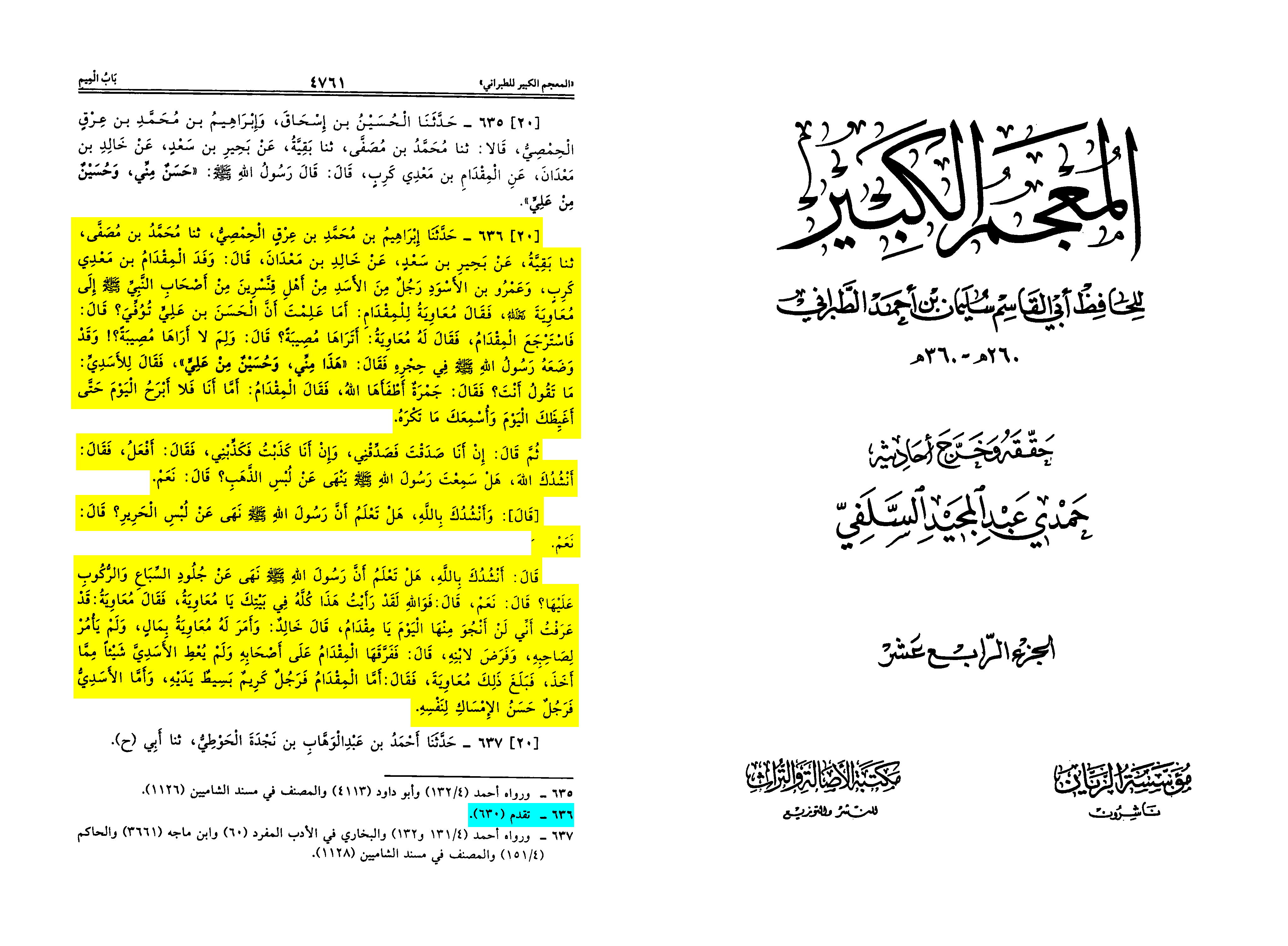
We read in Sunan Abu Dawud Hadith # 4119 as well as al-Mu’jam al-Kabir Vol. 14, pg. 4761, Hadith # 636 and Musnad Ahmad b. Hanbal Vol. 13, pg. 295 Hadith # 17123:
Narrated Al-Miqdam ibn Ma’dikarib: “Khalid said: Al-Miqdam ibn Ma’dikarib and a man of Banu Asad from the people of Qinnasrin went to Muʿāwiyah ibn Abī Sufyān.
Muʿāwiyah said to al-Miqdam: Do you know that al-Ḥasan ibn Ali has died? Al-Miqdam recited the Qur’anic verse “We belong to Allah and to Him we shall return.”
A man asked him: Do you think it a calamity? He replied: Why should I not consider it a calamity when it is a fact that the Apostle of Allah (pbuh) used to take him on his lap, saying: This belongs to me and Ḥusayn belongs to Ali?
The man of Banu Asad said: (He was) a live coal which Allah has extinguished. Al-Miqdam said: Today I shall continue to make you angry and make you hear what you dislike. He then said: Muʿāwiyah, if I speak the truth, declare me true, and if I tell a lie, declare me false.
He said: Do so. He said: I adjure you by Allah, did you hear the Apostle of Allah (pbuh) forbidding us to wear gold?
He replied: Yes. He said: I adjure you by Allah, do you know that the Apostle of Allah (pbuh) prohibited the wearing of silk?
He replied: Yes. He said: I adjure you by Allah, did you know that the Apostle of Allah (peace be upon him) prohibited the wearing of the skins of beasts of prey and riding on them?
He said: Yes. He said: I swear by Allah, I saw all this in your house, O Muʿāwiyah.
Muʿāwiyah said: I know that I cannot be saved from you, O Miqdam.
Khalid said: Muʿāwiyah then ordered to give him what he did not order to give to his two companions, and gave a stipend of two hundred (dirhams) to his son. Al-Miqdam then divided it among his companions, and the man of Banu Asad did not give anything to anyone from the property he received. When Muʿāwiyah was informed about it, he said: Al-Miqdam is a generous man; he has an open hand (for generosity). The man of Banu Asad withholds his things in a good manner”.
Allama Abi al-Tayyib Abadi in his famed commentary of Sunan Abu Dawud, writes that this “man” in this tradition is in fact Mu’awiyah in ‘Awn al-Ma’bud Sharh Sunan Abu Dawud, Vol 11, pg. 127 - 129:
“So so-and-so said to him — and in some copies ‘a man’ occurs in place of ‘so-and-so.’ What is meant by ‘so-and-so’ is Muʿāwiyah b. Abī Sufyān, may Allah Most High be pleased with him. The author did not state his name explicitly, and this is his habit in such matters.
And Musnad Ahmad has narrated through the route of Haywah b. Shurayh: Baqiyyah narrated to us, Buhayr b. Sa‘d narrated to us, from Khalid b. Ma‘dan, who said: al-Miqdam b. Ma‘di Karib came in a delegation, and in it he said to him: ‘Do you consider it a calamity?’ — the hadith.
‘Do you count it’ — and in some copies: ‘Do you see it’ — meaning: Do you count, O Miqdam, the event of the death of al-Ḥasan b. Ali, may Allah be pleased with him, as a calamity?
And the amazement, all amazement, is from Muʿāwiyah, for he did not know the worth of the People of the House until he said what he said. For indeed the death of al-Ḥasan b. ‘Ali, may Allah be pleased with him, is among the greatest calamities.
And may Allah reward al-Miqdam and be pleased with him, for he did not remain silent from speaking the truth until he made it manifest. And such is the state of the complete, sincere believer.”
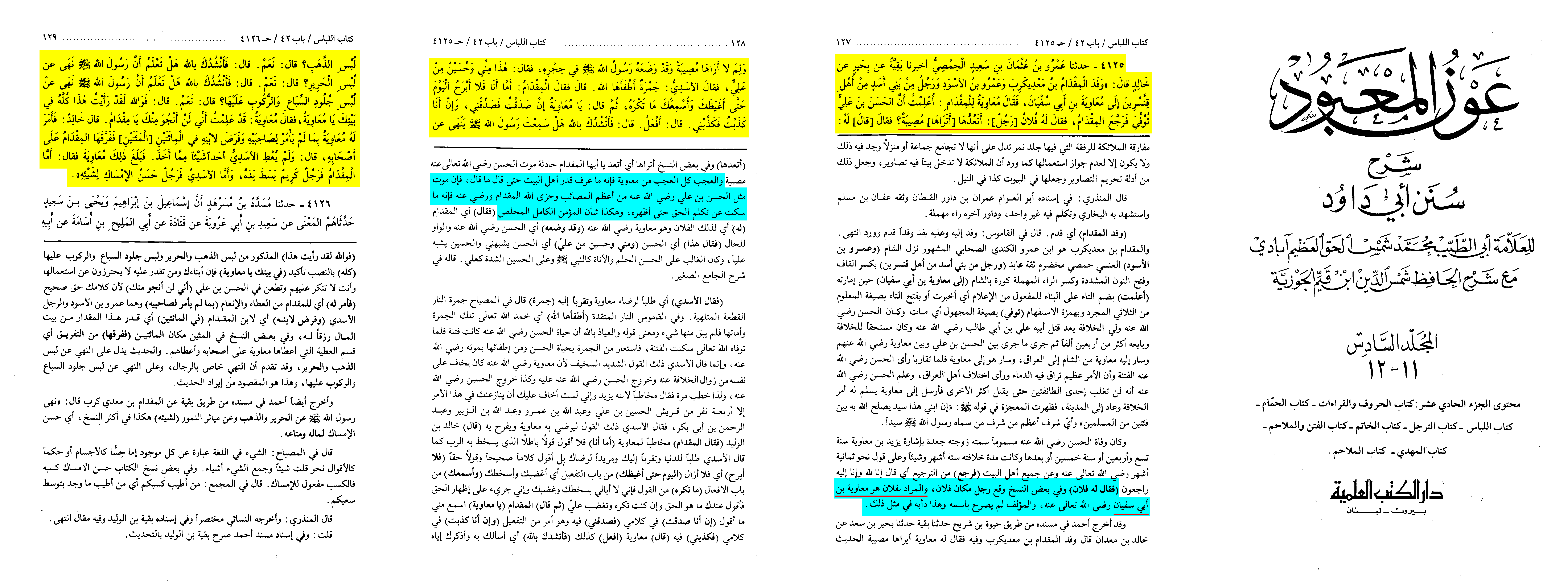
Thus we see that Muʿāwiyah made light of the death of al-Ḥasan (AS), mocking a companion of the Prophet (SAW) for expressing sorrow at the Imam’s death, forcing this companion to silence him by exposing his blatant fisq (corruption).
Conclusion
As we have quoted from Sunan Abi Dawud, the Prophet (SAW) said regarding Imam Ḥasan (AS) that al-Ḥasan is from him, so we would ask our opponents who love the son of Hind how they can take this man as an Imam and an exemplar? We have shown how the books of history and hadith all point to Muʿāwiyah as the main culprit behind Imam Ḥasan’s martyrdom. If murdering the grandson of the Prophet (SAW) is not enough to convince our opponents of the disbelief of this tyrant, then we sincerely ask Allah to raise them alongside Muʿāwiyah.


Comments