A Third of Islam: The Mursal Report of Zayn al-Abidin (a)

Credits to Ammar Muslim al-Dodomi from ShiiticStudies.com
Out of the many thousands of Prophetic ḥadīths that are known to have circulated in early Islam, there were 3 or 4 critical ḥadīths that were said to capture the essence of what Islam is all about. One of these critical ḥadīths is narrated by ʿAlī b. al-Ḥusayn Zayn al-ʿĀbidīn directly from the Prophet (i.e. without naming his intermediary).
Mālik (d. 179) narrates in his Muwaṭṭaʾ from Ibn Shihāb (i.e. al-Zuhrī) from ʿAlī b. al-Ḥusayn b. ʿAlī b. Abī Ṭālib that the Messenger of Allah said in Muwatta Malik Hadith # 1638:
“From the perfection of a person’s Islam is his abandonment of that which does not concern him”
The significance of this ḥadīth can be gleaned by Mālik’s comment regarding it as reported by al-Rāmahurmuzī (d. 360) in al-Muḥaddith al-Fāṣil, pg. 191 - 192, Report # 92:
“It is incumbent upon the seeker of knowledge to begin with (memorizing) this statement from (among) the chained (reports)”

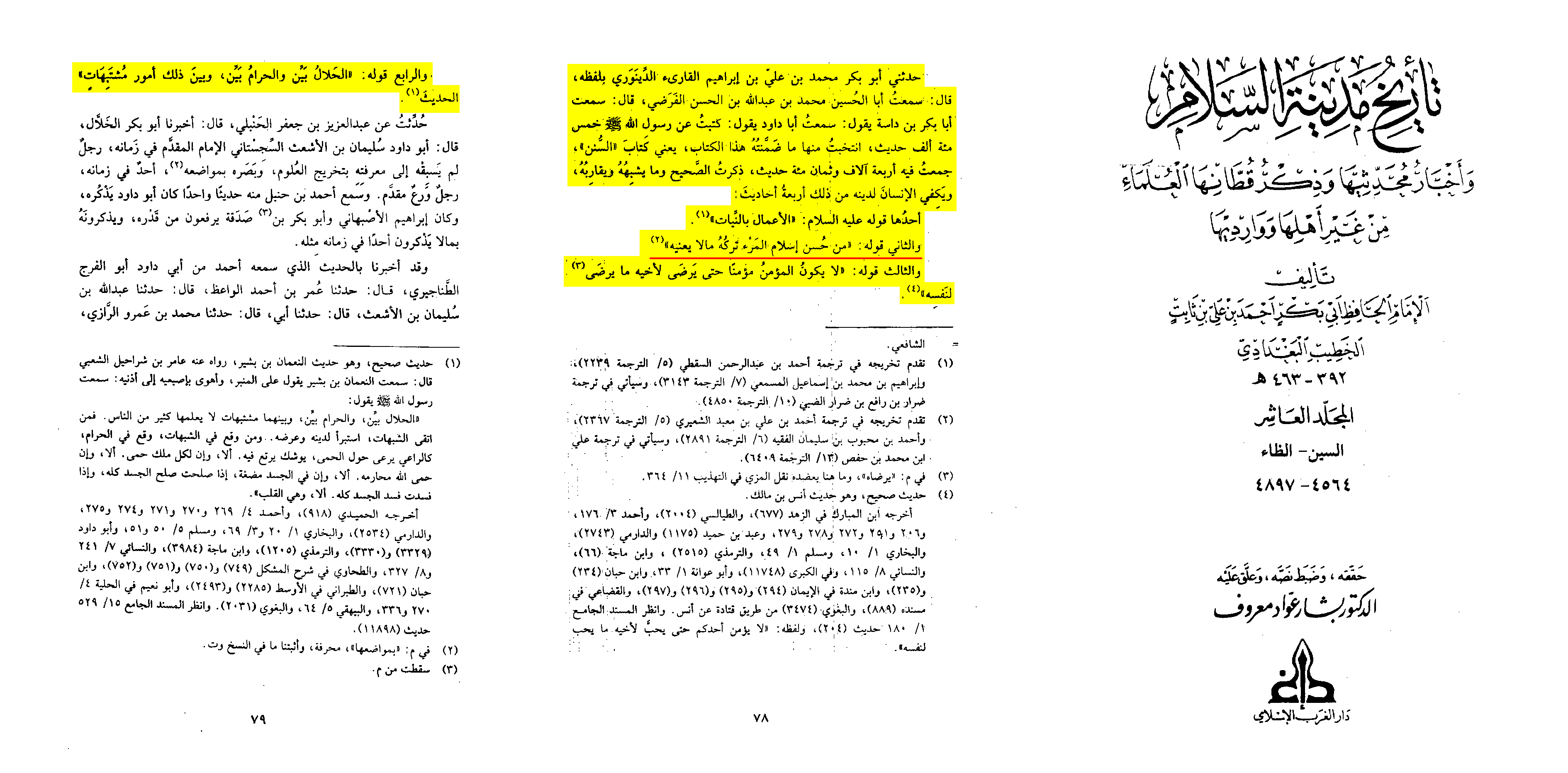
The celebrated ḥadīth scholar, Abū Dāwūd al-Sijistānī (d. 275), is quoted as saying in Tarikh Baghdad, Vol 10, pg 78:
“I wrote down 500,000 ḥadīths on the authority of the Messenger of Allah, from which I selected what is found in this book, meaning Kitāb al-Sunan, in which I have gathered 4800 ḥadīth. I (only) included the ṣaḥīḥ or that which is similar and close to it.
(Yet) 4 ḥadīths out of these are sufficient for a person’s religion:
‘Actions are governed by intentions’
‘From the perfection of a person’s Islam is his abandonment of that which does not concern him’
‘A believer is not a (true) believer until he loves for his brother what he loves for himself’
‘The ḥalāl is evident, the ḥarām is evident, but between the two are doubtful matters which many people do not possess knowledge about, so the one who is wary of (engaging in) doubtful matters then he has acted with precaution in his religion ...’”.
Qāḍi ʿIyāḍ (d. 544) recorded in Ikmāl al-Muʿallim bi-Fawāʾid Muslim Vol 5, pg. 284 that the Andalusian scholar, Ṭāriq b. Mufawwiz (d. 484), composed a couplet for the 4 ḥadīths:
The essence of the religion according to us is a set of words
Numbering four from the speech of the best of creation
Be wary of doubtful matters and renounce;
Abandon that which does not concern you and act with intention
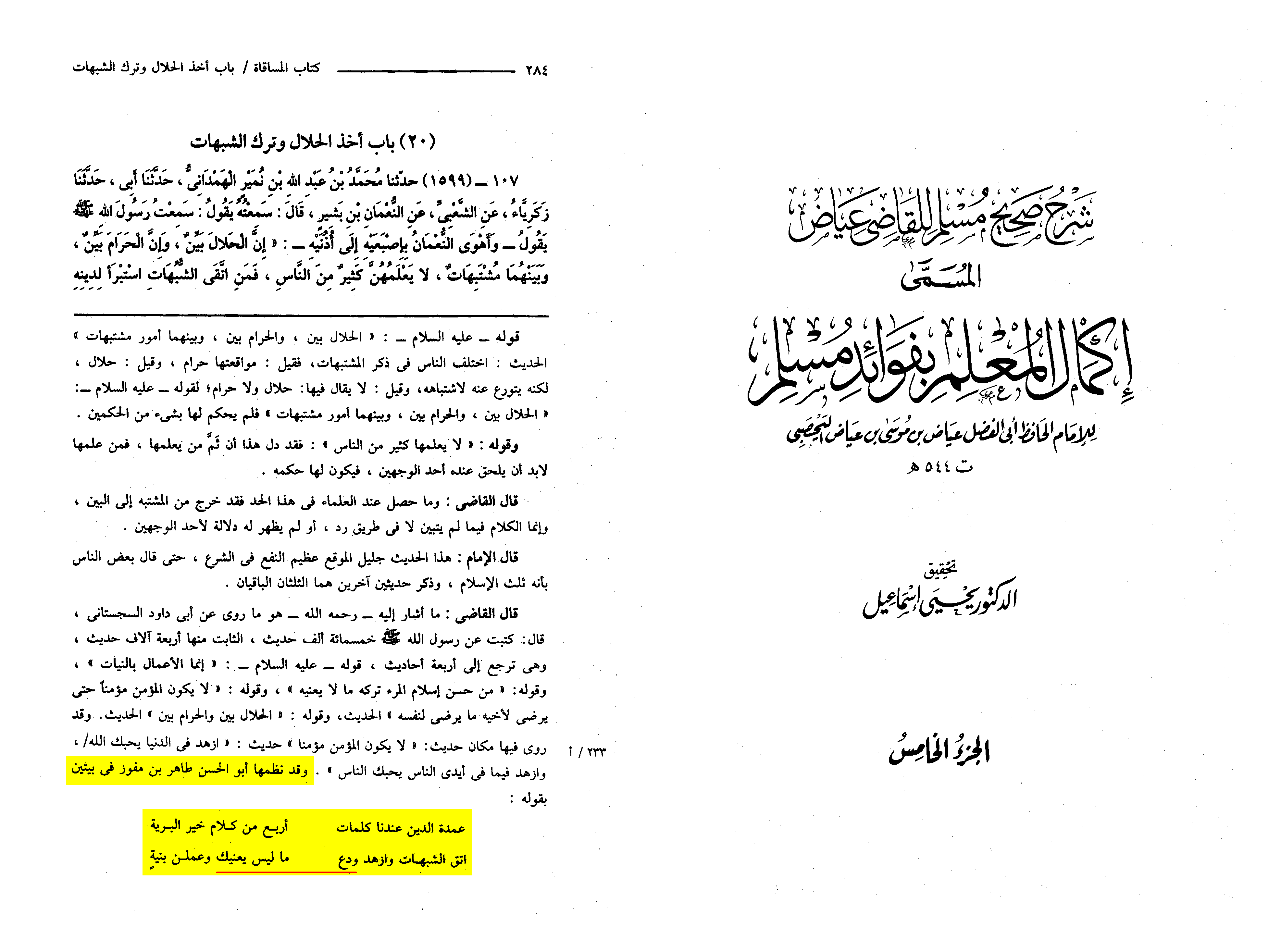
Note that he has replaced the ḥadīth “A believer is not a true believer until …” with the ḥadīth “Renounce the world you will be loved by Allah …”
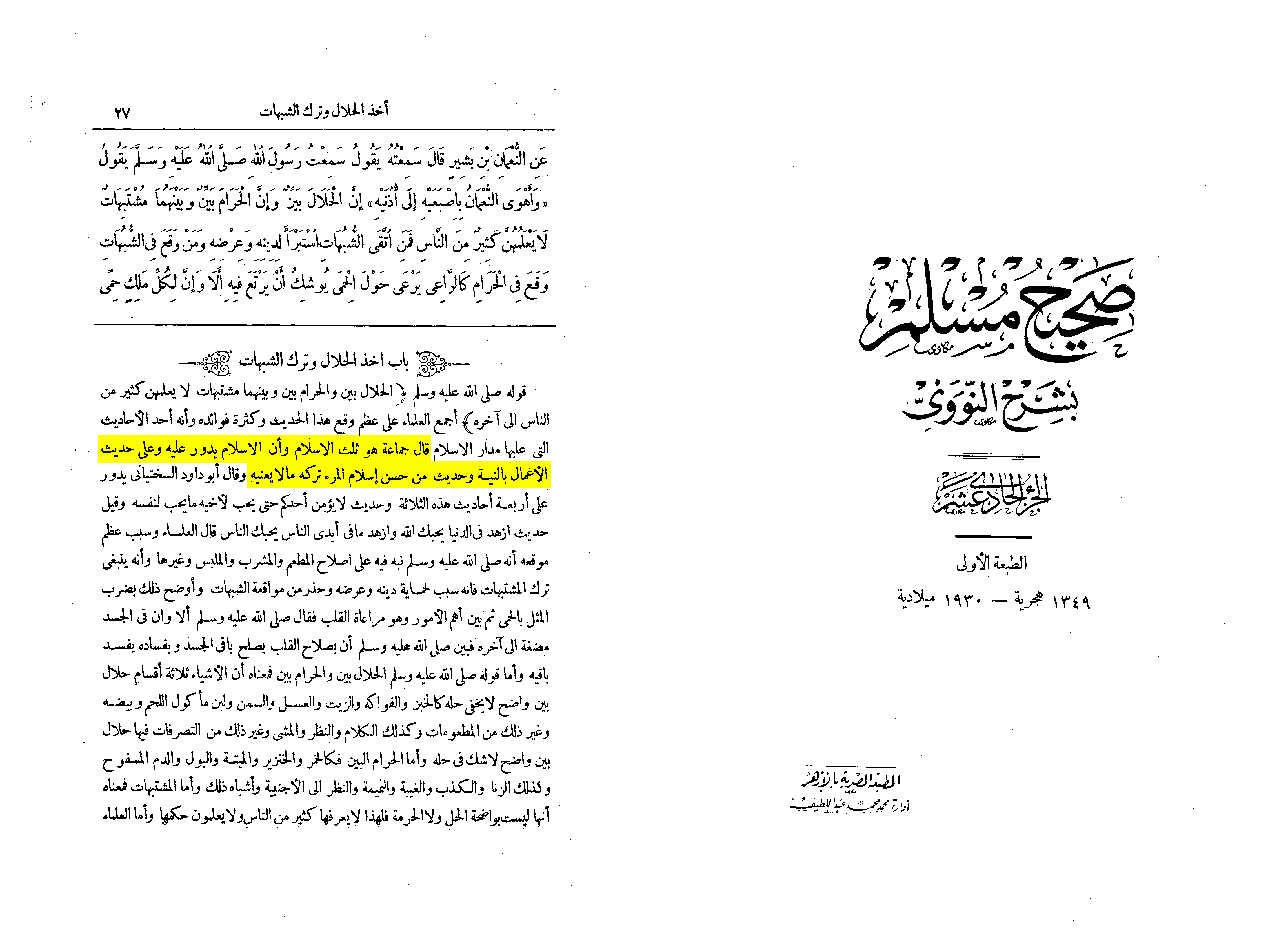
Al-Nawawī (d. 676) informs us in his famous Sharh Sahih Muslim Vol 11 pg. 27 that a large group of scholars consider Islam to “revolve around” 3 ḥadīths:
“The ḥalāl is evident, the ḥarām is evident, but between the two are doubtful matters …”
“Actions are governed by intentions”
and “From the perfection of a person’s Islam is his abandonment of that which does not concern him”.
Despite this, both Bukhārī (d. 256) and Muslim (d. 261) left this ḥadīth out from their respective Ṣaḥīḥ collections because of the supposed ‘disconnection’ between ʿAlī b. al-Ḥusayn and the Prophet.
Tirmidhī (d. 279), the only author out of the six canonical authors to include it with this chain, feels compelled to comment in Jāmiʿ al-Tirmidhī , n. 2318:
وَهَكَذَا رَوَى غَيْرُ وَاحِدٍ مِنْ أَصْحَابِ الزُّهْرِيِّ عَنِ الزُّهْرِيِّ عَنْ عَلِيِّ بْنِ حُسَيْنٍ عَنِ النَّبِيِّ صلى الله عليه وسلم نَحْوَ حَدِيثِ مَالِكٍ مُرْسَلاً وَهَذَا عِنْدَنَا أَصَحُّ مِنْ حَدِيثِ أَبِي سَلَمَةَ عَنْ أَبِي هُرَيْرَةَ. وَعَلِيُّ بْنُ حُسَيْنٍ لَمْ يُدْرِكْ عَلِيَّ بْنَ أَبِي طَالِبٍ
“This is how multiple students of al-Zuhrī narrated it from al-Zuhrī from ʿAlī b. al-Ḥusayn from the Prophet, akin to the report of Mālik, in a disconnected fashion. This (disconnected version) is more accurate than the (connected) ḥadīth of Abū Salama from Abū Hurayra. ʿAlī b. al-Ḥusayn did not meet ʿAlī b. Abī Ṭālib”.
But is this sufficient reason to discard this ḥadīth and others like it? For ʿAlī b. al-Ḥusayn may not have named his source but we are dealing with someone who has access to a golden family chain.
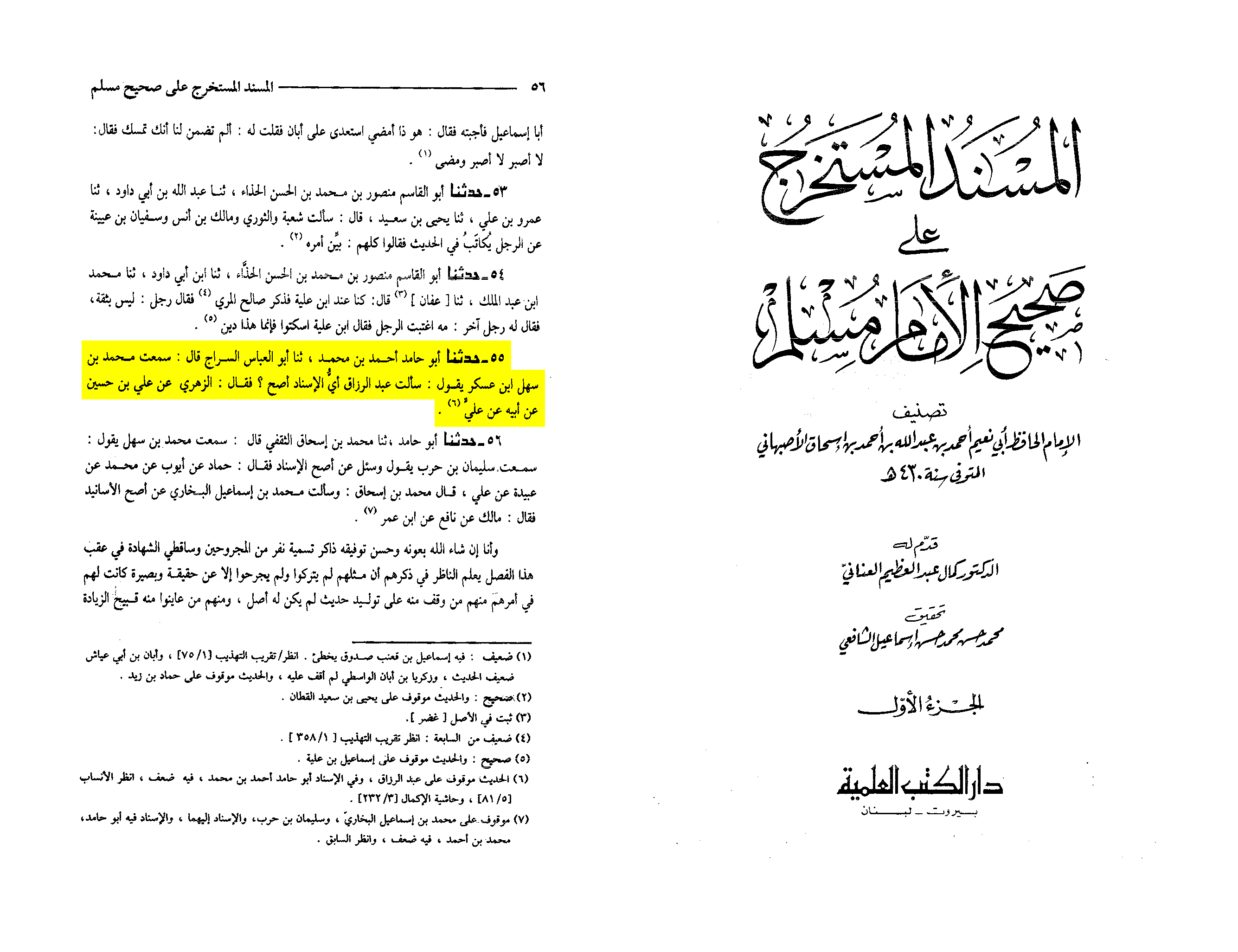
Thus, according to Abū Nuʿaym al-Iṣfahāni (d. 430), who recorded in al-Musnad al-Mustakhraj ʿala Ṣaḥīḥ al-Imām Muslim Vol 1, pg. 56, Report # 55 that when the ḥadīth scholar ʿAbd al-Razzāq al-Ṣanʿānī (d. 211) was asked which chain was the most authentic? He responded:
“Al-Zuhrī from ʿAlī b. al-Ḥusayn from his father from ʿAlī”.
Similarly, al-Ḥākim al-Naysābūrī (d. 405) reported in his Maʿrifat ʿUlūm al-Ḥadīth, pg. 227, Report # 93 that Ibn Abī Shayba (d. 235) is known to have said the following:
“The most authentic of all chains is al-Zuhrī from ʿAlī b. al-Ḥusayn from his father from ʿAlī”
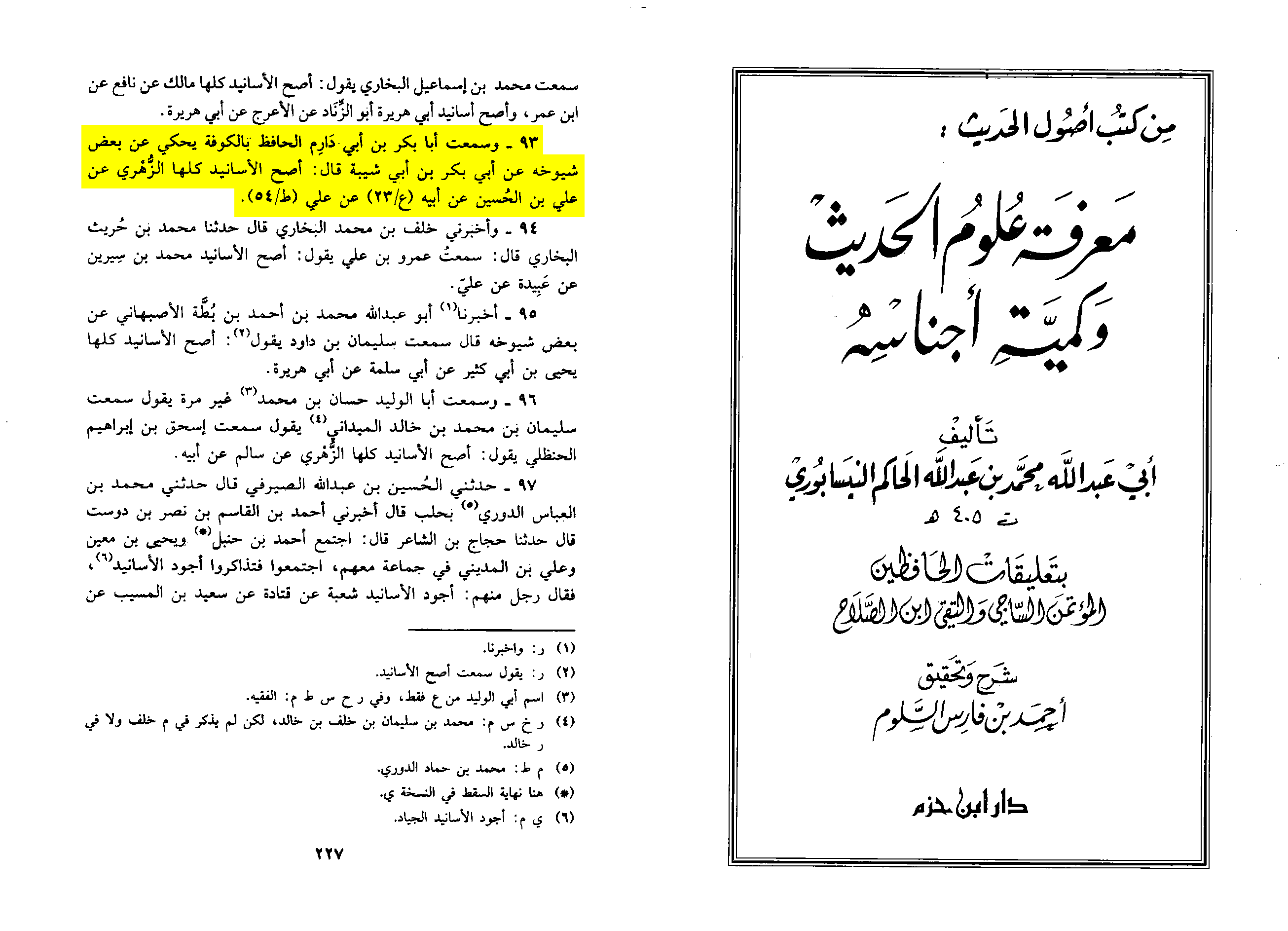
Moreover, ʿAlī b. al-Ḥusayn not giving his source here is consistent with the observed and well-documented practise of the Husaynid Imams not always giving their full chain when quoting reports (which should not be taken to mean that the report is disconnected).
Consider how this same ḥadīth is transmitted in al-Ḥusayn b. Saʿīd al-Ahwāzī’s very early Imami work, the Kitab al-Zuhd, pg. 45, Hadith # 19 of where Jaʿfar attributes it to his father al-Bāqir (and does not feel the need to raise it all the way back to the Prophet).
Note: The narrator al-Qāsim b. Sulaymān is unknown, and we don’t have sufficient variants of this report in the Imami corpus to compare the wording, it is likely that the original had al-Bāqir say: “The Prophet said: …”
As for the fiqh of the ḥadīth then I say: If someone were to apply this ḥadīth in their life then the countless hours spent scrolling and absorbing vacuous ‘information’ about other people’s lives which are of no concern to one’s ultimate fate would be saved. This is not to mention avoiding the rampant sin of back-biting, suspicion, spying, false accusation etc.


Comments