Fadak Series III: Abu Bakr's Fabricated Hadith

Updated: Jun 13
When Fatima (AS) is wanted her inheritance, Abu Bakr claimed that the Prophet (SAW) said that Prophets do not leave behind inheritance, and after he claimed this Fatima was angered and persisted in her anger until her death, to the point that she wanted to be buried at night so Abu Bakr won’t pray over her.
This was recorded in Sahih al-Bukhari 4240, 4241:
Narrated `Aisha:
So Abu Bakr refused to give anything of that to Fatima. So she became angry with Abu Bakr and kept away from him, and did not talk to him till she died. She remained alive for six months after the death of the Prophet. When she died, her husband `Ali, buried her at night without informing Abu Bakr and he said the funeral prayer by himself.
In this article we shall prove that Abu Bakr fabricated these words upon the Prophet (SAW) and that he said no such thing.
A convenient “truth”: Only Abu Bakr and Aisha knew
If we were to believe this hadith, then we would have to believe that the Prophet (SAW) told Abu Bakr, who would not inherit from him about inheritance, but failed to tell those who would actually inherit from him!
In fact, Fakhr al-Din al-Razi recognized this absurdity and failed to refute it, and claimed Fatima (AS) accepted his report, something clearly untrue. We read in his Tafsir al-Kabir Vol. 5, pg. 171, regarding Sura al-Nisaa Ayah 11:
The ones who actually needed to know this ruling were only Fatimah, Ali b. Abi Talib, and al-Abbas b. Abd al-Muttalib, and these were among the greatest ascetics, scholars, and people of religion. As for Abu Bakr, he had absolutely no need to know this matter, because it never would have crossed his mind that he would inherit from the Messenger (SAW). So how could it be appropriate for the Messenger (SAW) to convey this ruling to someone who had no need for it, while not conveying it to those who had the greatest need to know it?’
The response is:
Fatima (AS) was satisfied with the statement of Abu Bakr after this debate, and consensus was established upon the correctness of Abu Bakr’s position. Thus this objection falls away. And Allah knows best.
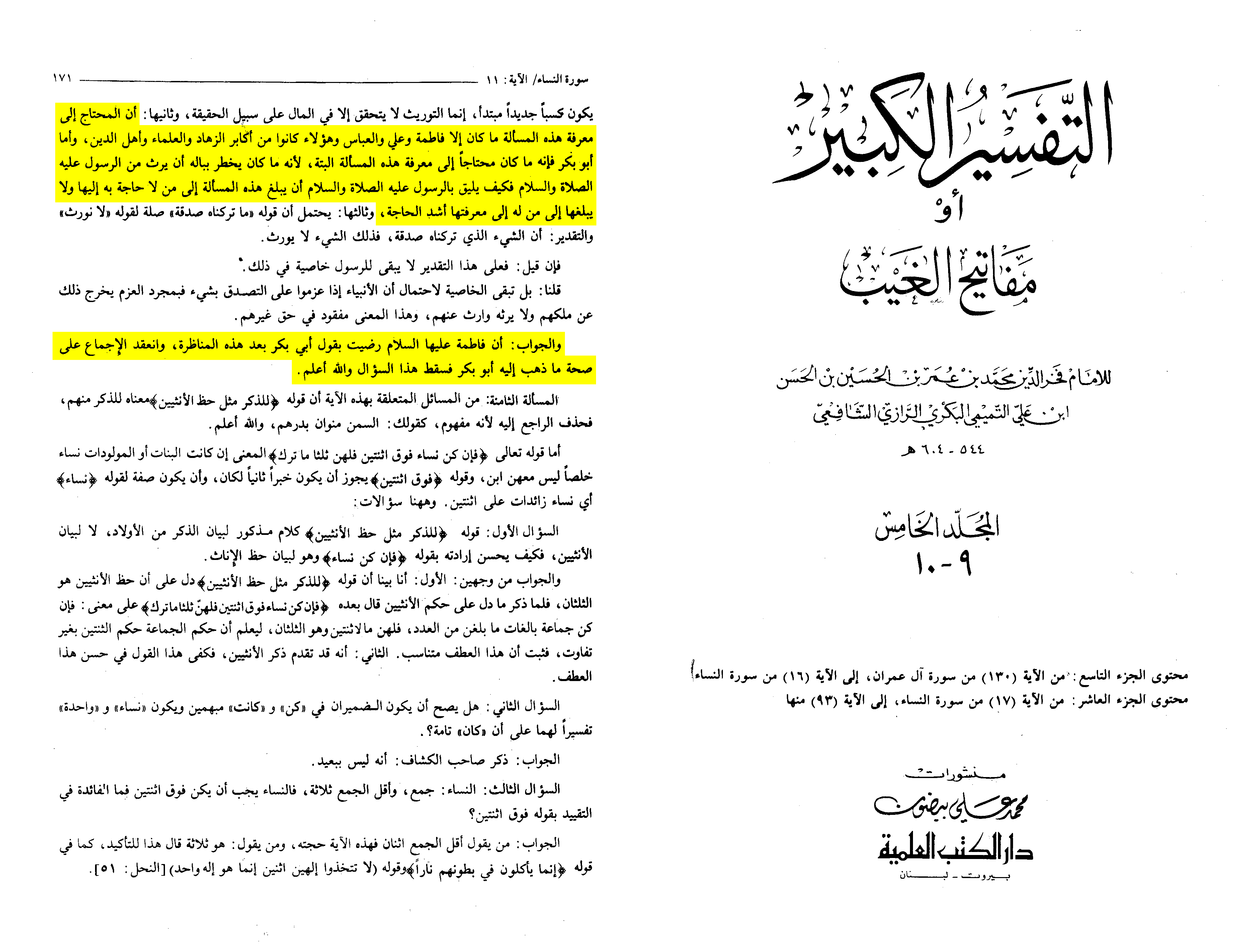
Al-Fakhr al-Razi presents two questions that have been used to counter the Sunni argument and does not even answer the questions! Even if we accept that Fatima al-Zahra (AS) was satisfied with Abu Bakr’s statement, that does not answer why the Messenger of Allah (SAW) told Abu Bakr this ruling and not his own daughter Fatima (AS) who this matter actually concerns. Instead he gives an answer that contradicts the Hadith of Bukhari that states she shunned Abu Bakr and died angry with him.
In fact, even the wives of Allah’s Messenger (SAW) did not know of the Hadith following his passing! There is, of course, only one exception and it is conveniently none other than Abu Bakr’s own daughter, ‘Aisha. Sahih al-Bukhari 6730 reads:
Aisha said, "When Allah's Messenger (ﷺ) died, his wives intended to send `Uthman to Abu Bakr asking him for their share of the inheritance." Then `Aisha said to them, "Didn't Allah's Messenger (ﷺ) say, 'Our (Apostles') property is not to be inherited, and whatever we leave is to be spent in charity?'"
Is it not shockingly convenient and suspicious that the Prophet’s own daughter and eight of his widows are ignorant of this Prophetic ruling but not ‘Aisha and her father Abu Bakr?
Thus we see that according to ‘Aisha’s own words, only Abu Bakr knew of this hadith, meaning that she got it from her father and not the Prophet (SAW).
We therefore have Fatima (AS), Imam ‘Ali (AS), al-Abbas, and the wives all not knowing that the Messenger of Allah (SAW) had said according to Abu Bakr. The issue is made worse by the fact that Abu Bakr claims it becomes sadaqah, which the Ahl al-Bayt (AS) cannot take!
Now, to make the issue worse, our opponent’s claim that the Prophet (SAW) only leaves behind knowledge and no material possessions. This, of course, means that Fatima (AS) did not even inherit this critical and beneficial knowledge, his own family!
The fact that they can’t take sadaqah is in Sahih Muslim 1069a:
Narrated Waki from Shu'ba from Muhammad ibn Ziyad from Abi Huraira and also Abdul Rahman from Shu'ba from Muhammad ibn Ziyad who said: I heard Abi Huraira saying: "The Prophet (saw) saw Al-Hassan ibn Ali (as) taking a date from the dates dedicated to charity and put it in his mouth. The Prophet (saw) said: "Throw it, throw it, verily charity is not Halal for us."
So if Abu Bakr is truthful, the Prophet (SAW) fails to tell his family that there’s no inheritance which actually becomes sadaqah, which is haram for them. A ridiculous view.
And all of this, despite Abu Bakr not being the wasi, (executor of the Prophet’s (SAW) will) even according to our opponents.
Did ‘Aisha also hear this hadith from the Prophet?
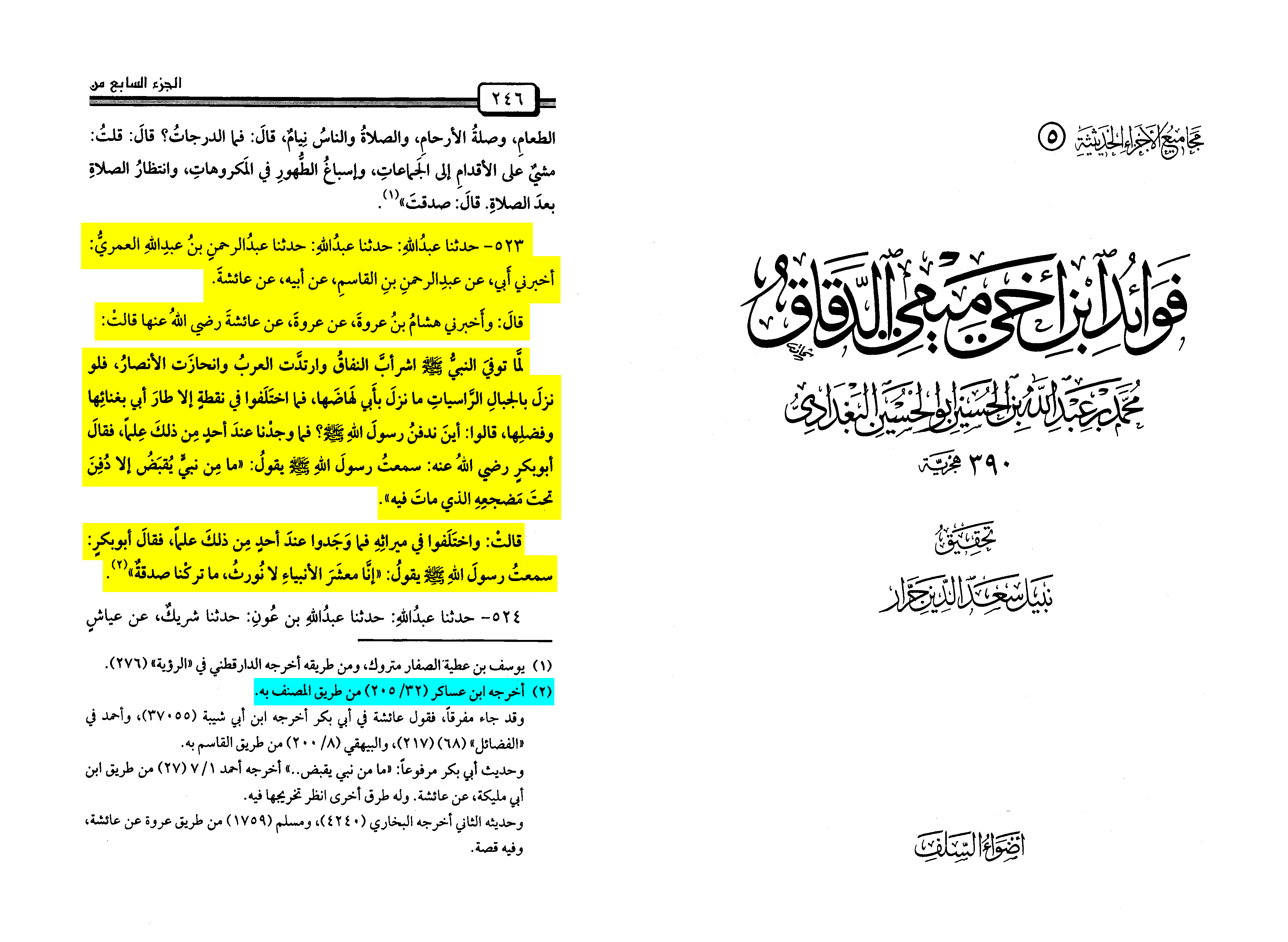
Should our opponents wish to argue that both ‘Aisha and Abu Bakr heard this hadith from the Prophet (SAW), we respond to them by pointing out that ‘Aisha herself stated that only Abu Bakr knew of this supposed Hadith. We read in Fawa’id Ibn Akhi Ma‘i al-Daqqaq, pg. 246, Hadith # 523.
‘Abd Allah narrated to us: ‘Abd Allah narrated to us: Abd al-Rahman b. ‘Abd Allah al-’Umari narrated to me from his father, from Abd al-Rahman b. al-Qasim, from his father, from ‘Aisha.And Hisham b. ‘Urwah narrated to me from ‘Urwah, from Aisha:
‘When the Prophet (SAW) passed away, hypocrisy raised its head, the Arabs apostatized, and the Ansar withdrew. Had what descended upon Abu Bakr descended upon towering mountains, it would have crushed them.
There was not a single matter in which they differed except that my father flew forth with its proper understanding and excellence.
They said: “Where shall we bury the Messenger of Allah (SAW)?” And they found no one who had knowledge about that matter. So Abu Bakr said: “I heard the Messenger of Allah (SAW) say: ‘No prophet is taken except that he is buried beneath the place where he died.’”
She (Aisha) said: And they differed regarding his inheritance, and they found no one who had knowledge concerning it. So Abu Bakr said: “I heard the Messenger of Allah (SAW) say: ‘We, the company of prophets, are not inherited from; whatever we leave is charity.’”
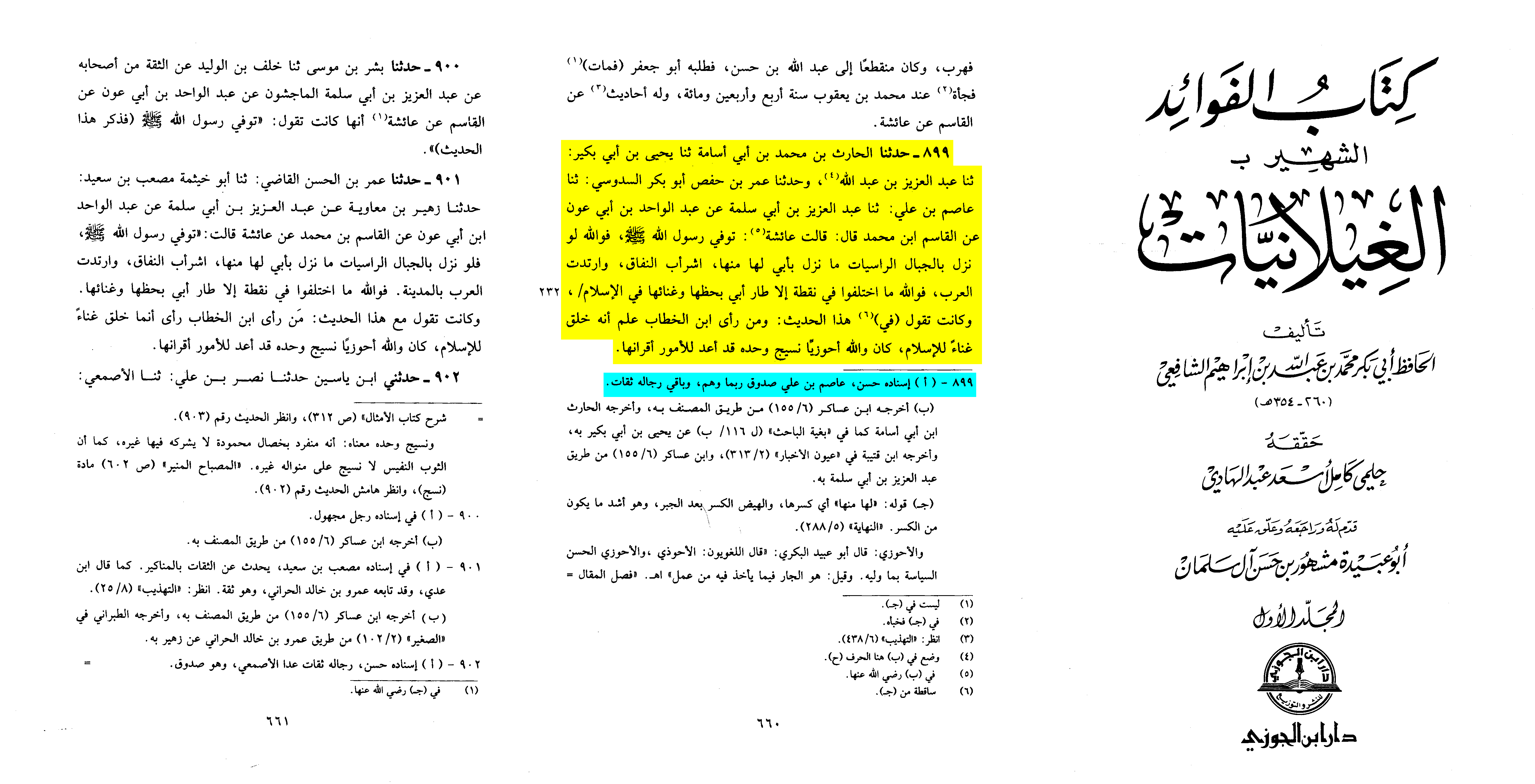
A report with a similar chain can be found in Kitab al-Fawa’id al-Ghilaniyat Vol 1, pg. 660 - 661, Hadith # 899 where the researcher affirmed that the chain of transmission is Hasan.
Imam 'Ali was the Wasi of the Prophet
Additionally, the fact that ‘Ali (AS) did not know of this supposed hadith is even more suspicious due to the fact that he was the executor of the will (wasi) of the Prophet (SAW). We have already gone over how the prophet (SAW) explicitly appointed ‘Ali as his wasi in our article about Hadith Indhar al-’Ashira.
Imam ‘Ali inherited the Prophet’s knowledge
We would also add: how is it that Abu Bakr knows more about the Prophet’s inheritance than the inheritor of the Prophet’s knowledge?
It was narrated to us by Abu al-Nadr Muhammad b. Yusuf al-Faqih; it was narrated to us by ‘Uthman b. Sa'eed al-Darimi; it was narrated to us by al-Nufayli; it was narrated to us by Zuhayr; it was narrated to us by Abu Ishaq;
Uthman said, and it was narrated to us by Ali b. Hakim al-Awdi, and Amr b. Awn al-Wasiti, they both said: it was narrated to us by Sharik b. Abd Allah, from Abu Ishaq, he said: I asked Qutham b. al-Abbas: 'How did Ali inherit the Messenger of Allah (SAW) besides you?'
He said: 'Because he was the first of us in joining him, and the strongest of us in adhering to him.’”
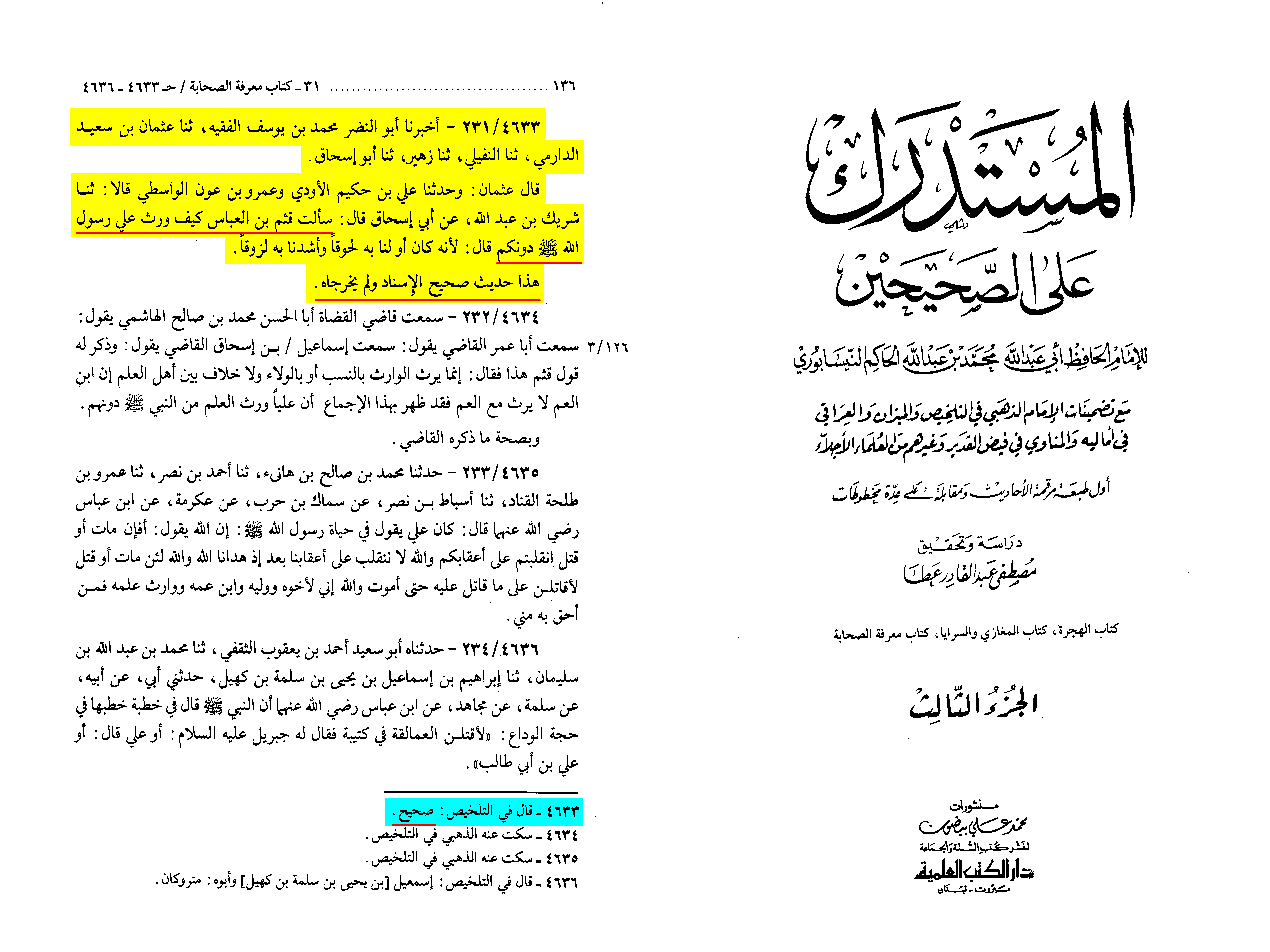
Al-Hakim gives an explanation in the next narration, Hadith # 4634:
I heard the Chief Judge Abu al-Hasan Muhammad b. Salih al-Hashimi say: I heard Abu Umar the Judge say: I heard Ismail b. Ishaq the Judge say—and this statement of Qutham was mentioned to him, so he said:
‘An inheritor only inherits by lineage or by clientage (wala), and there is no disagreement among the people of knowledge that a cousin does not inherit alongside a paternal uncle. Thus, it has become manifest through this consensus that ‘Ali inherited knowledge from the Prophet (SAW) to their exclusion, and [it demonstrates] the correctness of what the Judge mentioned.’
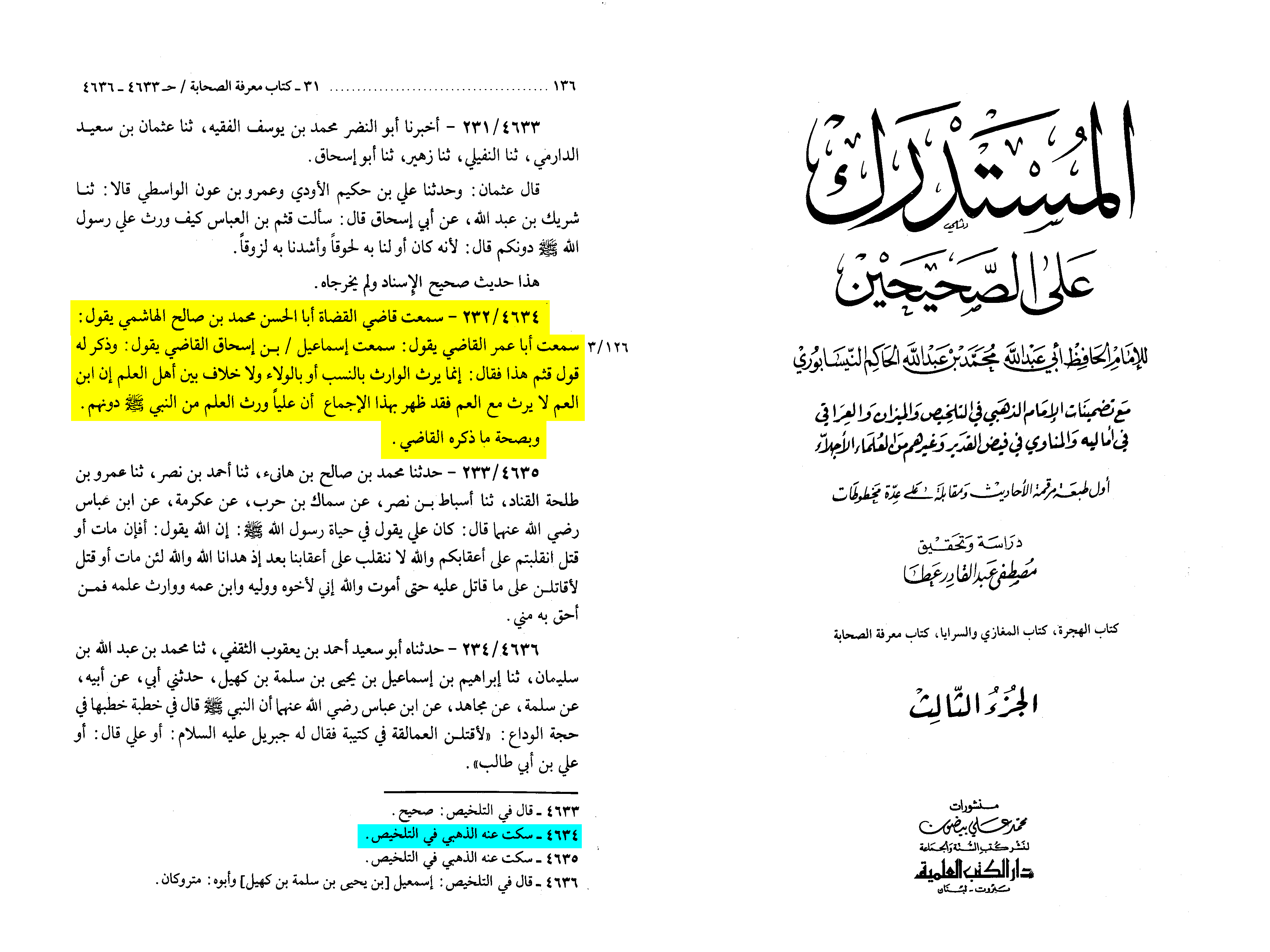
This hadith can also be found in the following sources
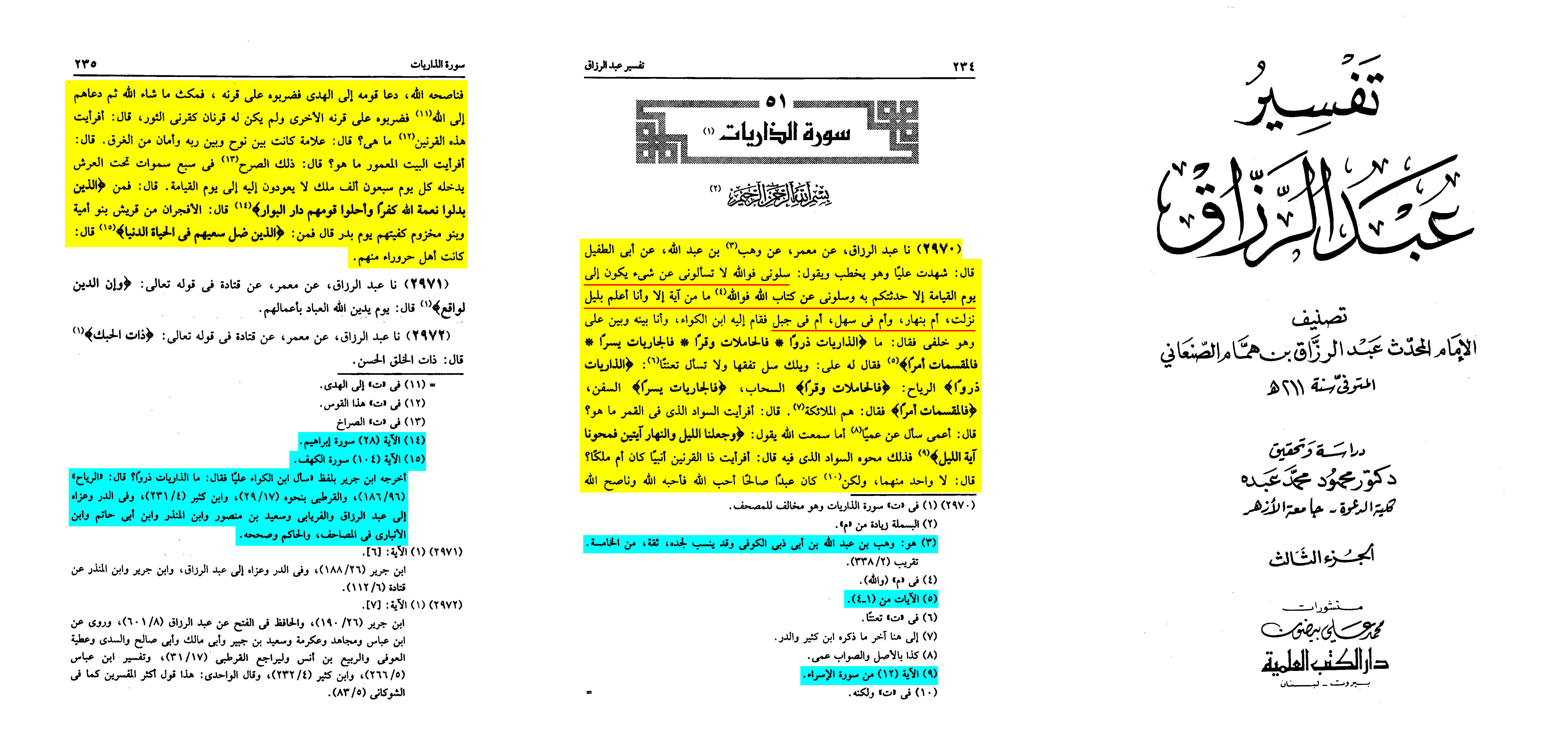
What makes this even more absurd is that ‘Ali (AS) was not only the heir of the Prophet’s knowledge, but he also possessed a complete understanding of the Quran. Should our opponents argue that this is an exaggeration, we invite them to read their own books.
From Mamar, from Wahb b. ‘Abd Allah, from Abu al-Tufayl, who said:
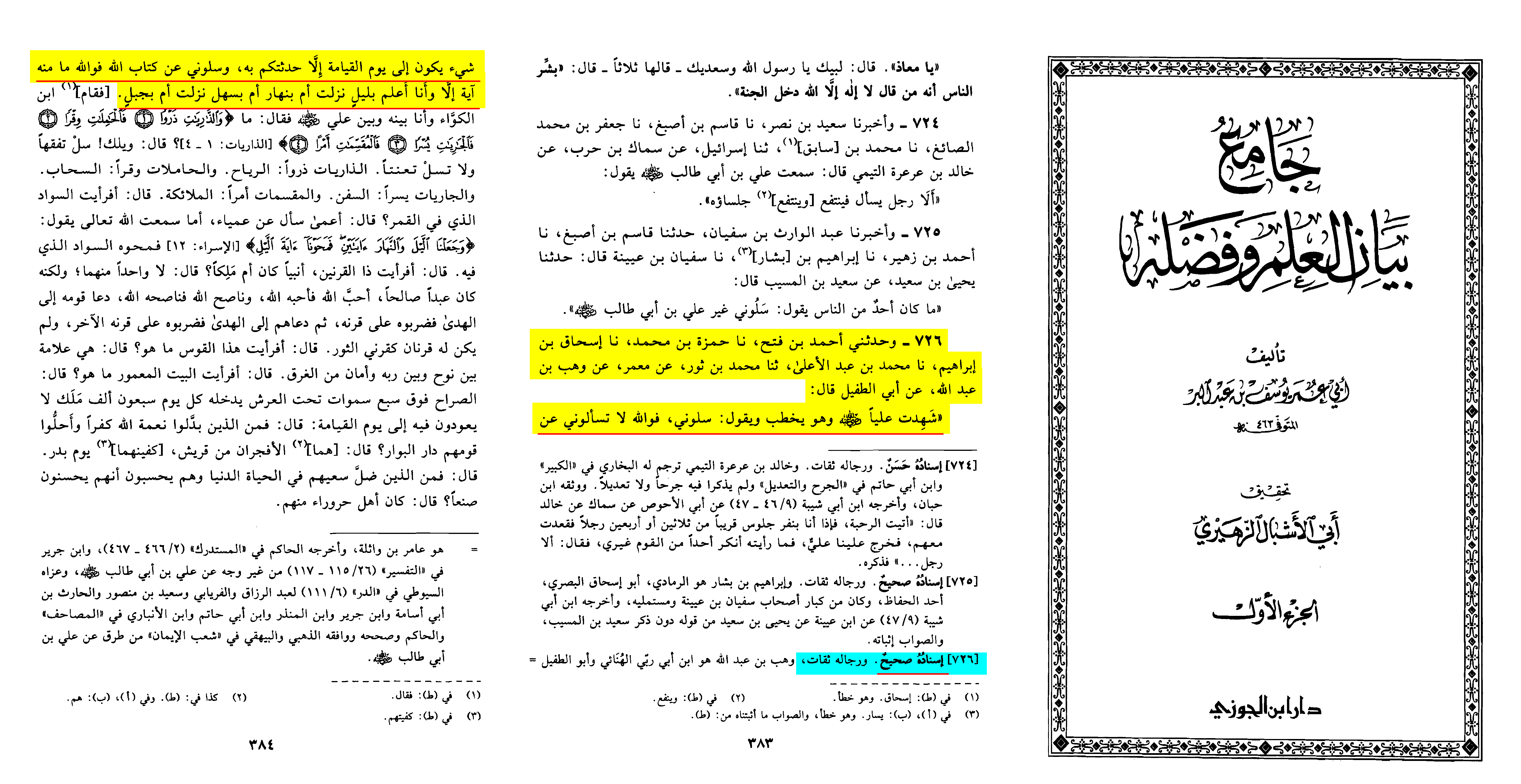
I witnessed ‘Ali b. Abi Talib while he was delivering a sermon and saying: ‘Ask me, for by Allah, you will not ask me about anything that will occur until the Day of Resurrection except that I will inform you about it. And ask me about the Book of Allah, for by Allah, there is not a single verse except that I know whether it was revealed by night or by day, and whether it was revealed on flat land or on a mountain…’”
Ibn Abd al-Barr narrated this blessed report in his Jami’ Bayan al-Ilm, Vol 1 pg. 383 - 384, Hadith # 726. The examiner, Abi al-Ashbal al-Zahiri, said the chain is authentic.
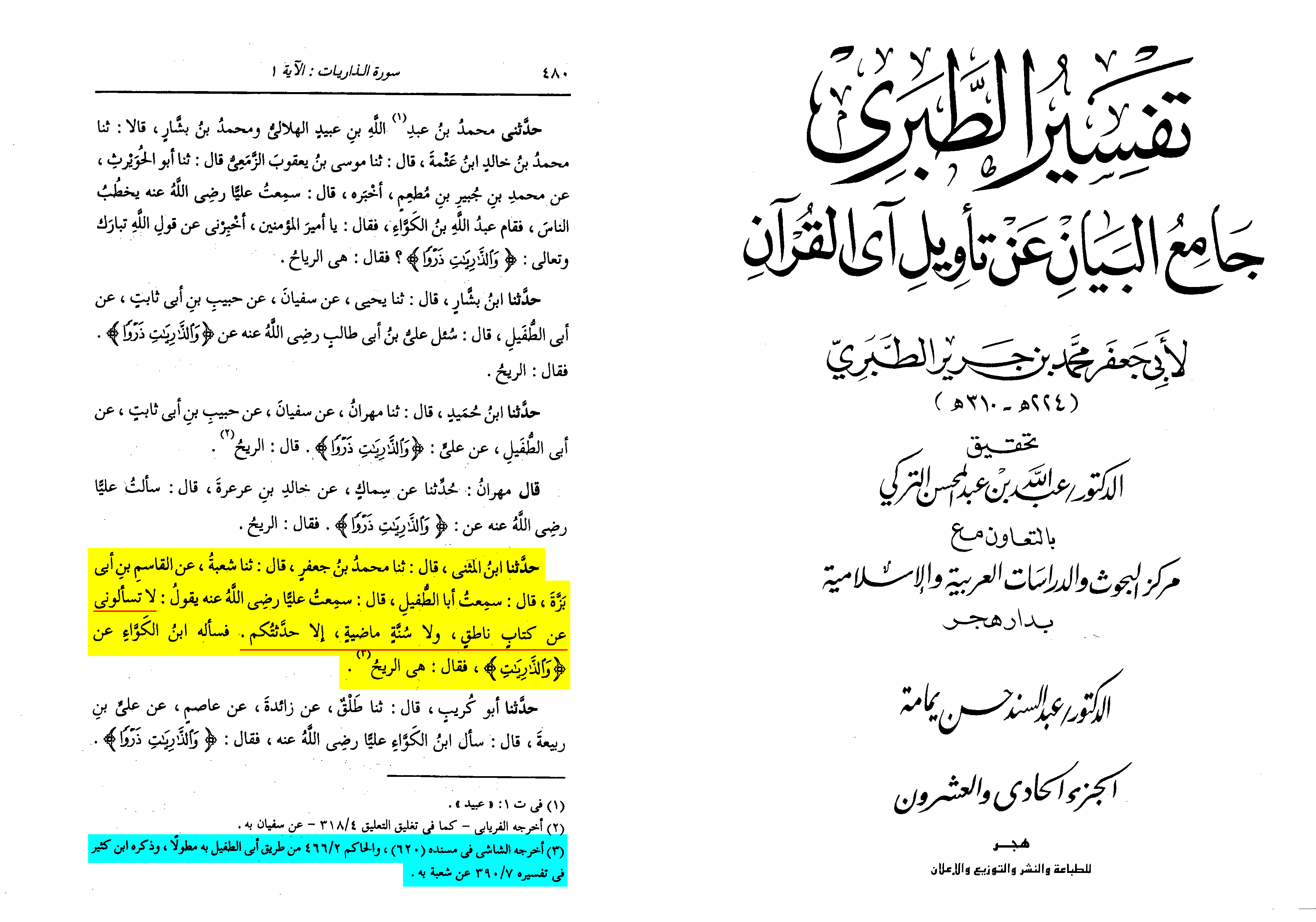
We also read similar wordings on the authority of Abu al-Tufayl in Tafsir al-Tabari, Vol 21, pg. 480:
“Muhammad b. al-Muthanna narrated to us: Muhammad b. Jafar narrated to us: Shubah b. al-Hajjaj narrated to us from al-Qasim b. Abi Bazzah, who said: I heard Abu al-Tufayl say:
I heard ‘Ali b. Abi Talib saying: ‘Do not ask me about any speaking Book or established Sunnah except that I will inform you about it.’”
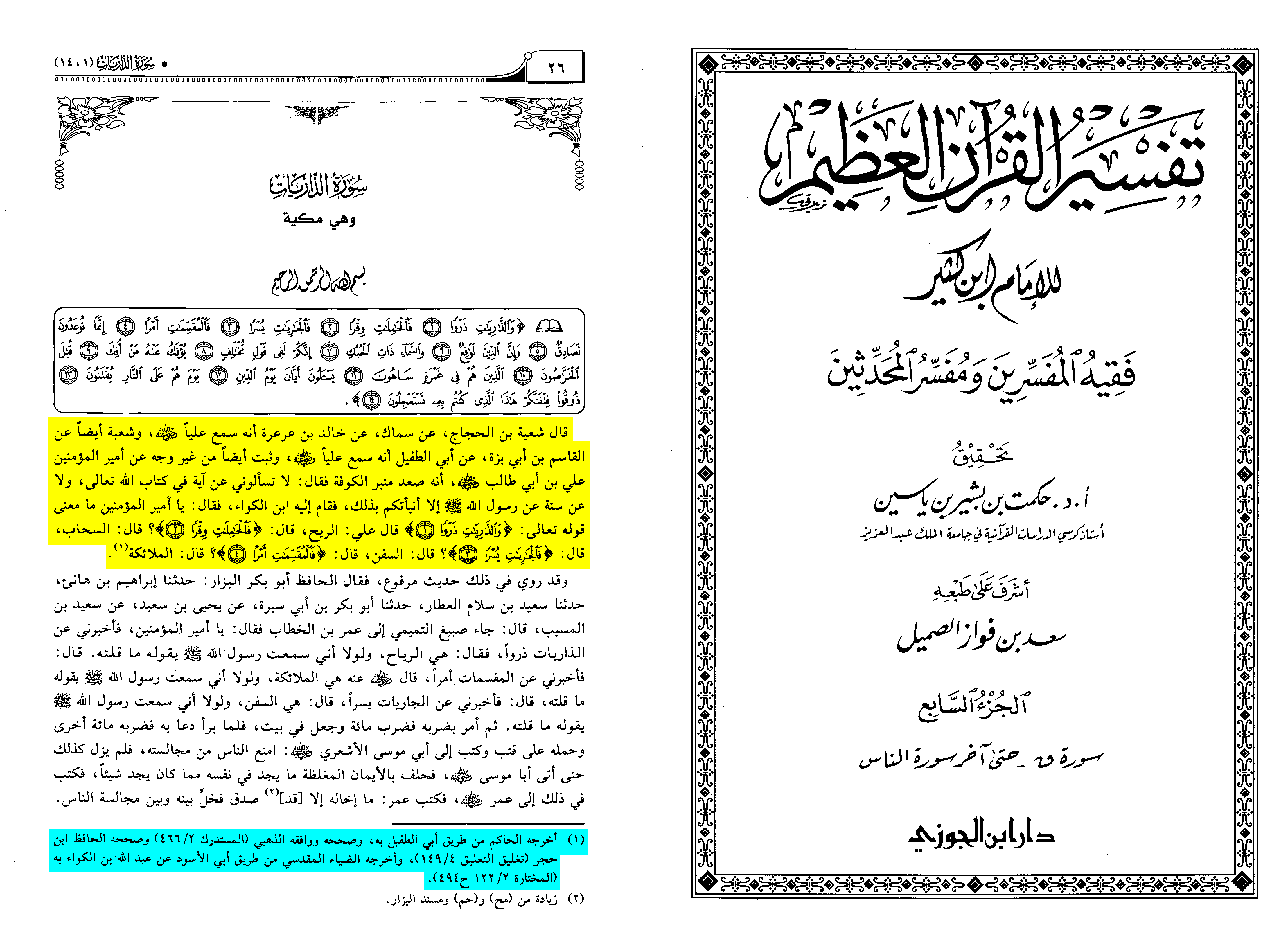
Ibn Kathir also transmitted this tradition in Tafsir Ibn Kathir Vol 7, pg. 26, and the examiner Abu Ishaq al-Huwayni certified the chain.
Similar traditions can also be read in the following sources:
These clear and blessed reports establish for us that Imam Ali (AS) was the heir of the Messenger’s knowledge and also had complete knowledge of the Quran. With that in mind, how could anyone reasonable accept that Imam Ali (AS) was ignorant of the rulings regarding the inheritance of Prophets (AS)? In addition to that, the Commander of the Faithful (AS) not only did not recognize Abu Bakr’s Hadith, but he also rejected it on the basis that it contradicted Allah's Honorable Book as we shall show in a bit.
Abu Bakr’s fabricated Hadith contradicted the Quran
Indeed, Imam Ali (AS) asserted that Prophets do indeed leave inheritance. There are numerous cases in the Quran including that of Dawud and Sulayman (AS), in addition to Zakariyyah and Yahya (AS), Musa and Harun (AS).
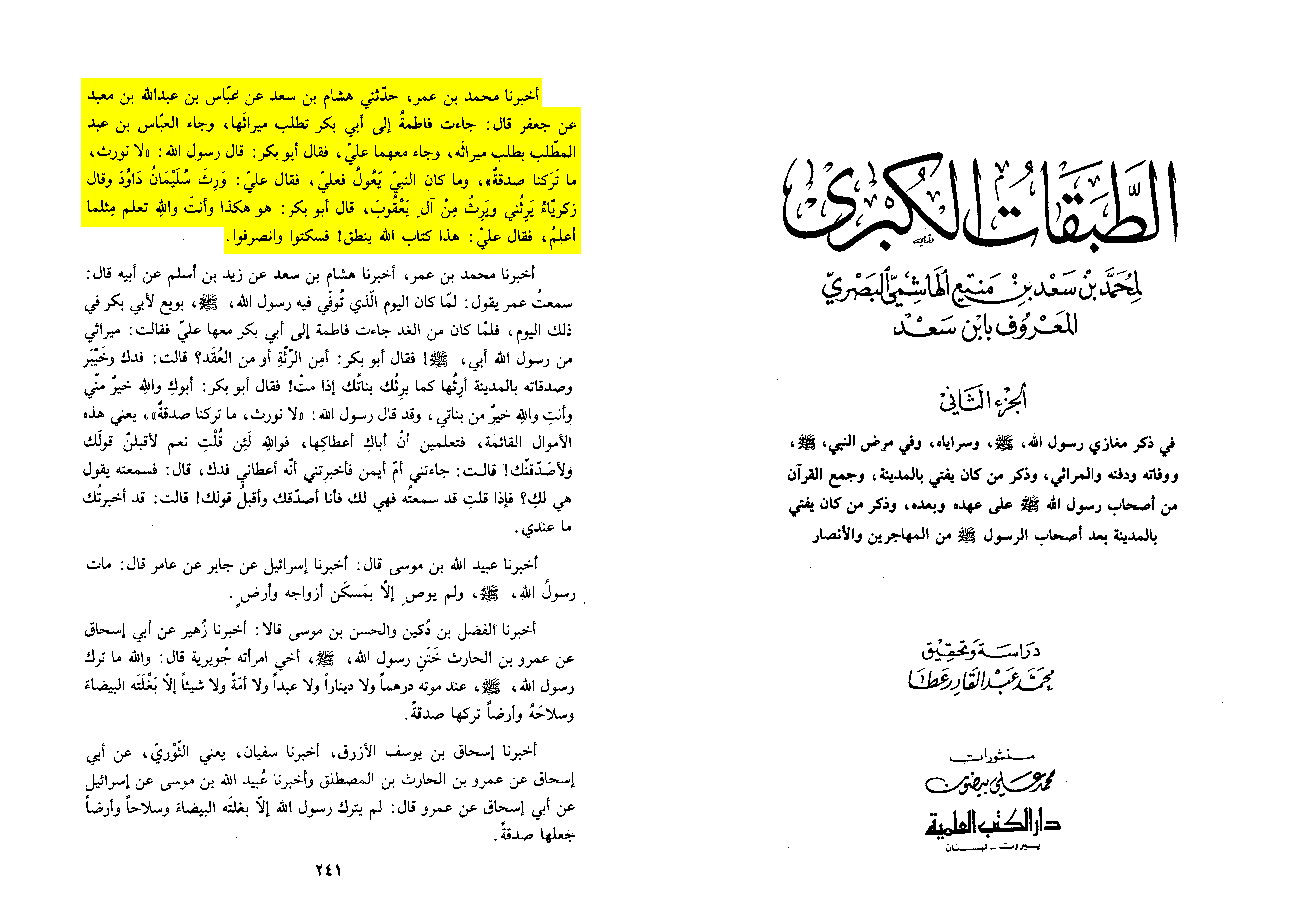
We read in Ibn Sa’ad’s Tabaqat Ibn Sa’ad. Vol. 2, pg. 241:
Muhammad b. Umar informed us. Hisham b. Sa’ad narrated to me from Abbas b. Abd Allah b. Mabad, from Jafar, who said:
Fatima came to Abu Bakr seeking her inheritance. Al-Abbas b. ‘Abd al-Muttalib also came seeking his inheritance, and Ali came with them. Abu Bakr said: “The Messenger of Allah said: We are not inherited from; whatever we leave is charity. And whatever the Prophet used to provide for, then it is upon me.”
Ali said: “And Sulayman inherited from Dawud, and Zakariyya said: ‘He will inherit from me and inherit from the family of Yaqub.’”
Abu Bakr said: “It is as such, and by Allah, you know just as I know.”
Ali said: “This is the Book of Allah—it speaks!”
Then they fell silent and departed.
We now look to the Quranic evidence.
Prophet Sulayman inherited from Prophet Dawud
The first verse which Imam ‘Ali (AS) cited to prove Prophets (AS) leave inheritance is the case of Dawud (AS). Allah says in Surah Naml 27:16:
وَوَرِثَ سُلَيْمَانُ دَاوُودَ ۖ وَقَالَ يَا أَيُّهَا النَّاسُ عُلِّمْنَا مَنطِقَ الطَّيْرِ وَأُوتِينَا مِن كُلِّ شَيْءٍ ۖ إِنَّ هَٰذَا لَهُوَ الْفَضْلُ الْمُبِينُ
And Solomon inherited David. He said, "O people, we have been taught the language of birds, and we have been given from all things. Indeed, this is evident bounty."
In this verse, it has been made clear to us that Sulayman (AS) inherited the Kingdom of Dawood (as) from him and this is well-known, for Sulayman (AS) had a huge Kingdom that he inherited from his father, which was given to him by Allah (swt). This is stated in the Qur’an itself as we read in Surah al-Baqarah 2:251:
فَهَزَمُوهُم بِإِذْنِ اللَّهِ وَقَتَلَ دَاوُودُ جَالُوتَ وَآتَاهُ اللَّهُ الْمُلْكَ وَالْحِكْمَةَ وَعَلَّمَهُ مِمَّا يَشَاءُ
So they routed them by Allah's leave and David slew Goliath; and Allah gave him the kingdom and wisdom, and taught him of that which
Notice how wisdom and kingdom are two separate things? As kingdom is tangible while wisdom isn’t. Indeed Sulayman (AS) inherited both of these from Dawud (AS).
For example, we read in Tafsir Ibn Abi Hatim pg. 2854:
Ahmad b. Yahya b. Malik al-Susi narrated to us, saying: Abd al-Wahhab b. Ata narrated to us, from Saeed,
from Qatada regarding His saying: {And Sulayman inherited Dawud}—he said: he inherited his prophethood and his kingdom.
Musa b. Harun al-Tusi informed us in what he wrote to me, saying: al-Husayn b. Muhammad al-Marwazi narrated to us, saying: Shayban narrated to us,
from Qatada regarding His saying: {And Sulayman inherited Dawud}—he said: he made him inherit his prophethood, his kingdom, and his knowledge.
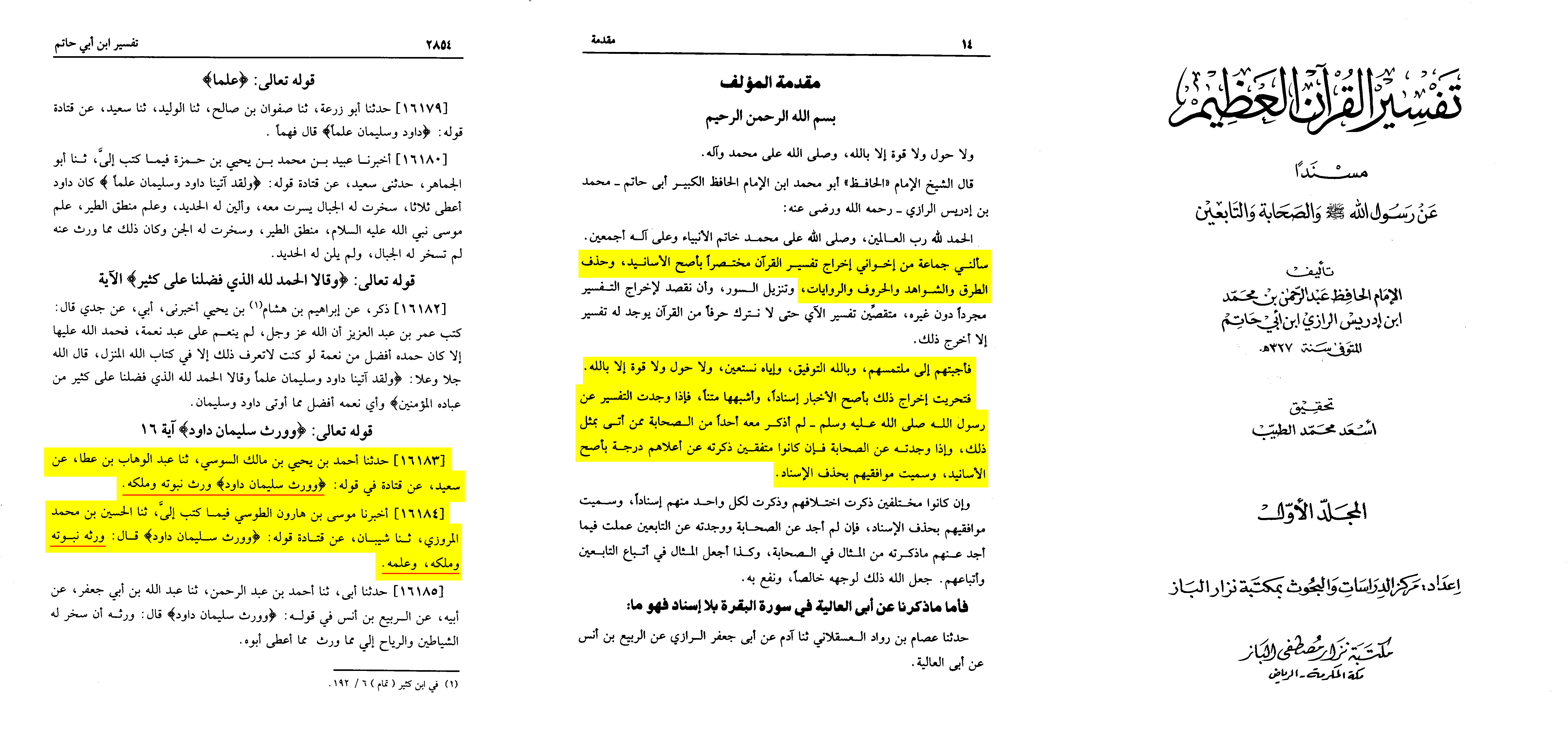
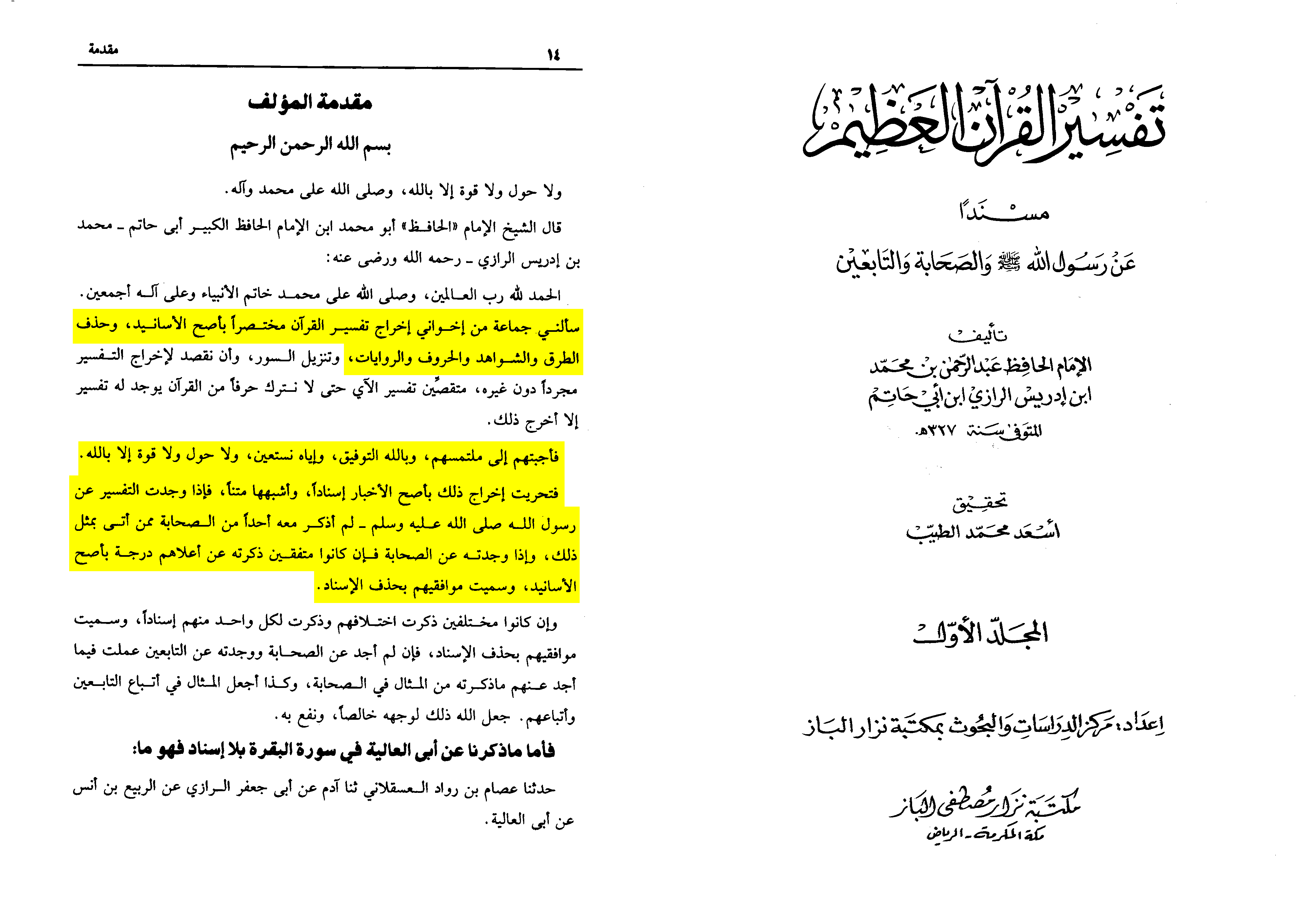
Before we continue, it is important for us to note two extremely integral points, namely that Ibn Abi Hatim only cited the most authentic reports available to him regarding the exegesis of the Quran as he stated in the introduction to his tafsir on pg. 14:
A group of my brothers asked me to bring forth the exegesis of the Qurʾan, abridged with the most authentic of chains of transmission, and the omission of the routes, corroborating reports, letters, and narrations, and the revelation of the chapters, and that we intend to bring forth the exegesis bare without anything else, tracking the exegesis of the verses until we do not leave a letter from the Qurʾan for which an exegesis is found except that I bring forth that.
So I answered them to their request, and by Allah is success, and Him we seek for help, and there is no power and no strength except by Allah.
So I sought to bring forth that with the most authentic of the reports in chain of transmission, and the most resembling of them in text. So if I found the exegesis from the Apostle of Allah (SAW) - I did not mention with him anyone from the companions from those who brought the like of that, and if I found it from the companions, then if they were agreeing, I mentioned it from the highest of them in degree with the most authentic of chains of transmission, and I named those who agreed with them with the omission of the chain of transmission.
We would also remind our readers that the exegesis cited by the Tabi’in such as Qatada is absolutely valid evidence according to the Sunni scholars. We read in Jami` at-Tirmidhi 2952:
[Imam At-Tirmidhi said:] This is how it has been reported from some of the people of knowledge among the Companions of the Prophet (ﷺ), and others. They were very stern about this - about explaining the Qur'an without knowledge.
As for what has been related from Mujãhid, Qatadah and others, among the people of knowledge, that they would interpret the Qur'an, then it should not be thought about them that they would say something about the Qur'an, or interpret it without knowledge, or according to their own intellect. Rather that which proves what we have said has been reported from them, that they would not say something from themselves without knowledge. H
usain bin Mahdi Al-Basri narrated to us (he said: AbdurRazzaq narrated to us, from Ma'mar, from Qatadah who said): "There is no Ayah in the Qur'an except that I have heard something about it."
Ibn Abi 'Umar narrated to us (he said): "Sufyan bin 'Uyainah narrated to us, from Al-A'mash who said: 'Mujãhid said: If you recited the recitation of Ibn Mas'ud, you would not need to ask Ibn 'Abbãs about much of what you ask him regarding the Qur'an."
As we have cited, one of the great Tabi’i exegetes affirms this to include the Kingdom of Dawud (AS). Those who don’t know him, he is the student of Anas b. Malik and said to be by al-Dhahabi in Siyar A'lam al-Nubala. Vol. 5, pg. 269 - 270:
Qatadah… The Hafidh of his time, the role model of the Mufasireen and Muhaditheen.
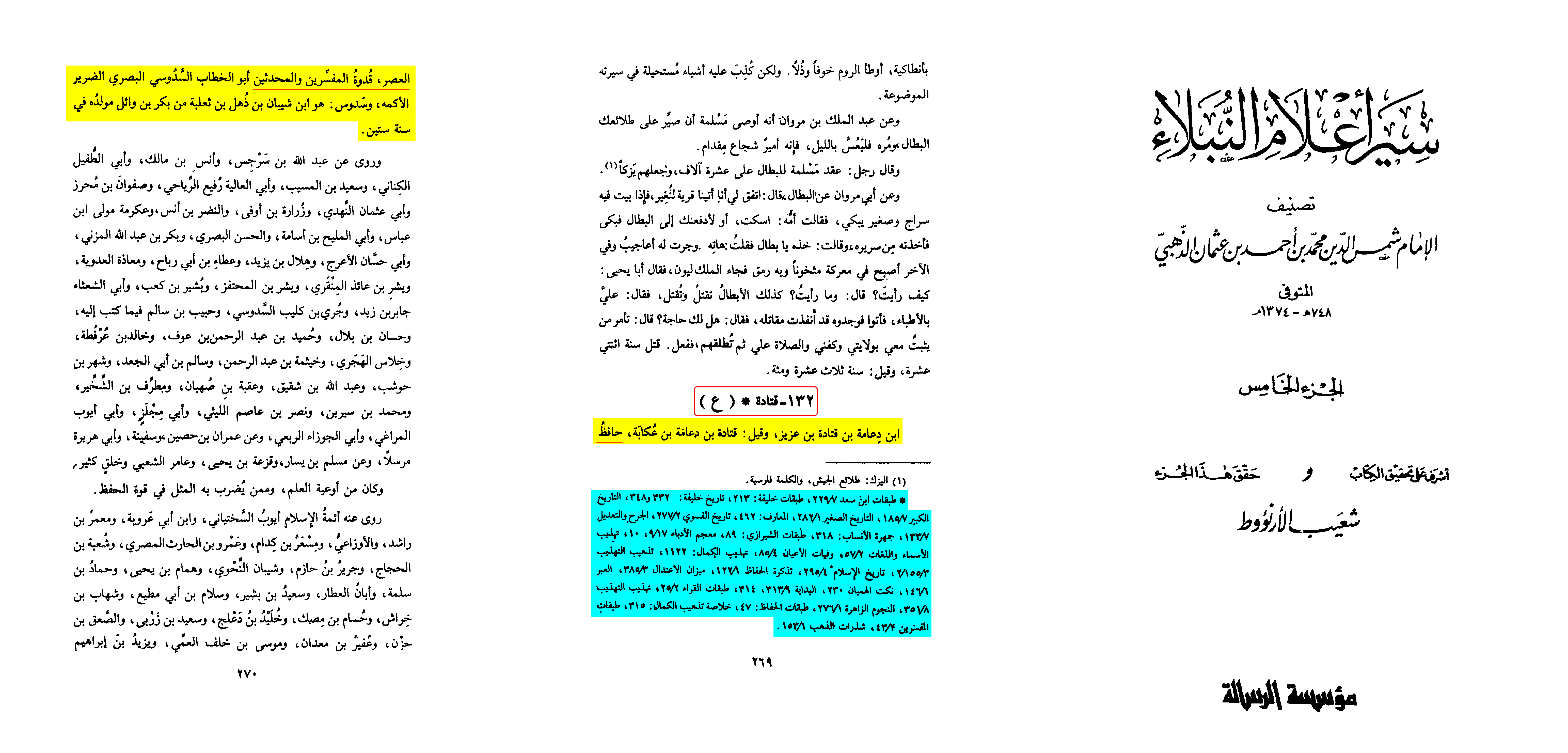
Furthermore, here is a list of scholars who agree:
We have cited 5 Sunni scholars that Prophet Sulayman (AS) inherited the worldly possessions of his father, similarly Sayyida Fatima (AS) was also the warith of her father Rasulullah (SAW). Denying her this inheritance right was a clear violation of the Qur’an.
We read in Surah Sad 38:30 & 31:
وَوَهَبْنَا لِدَاوُودَ سُلَيْمَانَ ۚ نِعْمَ الْعَبْدُ ۖ إِنَّهُ أَوَّابٌ ﴿٣٠﴾ إِذْ عُرِضَ عَلَيْهِ بِالْعَشِيِّ الصَّافِنَاتُ الْجِيَادُ ﴿٣١﴾
And to David We gave Solomon. An excellent servant, indeed he was one repeatedly turning back [to Allah ]. (30) [Mention] when there were exhibited before him in the afternoon the poised [standing] racehorses. (31)
These horses were inheritance and this is affirmed by the following scholars:
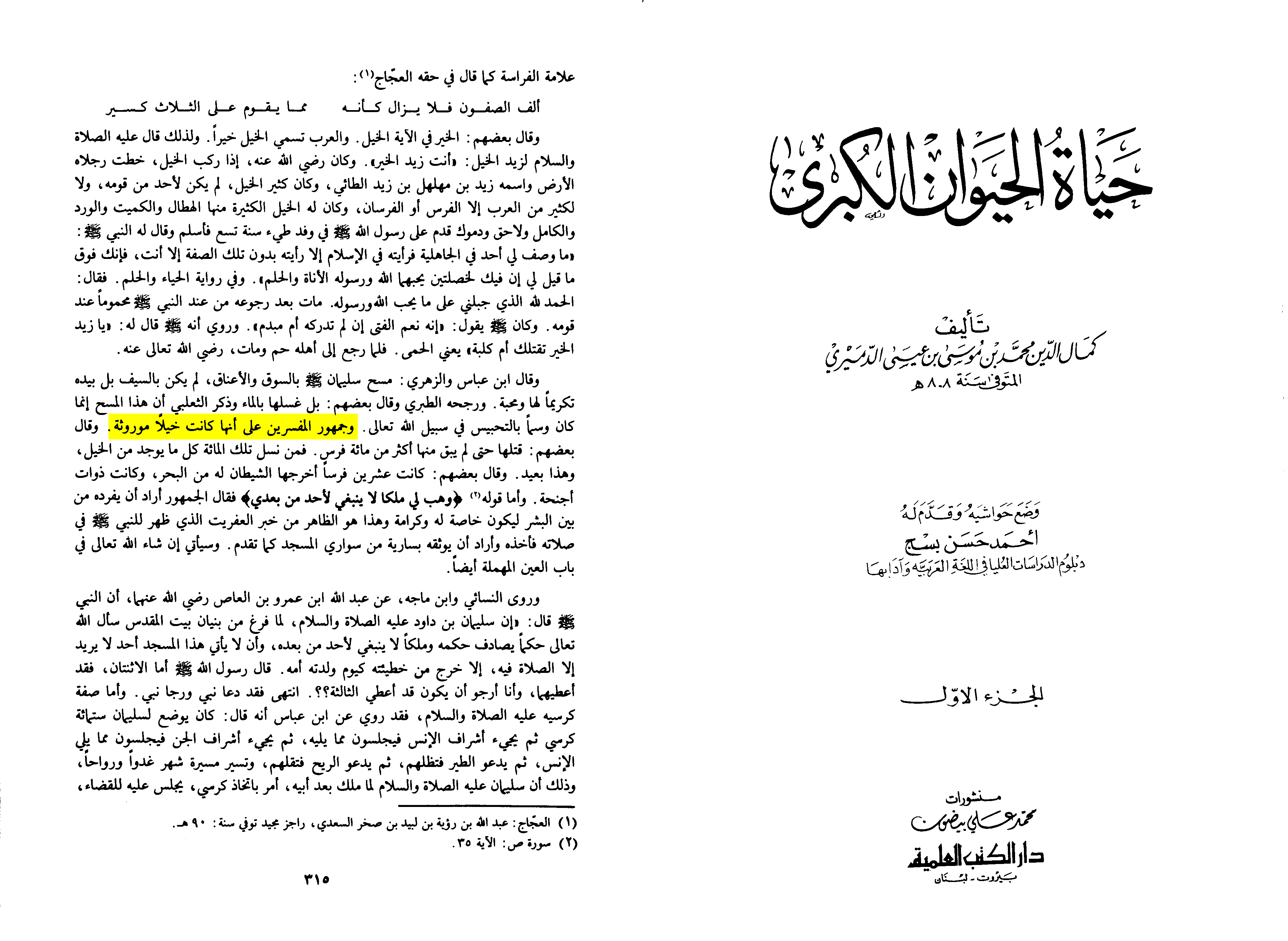
Shaykh Kamaluddin Muhammad b. Musa Damiri (C. 8th) records in Hayat al-Haywan, Vol. 1, pg. 315:
And the majority of the exegetes hold that they were inherited horses.
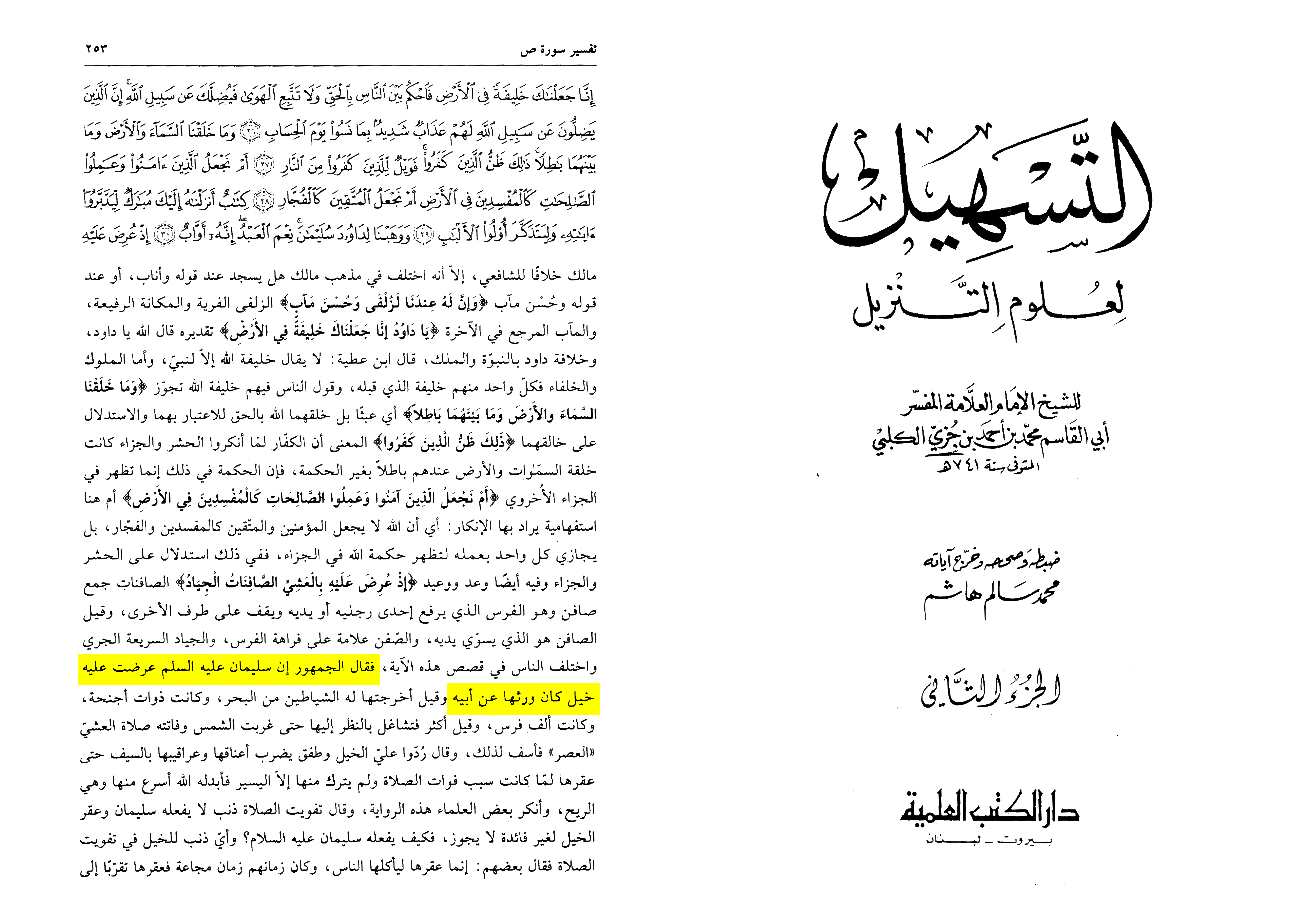
Ibn Juzayy (C. 8th) Tashil li-ulum al-Tanzil, Vol. 2, pg. 253:
“So the majority said that Sulayman (AS) was presented with horses which he had inherited from his father.”
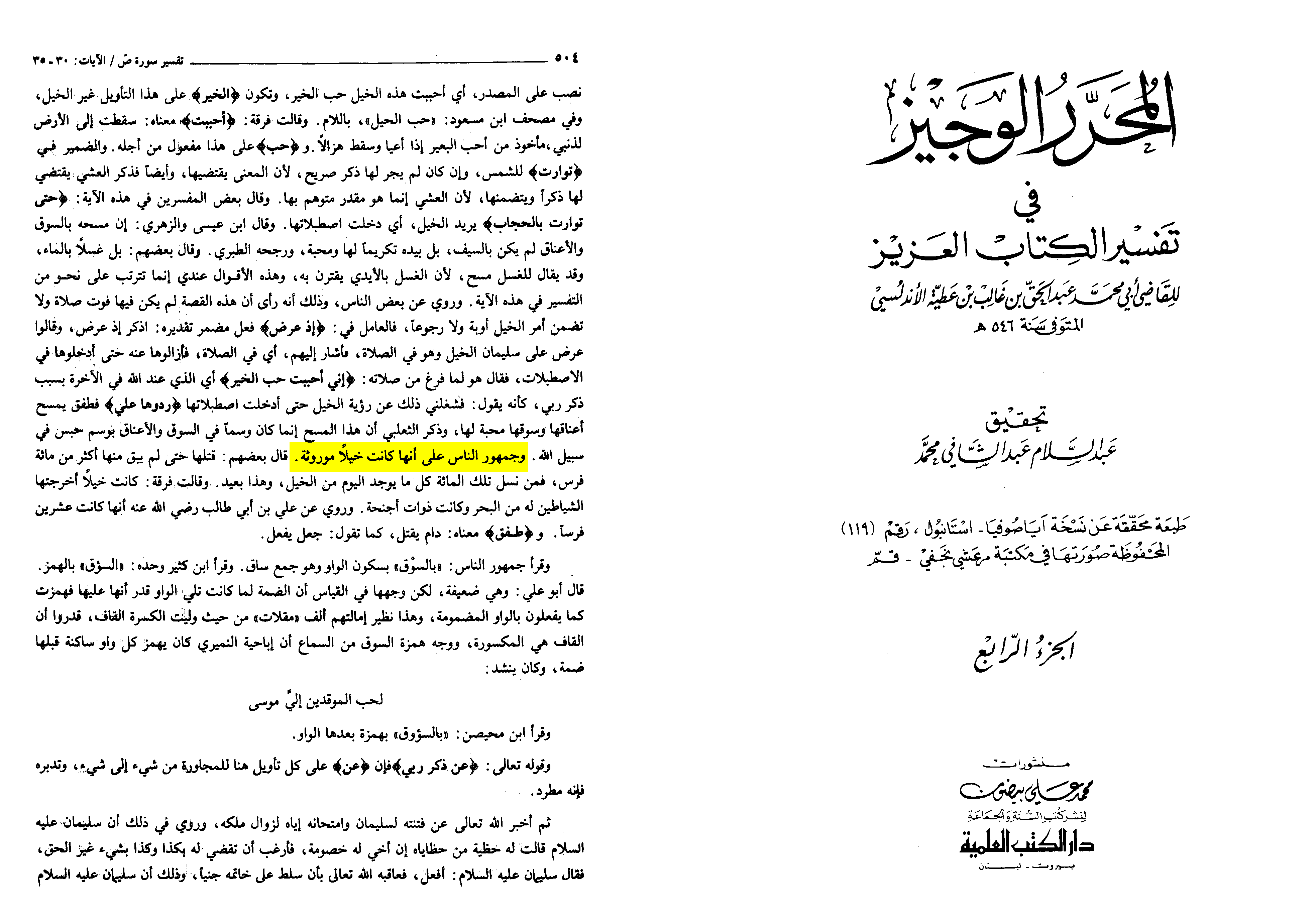
Ibn Attiya (C. 6th) in al-Muharrar al-Wajiz, Vol. 4, pg. 504:
“And the majority of people hold that they were inherited horses.”
Did Sulayman inherit Prophethood?
This claim that Sulayman (AS) inherited prophethood from Dawud (AS) is refuted by the very Qur’an itself, because Sulayman was already a Prophet during Dawud’s lifetime.
We read in Surah al-Anbiya 21:79:
فَفَهَّمْنَاهَا سُلَيْمَانَ ۚ وَكُلًّا آتَيْنَا حُكْمًا وَعِلْمًا
To Solomon We inspired the (right) understanding of the matter: to each (of them) We gave Judgment and Knowledge;
We read in Surah an-Naml 27:15:
وَلَقَدْ آتَيْنَا دَاوُودَ وَسُلَيْمَانَ عِلْمًا ۖ وَقَالَا الْحَمْدُ لِلَّهِ الَّذِي فَضَّلَنَا عَلَىٰ كَثِيرٍ مِّنْ عِبَادِهِ الْمُؤْمِنِينَ
We gave (in the past) knowledge to David and Solomon: And they both said: “Praise be to Allah, Who has favored us above many of his servants who believe!”
Sulayman (AS) was born during the lifetime of his father, and attained Prophethood during his father’s lifetime. Inheritance is something which is attained after death, thus this clearly proves that inheritance in the previous verse does not mean Prophethood rather it refers to his Kingdom. This also proves it cannot be knowledge and wisdom only, because he had it in his lifetime already.
Secondly, where did the kingdom of Dawud go? Did it go to charity? No it’s famously known that Sulayman (as) had a huge kingdom, where did he get it from? It’s very clear that he inherited from his father the kingdom.
Prophet Yahya inherited from Zakkariyah
We read in Surah Maryam 19:4 - 6:
قَالَ رَبِّ إِنِّى وَهَنَ ٱلۡعَظۡمُ مِنِّى وَٱشۡتَعَلَ ٱلرَّأۡسُ شَيۡبًا وَلَمۡ أَكُنۢ بِدُعَآئِكَ رَبِّ شَقِيًّا (٦) وَإِنِّى خِفۡتُ ٱلۡمَوَٰلِىَ مِن وَرَآءِى وَكَانَتِ ٱمۡرَأَتِى عَاقِرًا فَهَبۡ لِى مِن لَّدُنكَ وَلِيًّا (٧) يَرِثُنِى وَيَرِثُ مِنۡ ءَالِ يَعۡقُوبَۖ وَٱجۡعَلۡهُ رَبِّ رَضِيًّا (٨)
He said, "My Lord, indeed my bones have weakened, and my head has filled with white, and never have I been in my supplicastion to You, my Lord, unhappy [i.e., disappointed]. (6) And indeed, I fear the successors after me, and my wife has been barren, so give me from Yourself an heir. (7) Who will inherit me and inherit from the family of Jacob. And make him, my Lord, pleasing [to You]." (8)
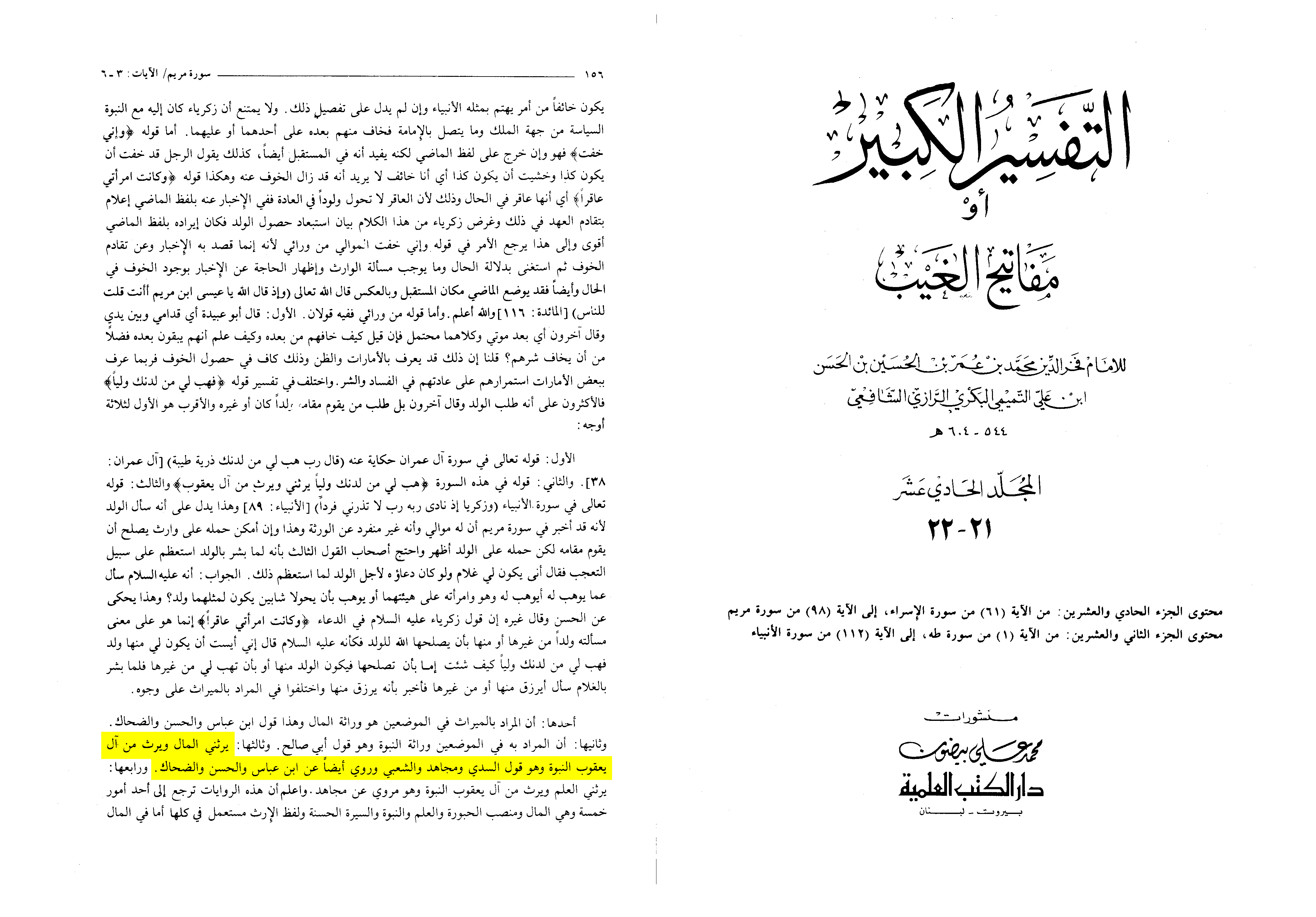
This verse includes material inheritance, as numerous exegetes from our opponents admit. Fakhr al-Din al-Razi mentions in his Tafsir al-Razi Vol. 11, pg. 156 regarding verse (19:6) Surat Maryam:
The third: ‘Inherit material possessions and inherit Prophethood from children of Yaqub, this is the statement of al-Suddi, Mujahid, al-Sha’bi and also narrated by Ibn Abbas, al-Hasan (al-Basri) and al-Dhahak.’
This was similarly affirmed as such in:
Tafsir al-Qurtubi, Vol. 13, pg. 410 (Mujahid, Qatada)
al-Baghawi’s Ma’alim al-Tanzil, Vol. 5, pg. 218 (al-Hasan al-Basri)
Ibn al-Jawzi in al-Zad al-Masir, pg. 877 (Ikrima, Ibn Abbas, Abu Saleh).
Scholars who were of this opinion include:
Sufyan al-Thawri and the muhaqiq mentions the opinions of all the Tabi’een that hold this opinion in Tafsir Sufyan al-Thawri, pg. 181.
Al-Tabari mentions this opinion in his Tafsir al-Tabari, Vol. 15, pg. 457 - 458.
The famed mufassir Muqatil in his Tafsir Muqatil b. Sulayman, Vol. 2, pg. 307:
Al-Alusi in his Tafsir Ruh al-Ma’ani, Vol. 8, pg. 382.
Al-Zamakhshari in his Tafsir al-Kashaf, Vol pg. 5.
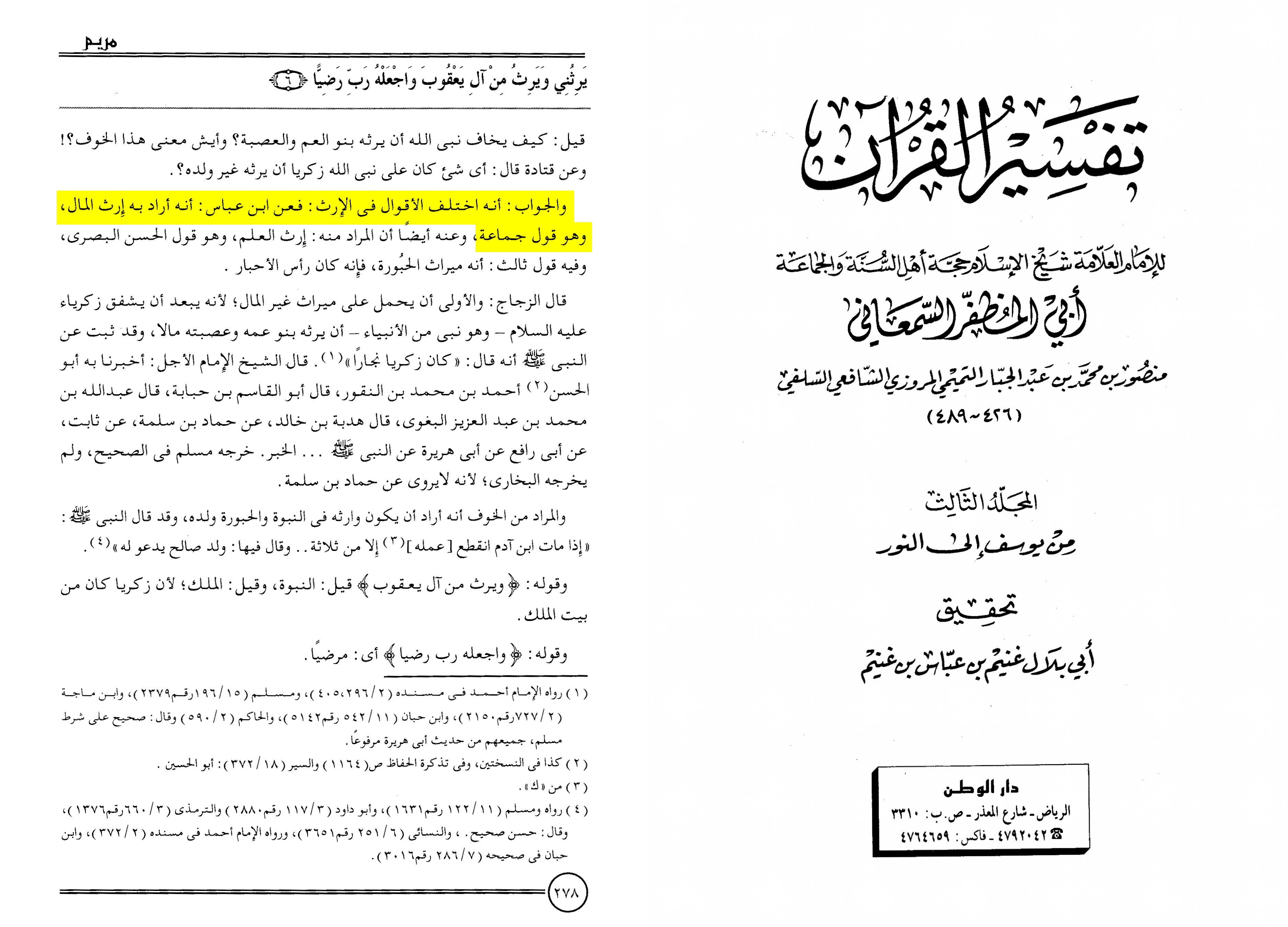
After seeing all this, we see the vastly stronger and most popular opinion is that the meaning of inheritance in this verse is in regard to wealth, and this is affirmed Ibn ‘Attiya in al-Muharrar al-Wajiz, Vol. 4, pg. 5 and al-Sam’ani in Tafsir al-Quran, Vol. 3, pg. 278 (that this was the majority opinion).
Even al-Qurtubi admits in his Tafsir al-Qurtubi. Vol. 18, pg. 415:
Their statement that inheriting material possessions is not impossible.
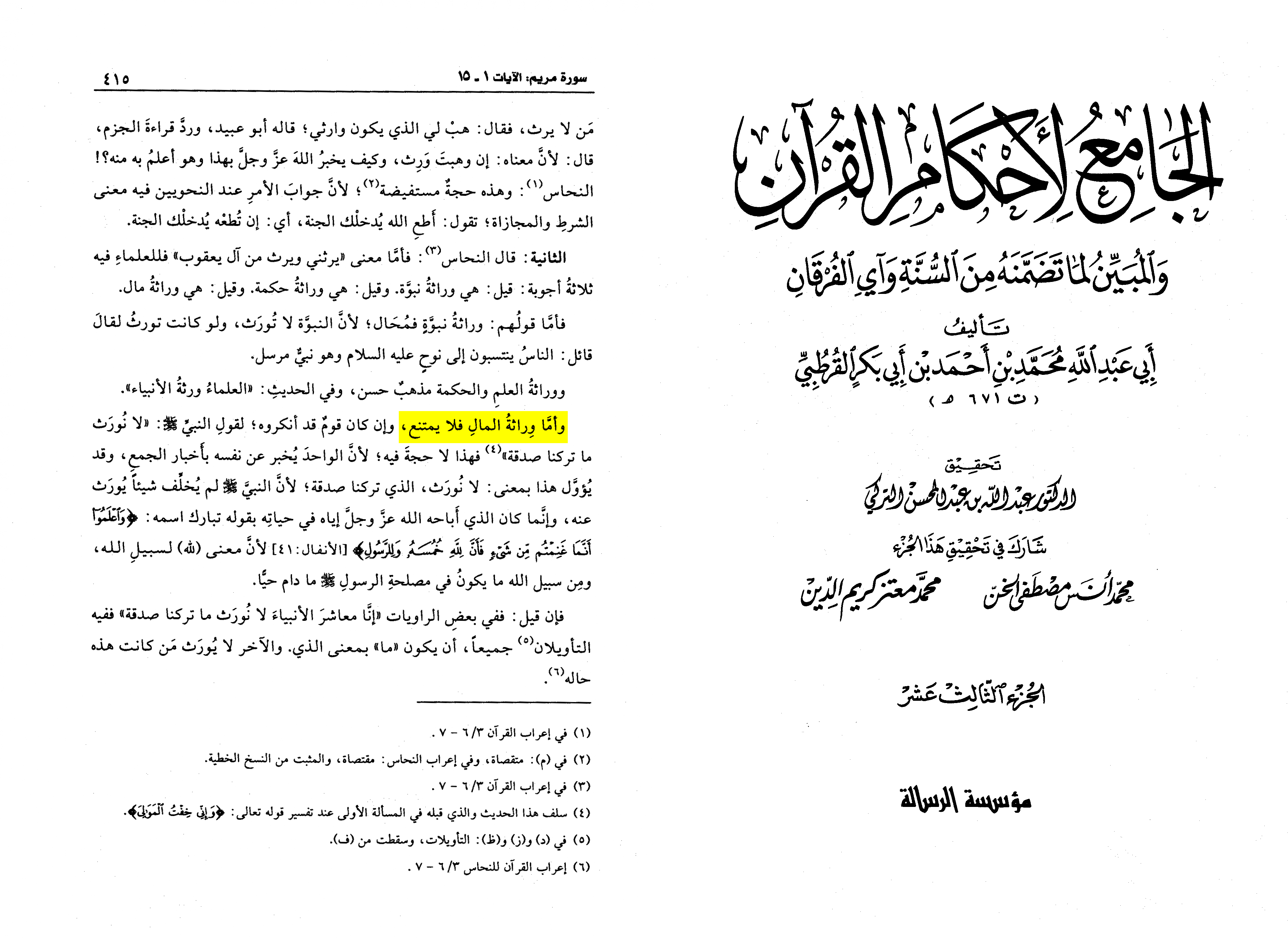
Though he tries to defend Abu Bakr by saying the hadith applies to Rasulullah (s) only, which is a weak argument as we mention later.
Furthermore, the plain sense of the verse indicates he wants a heir, which would also include material possessions.
Inheritance between Musa and Harun
We further have the inheritance of the family of Musa (AS) and Harun (AS) in the Quran. Allah says in Surah al-Baqarah 2:248:
وَقَالَ لَهُمْ نَبِيُّهُمْ إِنَّ ءَايَةَ مُلْكِهِۦٓ أَن يَأْتِيَكُمُ ٱلتَّابُوتُ فِيهِ سَكِينَةٌ مِّن رَّبِّكُمْ وَبَقِيَّةٌ مِّمَّا تَرَكَ ءَالُ مُوسَىٰ وَءَالُ هَـٰرُونَ تَحْمِلُهُ ٱلْمَلَـٰٓئِكَةُ ۚ إِنَّ فِى ذَٰلِكَ لَـَٔايَةً لَّكُمْ إِن كُنتُم مُّؤْمِنِينَ
And their prophet said to them, "Indeed, a sign of his kingship is that the chest will come to you in which is assurance from your Lord and a remnant of what the family of Moses and the family of Aaron had left, carried by the angels. Indeed that is a sign for you, if you are believers."
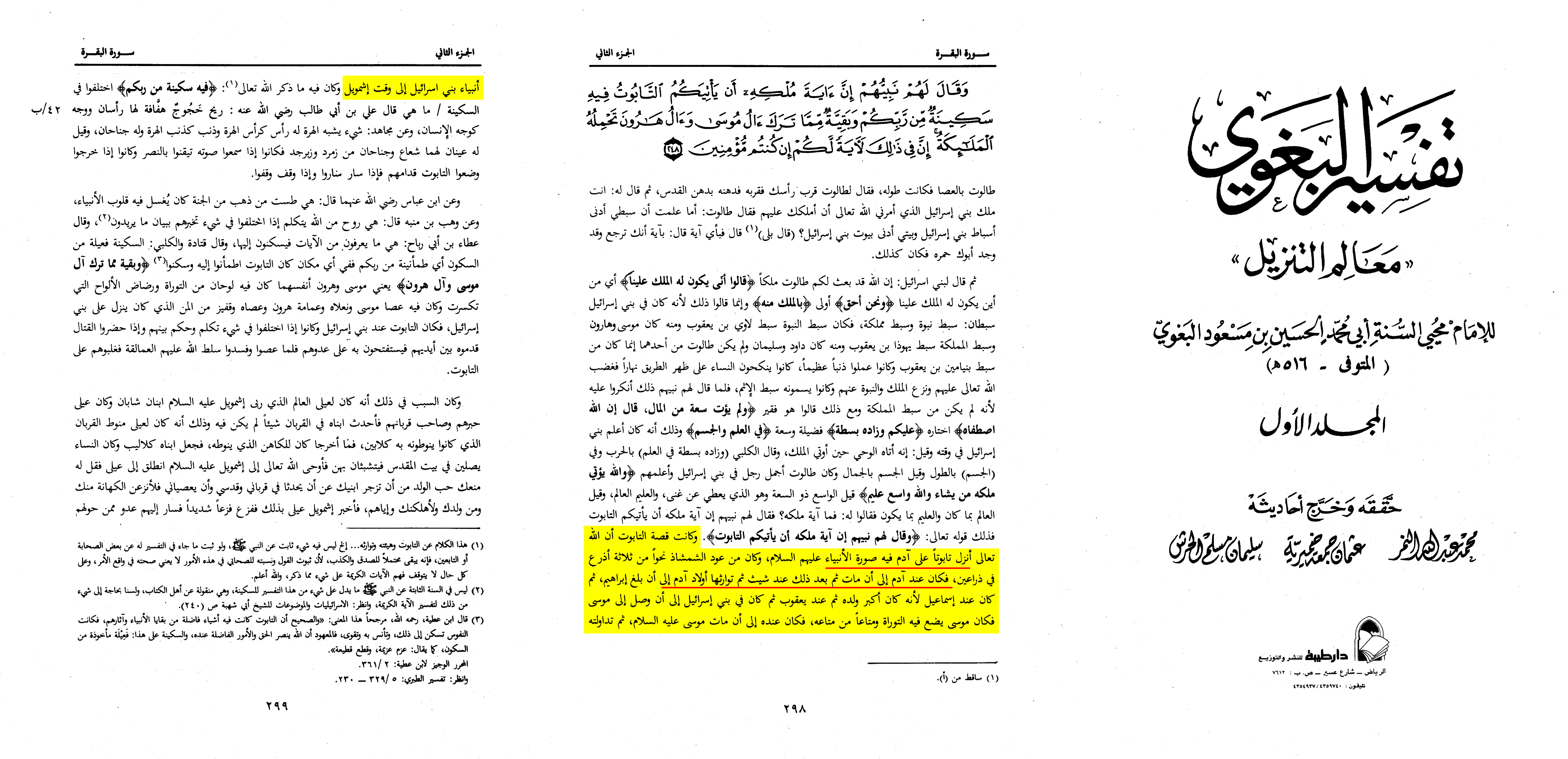
Now, if we ponder on the verse, we notice these relics are a symbol of Talut’s (AS) kingship, and one can only imagine that the signs are the relics of Musa (AS) and Harun (AS) passed down in the family, those are what are most likely to have that type of value. Interestingly, some of our opponents even say this inheritance of the Prophet Adam (AS). For example, we read in Tafsir al-Baghawi, Vol. 1, pg. 298 - 299:
The story of the Ark was that Allah, the Most High, sent down a box to Adam containing the images of the prophets, peace be upon them. It was made of shittim wood, about three cubits long in each of its arms. It remained with Adam until he passed away, then with Seth, and it was passed down to Adam's offspring until it reached Ibrahim.
Then it was with Isma'il because he was his eldest son, then with Jacob, and then it was among the Children of Israel until it reached Moses. Moses placed the Torah and some of his belongings in it, and it remained with him until he passed away. After that, the prophets of the Children of Israel took care of it until the time of Ishmael…
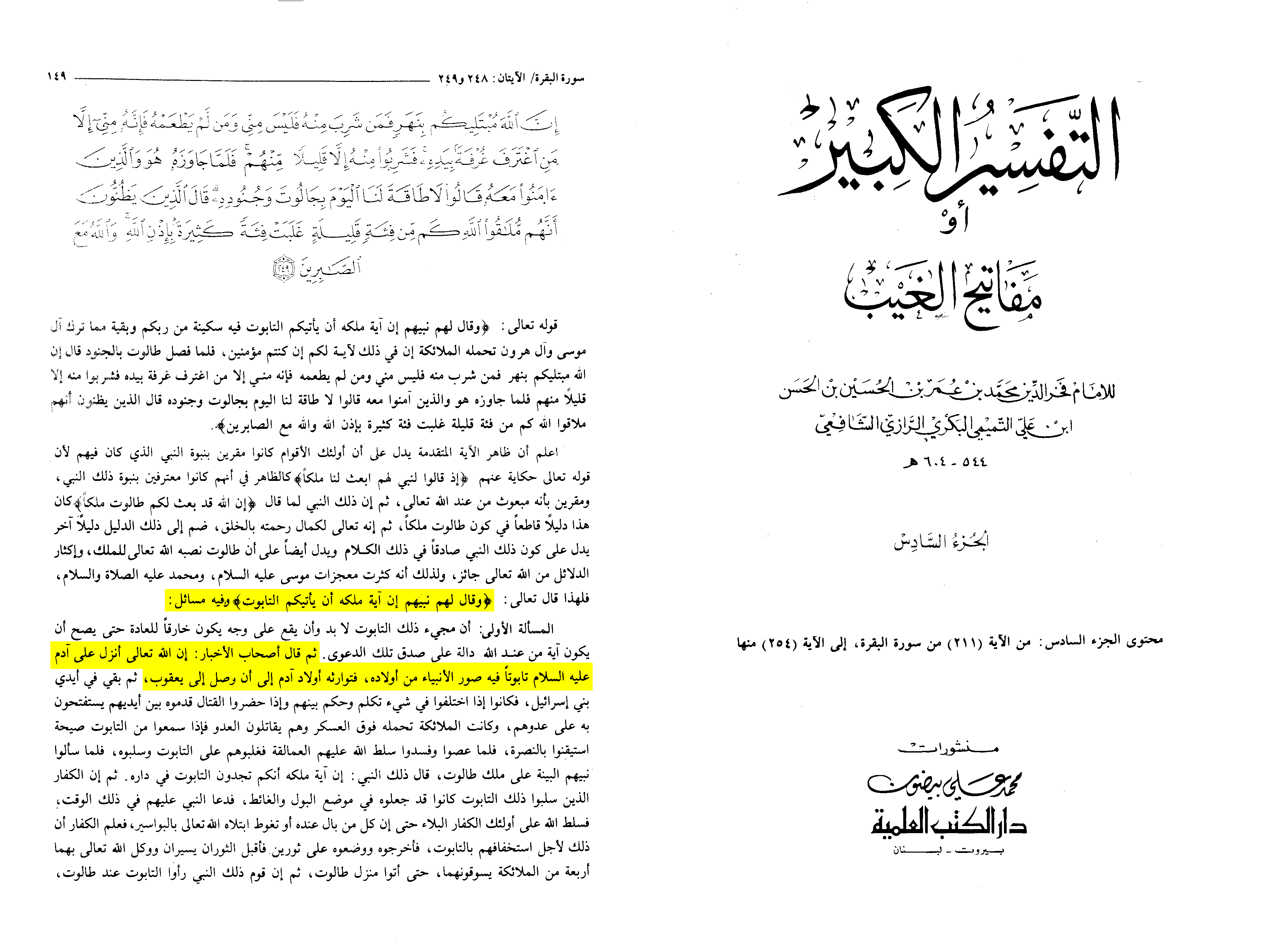
Fakhr al-Razi also says in Tafsir al-Kabir Vol. 6, pg. 149 regarding verses (248 - 249) Surat al-Baqarah:
The people of akhbar narrate that Allah (swt) sent some relics to Adam (as) which contained pictures of the Prophets, and these relics were inherited by the children of Adam, to the point that they reached Ya'qub (as).
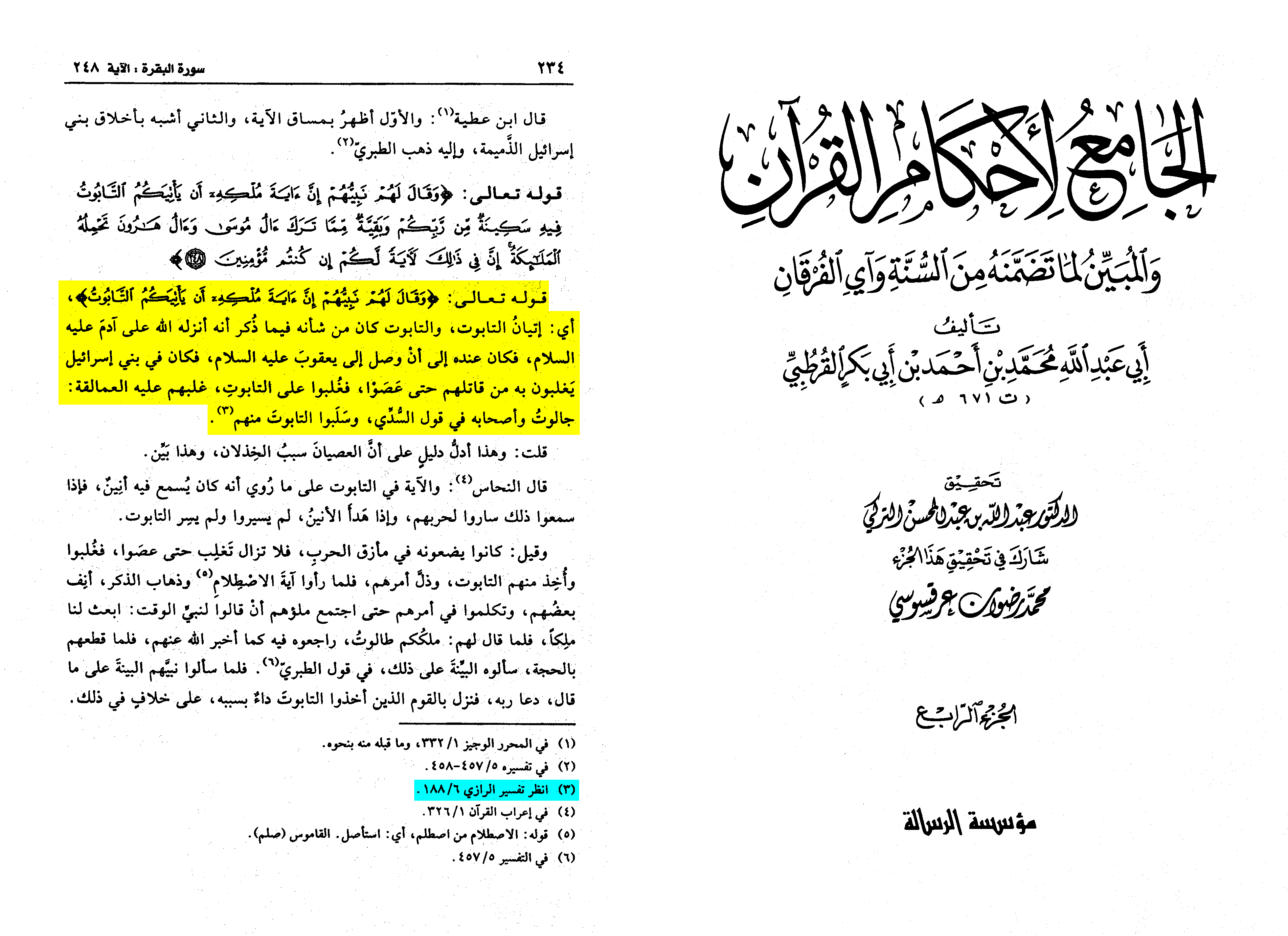
Al-Qurtubi says in his Tafsir Jami’ al-Ahkam al-Qur’an, Vol. 4, pg. 234:
And their Prophet said to them, 'Indeed, a sign of his kingship is that the Ark will come to you,' meaning the coming of the Ark. And the Ark was among the special items mentioned that Allah bestowed upon Adam, peace be upon him. It remained with him until it reached Jacob, peace be upon him. Then it was among the Children of Israel. They used it to prevail over their enemies until they disobeyed. They were defeated while the Ark was with them. The giants overpowered them: Goliath and his companions, as stated by As-Suddi, and they took the Ark from them."
Objection: It only applies to the Prophet!
Now, some of our opponents may say that Abu Bakr’s Hadith doesn’t contradict the Quran because the hadith is only denying that Muhammad (SAWW) leaves inheritance and not the Prophets (AS) in general. The simple response is that as the hadith clearly says “إِنَّا معاشر الْأَنْبِيَاءِ لَا نُورَثُ” which means “Us group of Prophets, don’t inherit” as can clearly be seen in Musnad Ahmad b. Hanbal Vol. 16, pg. 47 Hadith # 9972].
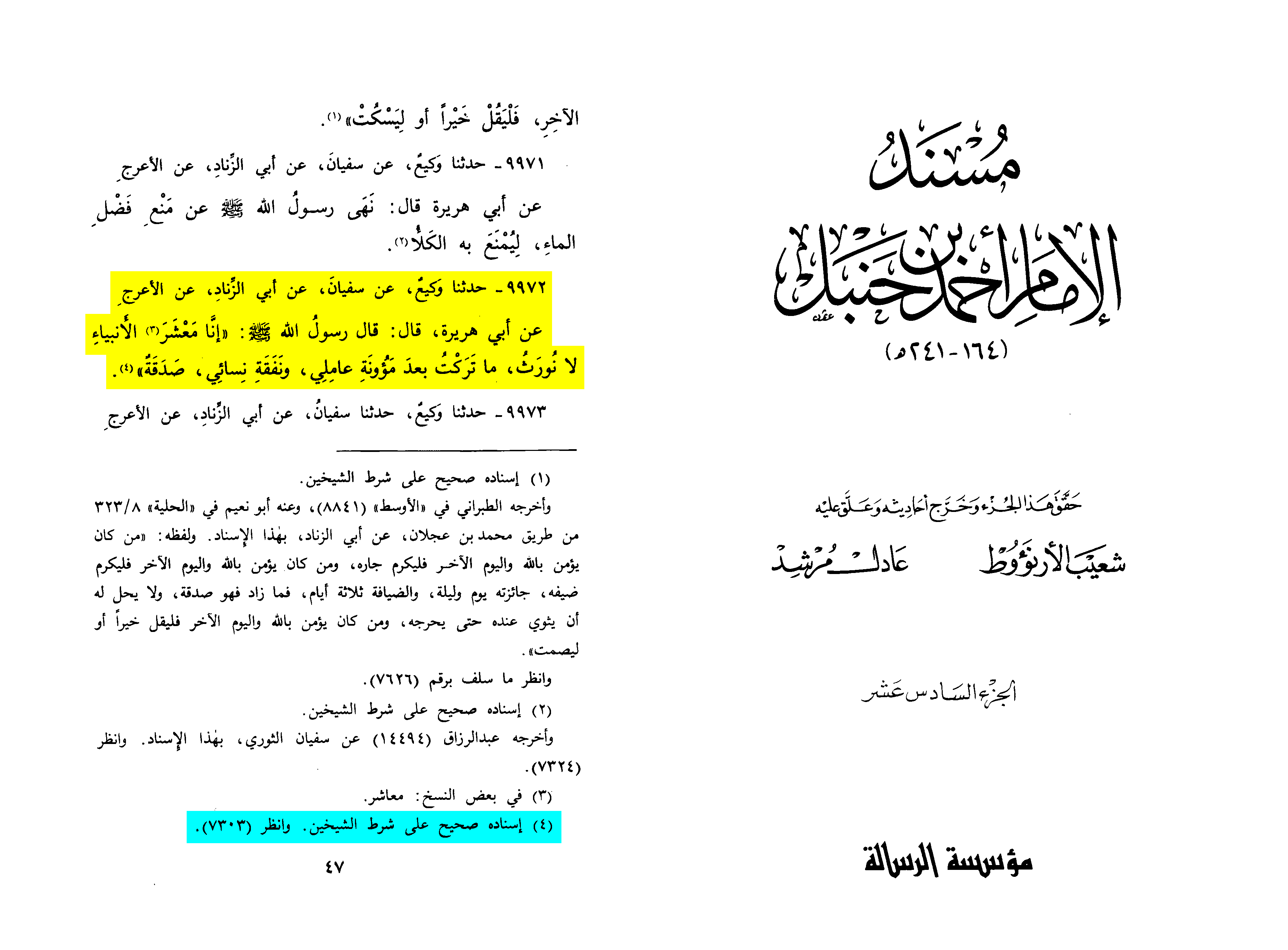
Why would he say “us group of prophets” while intending only himself? What kind of absurd ta’wil is this? It also doesn’t make sense for him alone to have a unique ruling of having no inheritors without ever telling people who’d inherit from him except Abu Bakr for some reason. Simply desperate attempts.
Items inherited from the Prophet (SAW)
Further evidence of Abu Bakr fabricating on the Prophet (SAW) is that many items he left behind were “inherited.” Let us cite a few relevant examples:
Imam ‘Ali (AS) inherited the Prophet’s (SAWW) mule
The Prophet (SAW) left behind a mule of his which Imam ‘Ali (AS) owned. We also know that he was aware of Abu Bakr’s hadith. Our opponent is between 2 options, either ‘Ali (AS) stole the mule knowingly or he didn’t believe Abu Bakr’s fabrication.
We read in Sahih al-Bukhari 3098:
Narrated `Amr b. Al-Harith: The Prophet (ﷺ) did not leave anything (after his death) except his arms, a white mule, and a (piece of) land which he had given as Sadaqa.
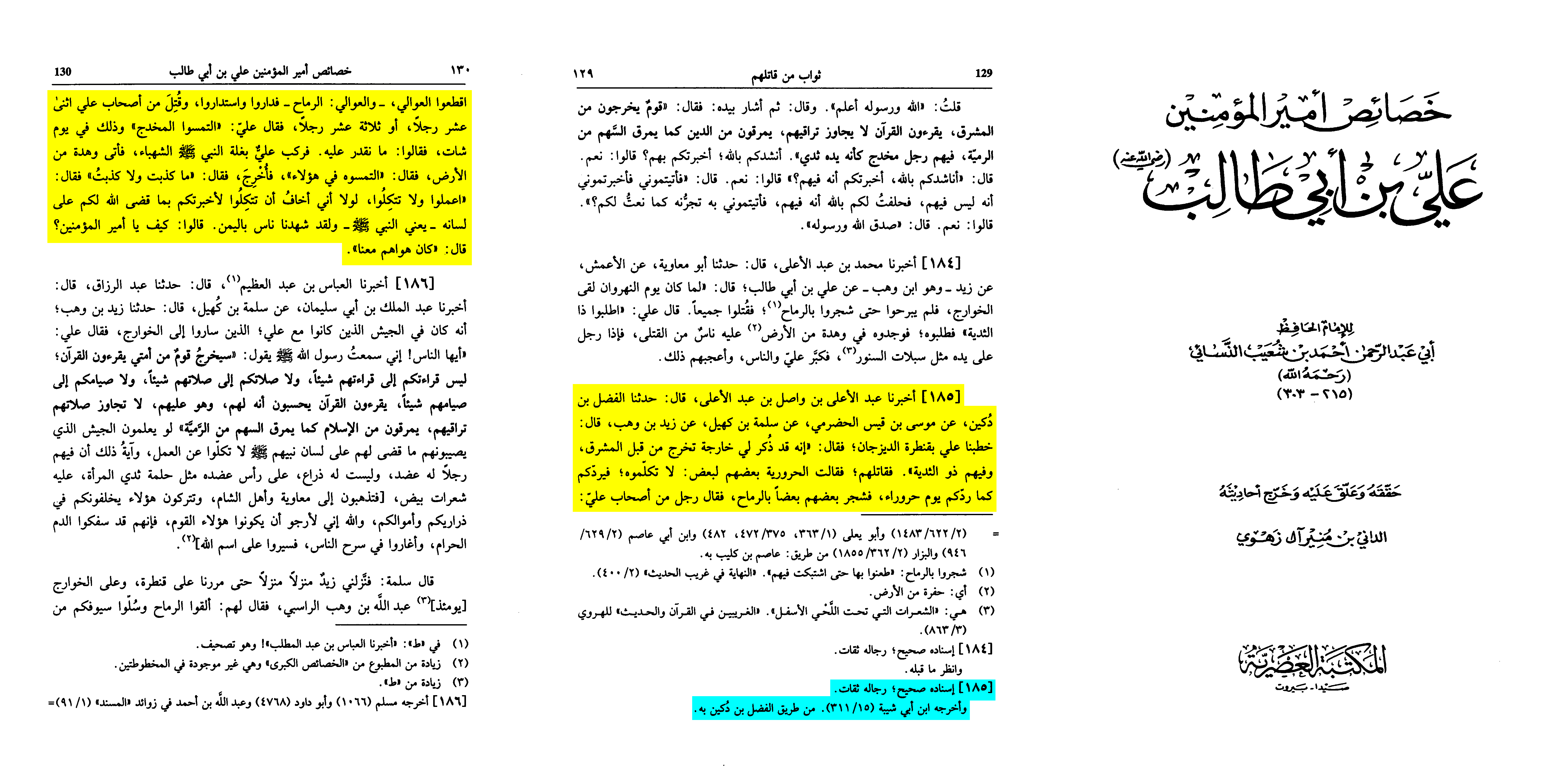
Now, we know that Imam ‘Ali (AS) rode that mule during one of his battles. Al-Nasa’i narrates in Khasa'is Amir al-Mu'minin Ali b. Abi Talib, pg. 129 - 130, Report # 185:
‘Abd al-A‘la b. Wasil b. ‘Abd al-A‘la narrated to us, he said: al-Fadl b. Dukayn narrated to us, from Musa b. Qays al-Hadrami, from Salamah b. Kuhayl, from Zayd b. Wahb, who said:
‘Ali addressed us at the bridge of al-Diyzjan. He said: “It has been reported to me that a group will emerge from the East, among them is the one with the withered hand (dhu al-thadiyya), so fight them.”
Then the Haruriyyah (Kharijites) said to one another, “Do not speak to him, or he will refute you as he refuted you on the day of Harura.” So they began to thrust their spears at each other.
A man from among the companions of ‘Ali said, “Cut off the spear tips! (al-‘awāli, the upper ends of the spears)” So they surrounded each other and clashed. Twelve or thirteen men from among ‘Ali’s companions were killed. Then ‘Ali said: “Search for the one with the mutilated hand (al-mukhaddaj).”
This was on a cold day. They said, “We’re not able to find him.” So ‘Ali mounted the Prophet’s (SAW) grey mule and came to a low area of land and said: “Search for him among these!” Then the man was found and brought out. ‘Ali said: “I did not lie, nor was I lied to. Act and do not rely (on miracles or foreknowledge). If I did not fear that you would depend on it, I would have told you what God has decreed for you through the tongue of the Prophet SAW.”
He also said: “We witnessed people in Yemen.” They asked, “How so, O Commander of the Believers?” He said: “Their inclinations were with us.”
Now, our opponent can claim that the mule is Sadaqah, but as we have already shown, Banu Hashim are forbidden from it, so that doesn’t work. So we can see another issue for our opponents, and they have to choose between being Nawasib or admitting that Imam ‘Ali (AS) didn’t believe Abu Bakr’s Hadith.
Abu Bakr took the Prophet’s ring
We see another inconsistency of Abu Bakr, where he takes the ring of the Prophet (SAWW) but claims he needs no inheritance. We read the following narration in Sahih al-Bukhari 5866 and Sahih al-Bukhari 5879:
Narrated Ibn ‘Umar: Allah's Messenger (ﷺ) wore a gold ring or a silver ring and placed its stone towards the palm of his hand and had the name 'Muhammad, the Messenger of Allah' engraved on it. The people also started wearing gold rings like it, but when the Prophet (ﷺ) saw them wearing such rings, he threw away his own ring and said. "I will never wear it," and then wore a silver ring, whereupon the people too started wearing silver rings. Ibn `Umar added: After the Prophet (ﷺ) Abu Bakr wore the ring, and then `Umar and then `Uthman wore it till it fell in the Aris well from Uthman.
If the Prophet (SAW) does not leave inheritance, why is Abu Bakr taking from it? This shows him stealing property of the Prophet (SAWW). And if he isn’t stealing, it shows he lied on the Prophet (SAW).
‘Aisha and the Prophet's (SAW) cloak
We also read in Sahih Muslim 2069a and Sahih Muslim 2080a:
I went back to Asma' and informed her. whereupon she said: Here is the cloak of Allah's Messenger (ﷺ). and she brought out to me that cloak made of Persian cloth with a hem of brocade, and its sleeves bordered with brocade and said: This was Allah's Messenger's cloak with 'A'isha until she died, and when she died. I got possession of it. The Apostle of Allah (ﷺ) used to wear that, and we waslied it for the sick and sought cure thereby.
Again, Aisha can inherit the Prophet (SAW) by taking his cloak but Fatima (AS) cannot receive her inheritance from her father (SAWW)? Where was Abu Bakr stopping Aisha from inheriting that cloak?
We mentioned earlier as she took land for herself from the Prophet (SAW) in Sahih al-Bukhari 2328:
The Prophet concluded a contract with the people of Khaibar to utilize the land on the condition that half the products of fruits or vegetation would be their share. The Prophet used to give his wives one hundred Wasqs each, eighty Wasqs of dates and twenty Wasqs of barley. (When ‘Umar became the Caliph) he gave the wives of the Prophet the option of either having the land and water as their shares, or carrying on the previous practice. Some of them chose the land and some chose the Wasqs, and ‘Aisha chose the land.
It is indeed sad that ‘Aisha inherited the very land that her father had denied Sayyida Fatima (AS). This is clear from Sahih al-Bukhari 3092:
Narrated ‘Aisha: “…She used to ask Abu Bakr for her share from the property of Allah’s Apostle which he left at Khaibar, and Fadak, and his property at Medina (devoted for charity).
Scholarly remarks
When we return to a Sharh of these hadiths, it reads from Sharh Mukhtasr Sahih al-Bukhari, vol. 4, pg. 132 - 133:
These hadiths included mention the belongings left behind by the Prophet (s), some of which passed to his successors, such as the ring, or to his companions, like his drinking cup and his sandals, or to his wives, like the square cloak (kisa) which was with Aisha, or to his family, like his sword which he passed to Ali and then passed on to his pure progeny. Allah knows best.
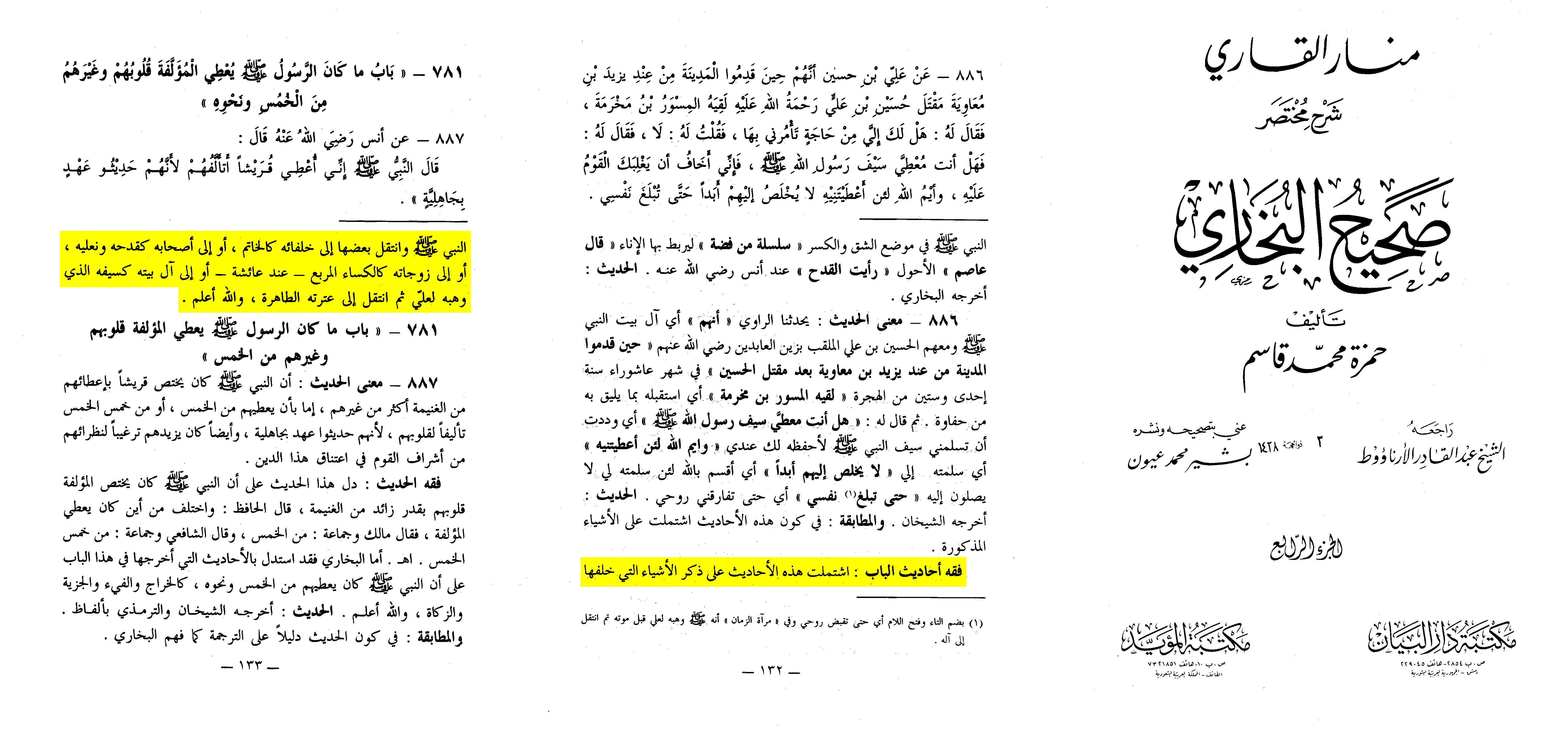
Other possessions of Rasulullah (SAW) may be passed to his family, but not Fadak to his daughter!?
Conclusion
We leave our readers to decide for themselves. The evidence that Abu Bakr fabricated this tradition is overwhelming, leaving little doubt as to why Abu Bakr once said the following as reported by Malik b. Anas in his Muwatta, Book 56, Hadith 1825:
Malik related to me from Zayd ibn Aslam from his father that Umar ibn al-Khattab came upon Abu Bakr as-Siddiq pulling his tongue. Umar said to him, "Stop, may Allah forgive you!" Abu Bakr replied, "This has brought me to dangerous places."
Indeed Abu Bakr's tongue brought him to the most dangerous destination of all, and we seek refuge in Allah from the wrath of Allah!


2 Comments